Tuning Into Healing: The Ultimate Guide to Frequencies, Sound, and the Body

Complex glowing mandala with geometric patterns over a starry cosmic backdrop
A glowing sacred geometry mandala set against a vibrant cosmic background.

Have you ever noticed how a particular song can instantly shift your mood, or how the steady rhythm of rain brings a deep sense of peace? That isn’t just in your head—it’s in your cells.

Everything in the universe, including the human body, is in a constant state of vibration. When our body’s natural frequencies fall out of sync due to stress, illness, or fatigue, sound and frequency therapy can help tune us back into harmony.

Let’s explore how healing frequencies work, their historical origins, their connection to the natural elements, and some mind-blowing facts about the power of sound.

🎶 The Core Healing Frequencies (The Solfeggio Scale)

The Solfeggio frequencies are a set of specific tone frequencies historically used in sacred music and sound healing to bring balance to the mind and body. Here is what the most popular frequencies do for you:

FrequencyPrimary FocusBody & Mind Benefits
174 HzFoundation & AnestheticRelieves physical pain, reduces stress, and grounds energy.
285 HzTissue & Cellular RepairStimulates the recovery of damaged tissues and promotes rapid healing.
396 HzLiberation from FearClears guilt, fear, and subconscious anxiety; grounds the root center.
417 HzChange & RebuildingClears negative energy, facilitates emotional undoing, and breaks negative patterns.
528 HzTransformation & DNA RepairKnown as the “Love Frequency” or “Miracle Tone,” it restores balance and reduces cellular stress.
639 HzConnection & RelationshipsEnhances communication, empathy, and harmony in interpersonal relationships.
741 HzAwakening & IntuitionCleanses cells from toxins, aids problem-solving, and clears the mind.
852 HzSpiritual Order & IntuitionAwakens inner strength and restores spiritual order.
963 HzDivine ConsciousnessActivates the pineal gland and re-connects you to cosmic energy.

🏛️ A Quick Dip into History: Ancient Frequency Healing

Ancient stone temple ruins with reflections in water and sunlight streaming through trees
Sunlight filters through trees over a serene ancient temple pool

Frequency healing isn’t a modern wellness trend—it’s an ancient practice backed by centuries of human intuition:

  • Ancient Greece: Pythagoras, the famous mathematician, was also considered the father of music therapy. He used specific musical intervals and melodies to treat emotional and mental ailments, calling it “musical medicine.”
  • Egyptian Temples: Ancient Egyptian priests used acoustic resonance in sacred chambers like the Pyramids of Giza. They designed these structures to amplify low-frequency sound waves during healing rituals.
  • Gregorian Chants: In the 11th century, Benedictine monks used the original Solfeggio scale in their sacred chants. They believed these precise harmonic tones elevated the mind and healed the body during prayer.

🌿 Frequencies & The Elements: Resonance in Nature

Sound frequencies do not exist in a vacuum; they interact directly with the physical elements that make up our world and our bodies:

A glowing circular vortex of water and light above rocky coastal cliffs and ocean at sunset
A swirling vortex of water and light forms over a rugged coastline at sunset.
  • Water (Flow & Structure): Humans are roughly 60% water. Through cymatics (the study of visible sound frequencies), scientists have demonstrated that sound waves physically structure water into beautiful geometric patterns. Frequencies like 528 Hz literally organize the fluid in your body into coherent, harmonious shapes.
  • Earth (The Schumann Resonance): The Earth itself vibrates at a fundamental frequency of 7.83 Hz, known as the Schumann Resonance. This electromagnetic pulse matches our brain’s alpha and theta wave states. Spending time in nature “entrains” your brain to this grounding frequency.
  • Air (Vibration Transmission): Sound needs a medium to travel, and air carries these physical pressure waves directly into your body, vibrating your eardrums and your skin.
  • Fire/Energy (Cellular Voltage): Your body’s cells are like small batteries operating on millivolts. Sound frequencies stimulate cellular energy production (ATP), helping re-energize tired tissues.

🤯 “Did You Know?” Intriguing Frequency Facts

Did You Know? Purring Cats are Natural Healers

A cat’s purr falls within the frequency range of 20 to 140 Hz. Medical studies show that vibrations within this specific range can promote bone density, ease breathing, repair tendons, and lower blood pressure. A purring cat is literally a living sound machine!

Did You Know? Modern Standard Tuning Was Shifted

Before the mid-20th century, much of the world tuned instruments to 432 Hz (a harmonic frequency aligned with natural geometry). In 1953, the International Organization for Standardization (ISO) made 440 Hz the standard pitch. Many sound therapists believe 440 Hz creates slight subconscious tension, whereas 432 Hz feels noticeably calmer.

Did You Know? Sound Can Destroy Cancer Cells

High-Intensity Focused Ultrasound (HIFU) is used in modern medicine to shatter tumors without incisions—using sound resonance in much the same way an opera singer breaks a crystal glass.

Did You Know? Your Brain Can “Create” Frequencies

When you play two slightly different frequencies in each ear (e.g., 200 Hz in the left ear and 210 Hz in the right), your brain creates a third frequency—a 10 Hz Binaural Beat—forcing your brainwaves into a deep state of relaxation or focus.

💡 How to Start Using Frequencies Today

Getting started with sound therapy is effortless:

  1. Listen to Solfeggio Tracks: Search for 528 Hz or 432 Hz music on your favorite streaming platform while sleeping, meditating, or working.
  2. Try Binaural Beats: Put on a pair of stereo headphones and listen to Theta binaural beats to instantly drop into a deep meditative state.
  3. Use Singing Bowls or Tuning Forks: Incorporate physical sound tools into your daily mindfulness or yoga routine to feel the mechanical vibrations directly.
  4. Use Frequency tuned wellness products! Supplements, skin care, jewelry, and more. Check those out here!

The Stages of Healing: Navigating the Beautiful, Messy Journey of Growth

We often talk about healing as if it’s a finish line we cross—a magical moment where the pain disappears, the sky clears, and we are suddenly “fixed.”

But anyone who has ever walked through a season of deep change knows the truth: healing is a journey, not a destination.

It isn’t a straight line. It is an ebb and flow, a continuous cycle of unlearning, shedding, and rebuilding. If you are currently in the thick of your own evolution, wondering why it feels so challenging, it helps to understand the terrain.

Paths and roads winding through multiple landscapes including forests, fields, mountains, desert, coastline, grasslands, and volcanic terrain.
A collage of various natural paths winding through different landscapes from forests to deserts and volcanic areas.

Here are the nine stages we move through as we heal, grow, and reclaim our power.

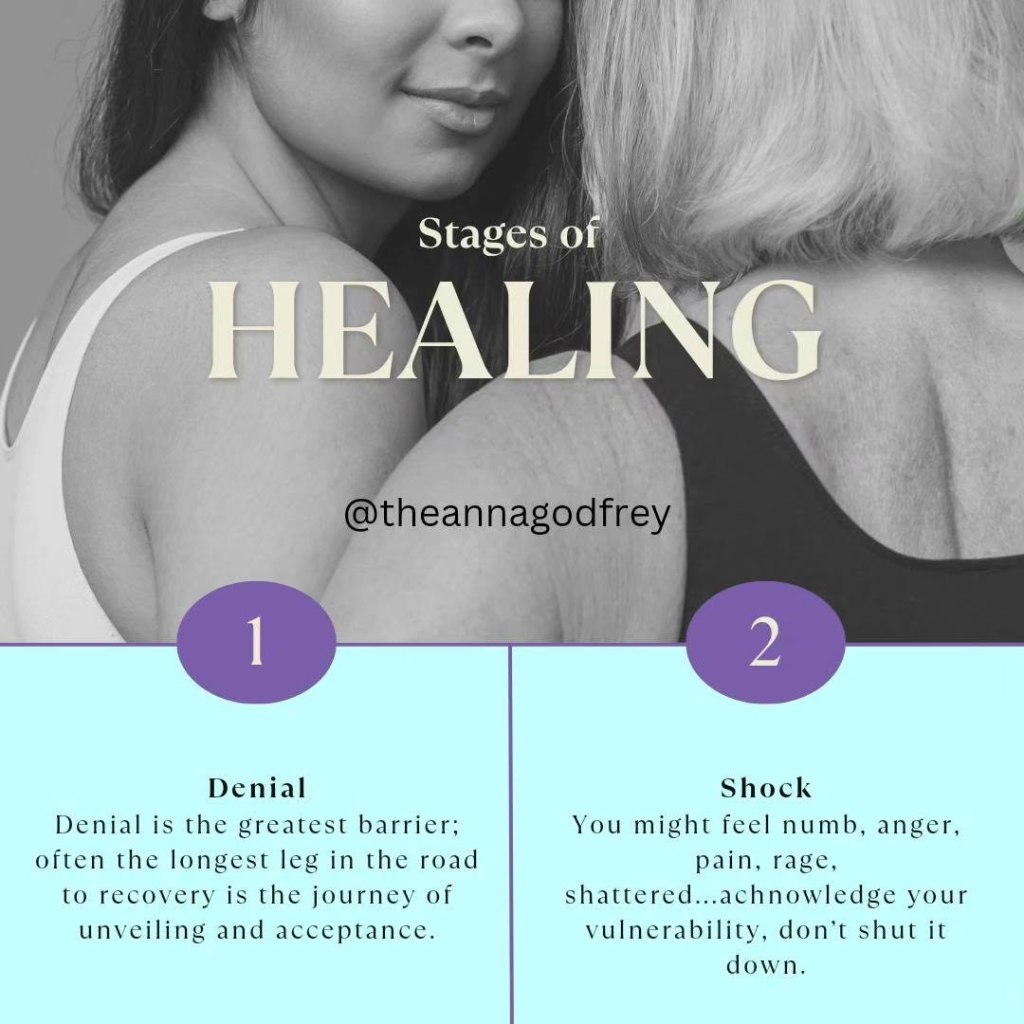
1. Denial

Denial is a protective blanket our mind throws over us when the truth feels too heavy to bear. It is often the greatest barrier to our evolution. The longest, most exhausting leg of the road to recovery is simply the journey of unveiling the truth and moving toward acceptance. Healing cannot begin until we stop hiding from what is.

2. Shock

When the denial fades, reality hits. In this stage, you might feel entirely numb, or you might be flooded with intense anger, pain, rage, and a feeling of being completely shattered. The key here is survival through allowance: acknowledge your vulnerability; do not shut it down. Let the storm pass through you without judging it.

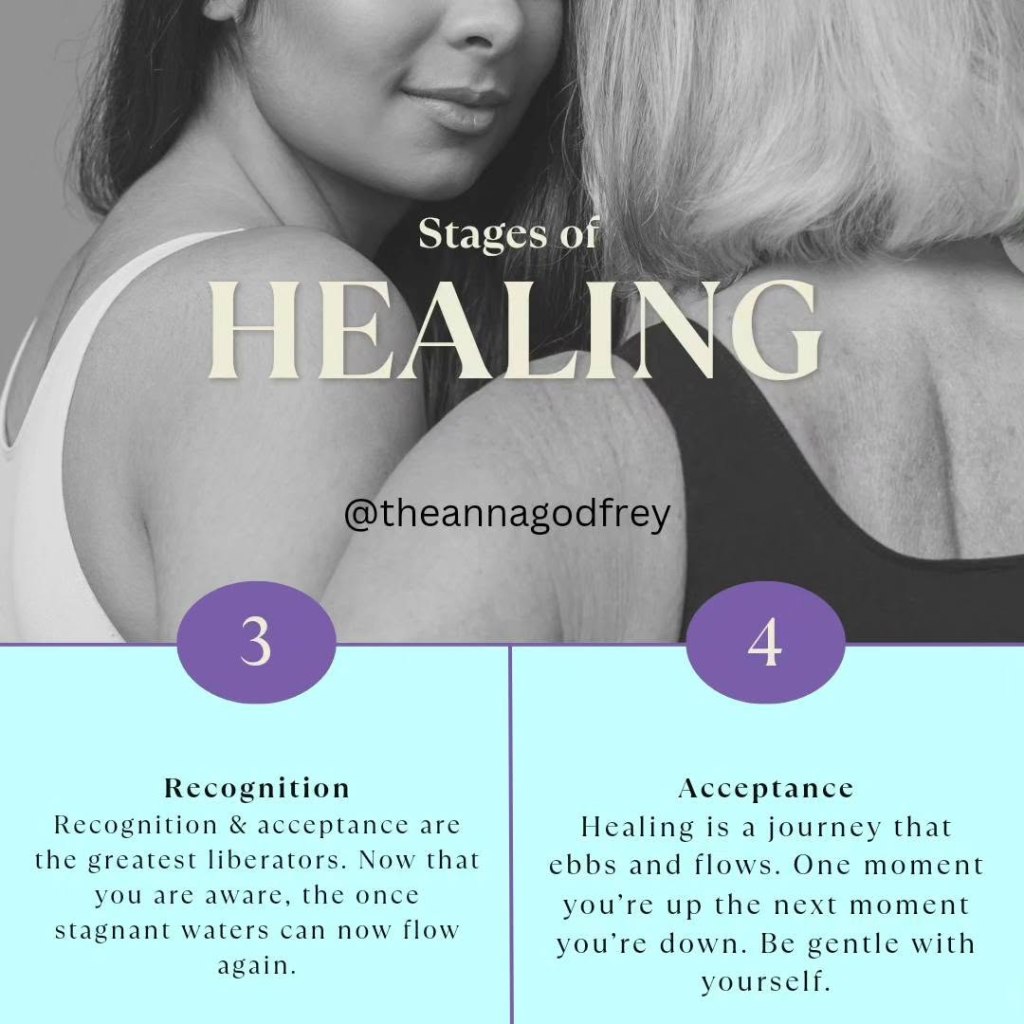
3. Recognition

This is the turning point. Recognition combined with acceptance are the greatest liberators of the human spirit. The moment you look your reality in the eye and say, “This is what happened, and this is where I am,” the once stagnant waters of your life can finally begin to flow again.

4. Acceptance

Acceptance doesn’t mean you love what happened; it means you stop fighting it. This stage is a fluid journey that ebbs and flows. One moment you are standing strong on the mountaintop, and the next moment you feel down in the valley again. This is normal. Be gentle with yourself during the dips.

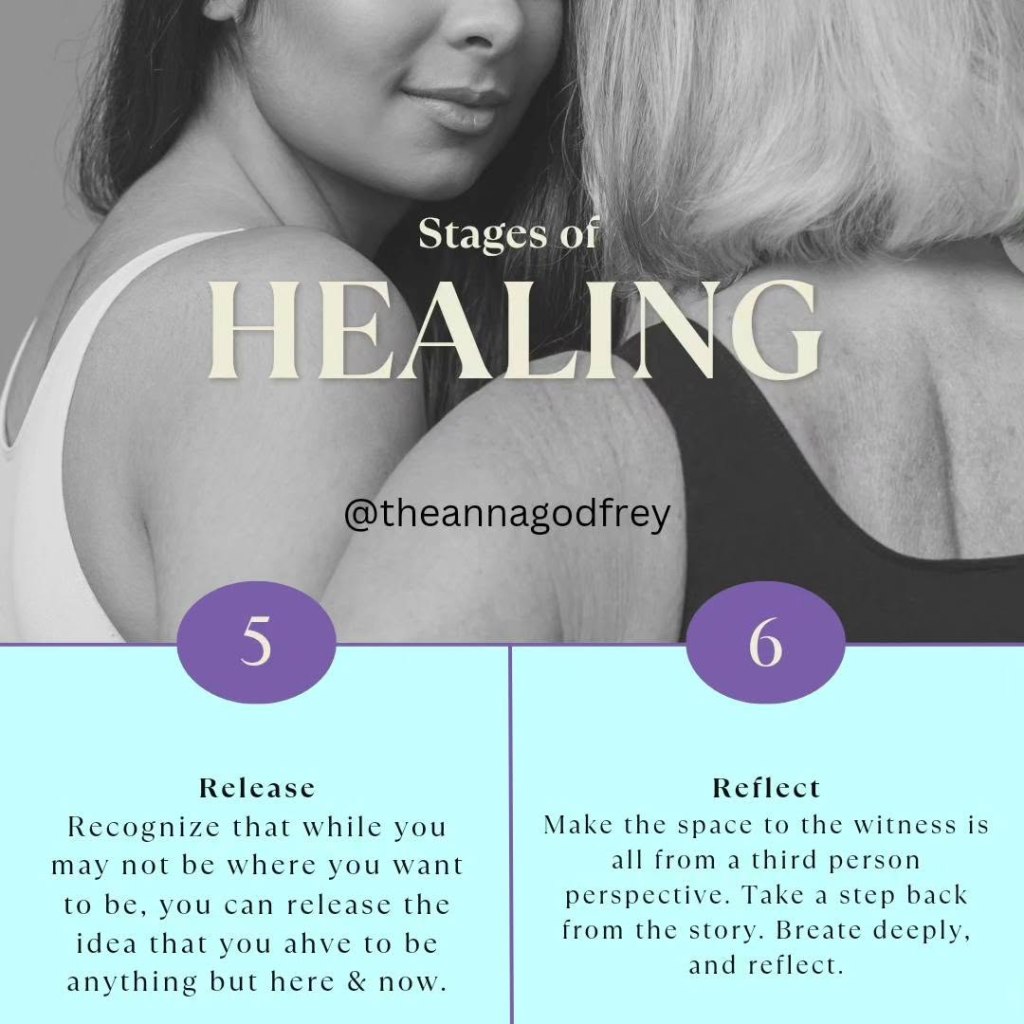
5. Release

True peace comes when we stop fighting the present moment. In the release phase, you recognize that while you may not be exactly where you want to be yet, you can release the heavy expectation that you have to be anything but here and now. You are allowed to just exist as you are today.

6. Reflect

To heal deeply, we have to step out of the chaos of our own minds. Make the conscious space to witness it all from a third-person perspective. Take a step back from the narrative, pull yourself out of the drama of the story, breathe deeply, and simply reflect on how far you’ve come.

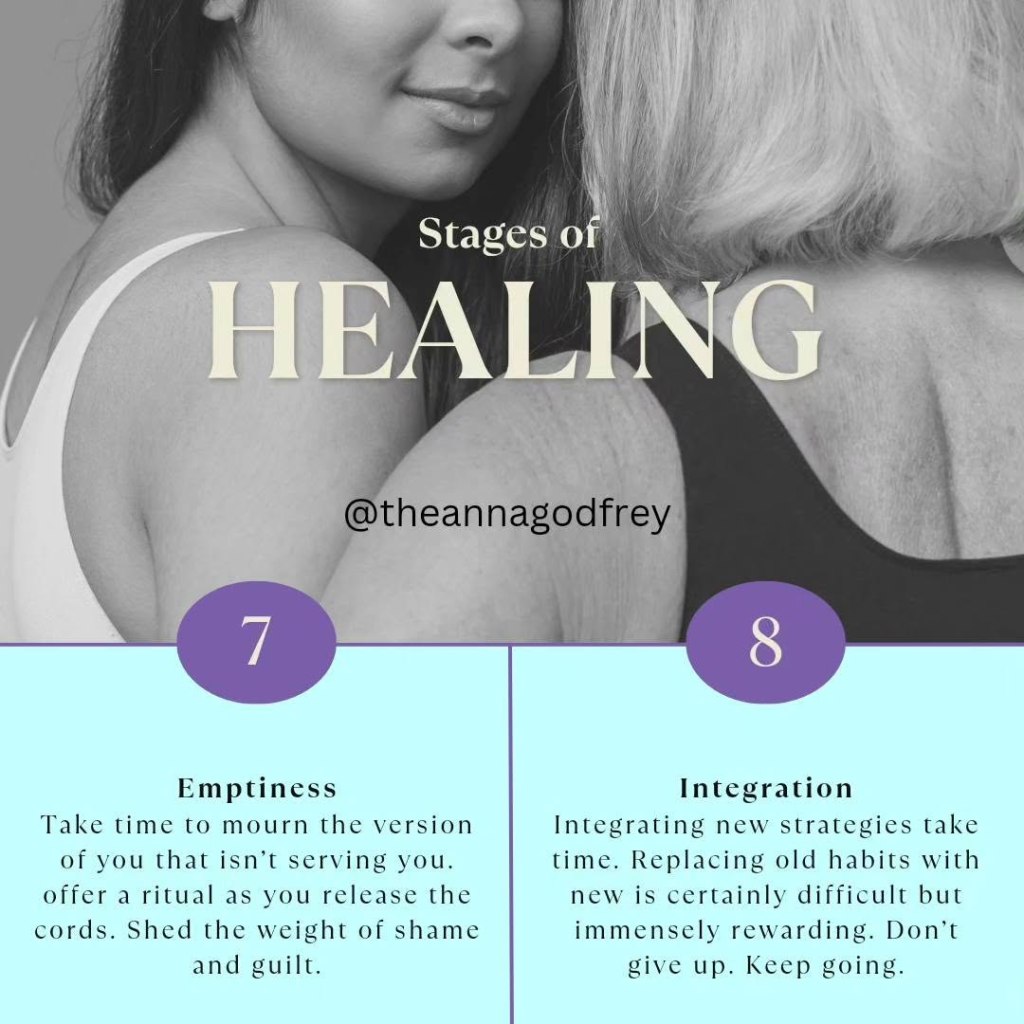
7. Emptiness

Before you can fill your cup with new, vibrant energy, you have to sit with the space left behind. Take the time to mourn the older version of you that is no longer serving your highest good. Offer yourself a quiet ritual as you cut those energetic cords. Shed the heavy weight of shame and guilt; they have no place in your future.

8. Integration

This is where the real work happens. Integrating new, healthy strategies takes time and conscious effort. Replacing lifelong, survival-driven habits with new, mindful practices is undeniably difficult, but it is immensely rewarding. When it feels tough, don’t give up. Keep going.

9. Transform

The final shift. This is where you begin actively making changes where you feel they are most appropriate for your unique journey. Remember: there is absolutely no rush. One single step at a time is enough, because small, consistent changes move mountains.

A Gentle Reminder for Today: Healing takes time. There is no timeline, no schedule, and no competition. Trust the process, honor exactly where your feet are planted today, and above all, be kind to yourself.

How are you nurturing your nervous system through your own healing journey today? Which stage resonates with you the most right now? Let’s connect in the comments.

#HealingJourney #SelfCare #MentalHealth #PersonalGrowth #EmotionalHealing #Mindfulness

From Soil to Plate: Cultivating a Backyard (or Windowsill) Herb Garden

There is something deeply grounding about getting your hands in the dirt. In a world where so much of our daily lives is digital and fast-paced, spending a few quiet minutes tending to living things offers a beautiful, tactile way to slow down.

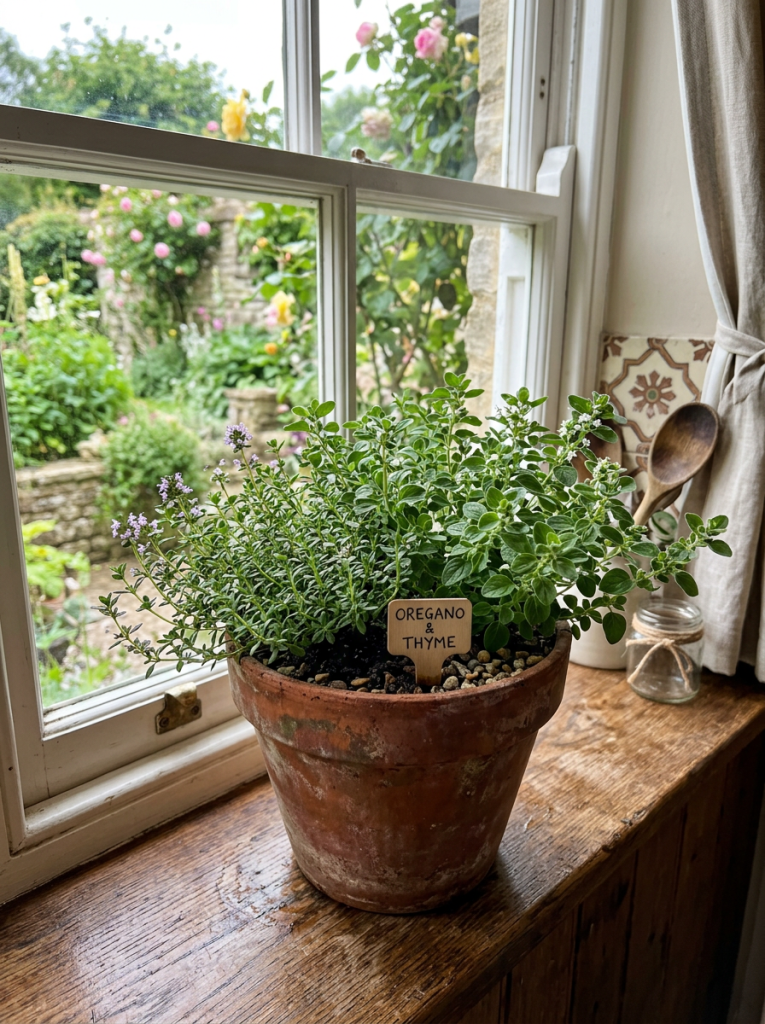
Terracotta pot with oregano and thyme plants on wooden windowsill by kitchen window
A terracotta pot with oregano and thyme sits on a wooden windowsill in a cozy kitchen

You don’t need an expansive backyard or a farm to experience the joy of growing your own food. A sunny windowsill, a small patio, or a simple container pot on the back step is all it takes to start your own kitchen herb garden.

Growing fresh herbs isn’t just a rewarding hobby—it’s an easy way to elevate your cooking, connect with nature, and bring a little bit of mindful green space into your everyday life.

The Magic of Companion Planting

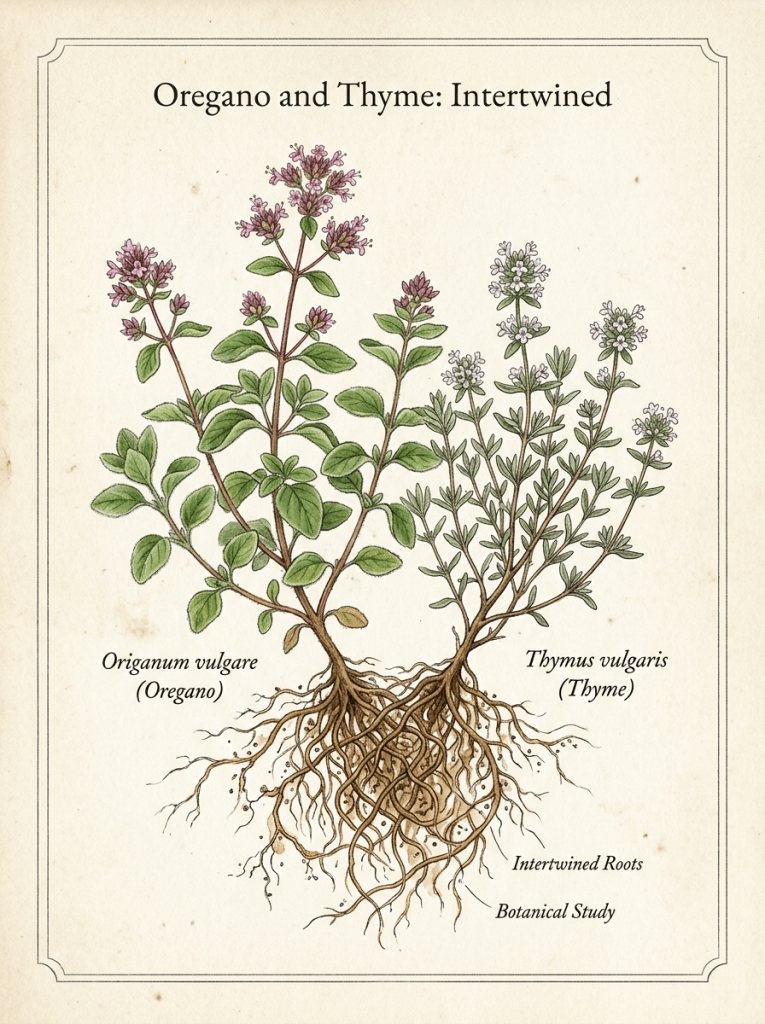
Botanical illustration of oregano and thyme with their intertwined roots
Detailed botanical drawing showing intertwined oregano and thyme plants with roots.

If you are new to gardening, or if you are working with limited space, the secret to success lies in choosing plants that naturally love to be together. This is called companion planting.

Just like people, certain plants thrive when they share a home with neighbors who enjoy the same environment. When creating a simple container herb garden, look for varieties that share a love for plenty of sunlight and well-draining soil.

Two of the absolute best companion herbs to plant together are oregano and thyme.

  • Oregano: Hardy, robust, and full of rich flavor, oregano loves soaked-in sunshine and doesn’t mind the soil drying out a bit between waterings.
  • Thyme: Boasting delicate leaves and a wonderful earthy aroma, thyme shares the exact same preference for bright light and moderate water as oregano.

Because they share identical care needs, planting them side-by-side in a single container makes your garden incredibly low-maintenance. Plus, their contrasting textures—oregano’s lush, round leaves next to thyme’s fine, trailing stems—look absolutely beautiful together.

Getting Started: Your 4-Step Guide

Woman watering basil and mint plants on balcony garden at sunset
A woman waters her thriving herb garden on a city balcony during sunset

Ready to plant your own kitchen oasis? Here is everything you need to create a simple, thriving herb pot:

1. Choose the Right Container Pick a pot that has excellent drainage holes at the bottom. Herbs do not like their roots sitting in stagnant water. A classic terracotta or clay pot is perfect because it allows the soil to breathe.

2. Use Quality Soil Fill your container with a lightweight, high-quality potting mix. If you want to give your oregano and thyme an extra boost, mix in a handful of coarse sand or perlite to ensure the soil drains quickly and stays loose.

3. Give Them Light Place your pot where it will receive at least six hours of bright sunlight every day. A south- or west-facing window, a sunny deck, or a bright patio spot will make your herbs incredibly happy.

4. Practice “Mindful Watering” Instead of watering on a rigid schedule, check in with your plants first. Push your finger about an inch into the soil. If it feels completely dry, give it a thorough watering until moisture runs out the bottom of the pot. If it still feels damp, give it another day.

Cultivating Patience and Wellness

Tending to a small herb garden introduces a wonderful rhythm to your week. Taking a moment to check the moisture of the soil, snip away a few yellow leaves, or track a new little sprout forces you to step into the present moment. It is a quiet reminder that good things take time to grow.

And the best reward? Walking over to your windowsill or patio, clipping a few fresh sprigs of homegrown oregano and thyme, and tossing them straight into your evening meal. The flavor of an herb you grew yourself is unmatched.

Are you thinking about starting a small green space this season? Or do you already have a favorite kitchen herb you can’t live without? Let’s swap gardening tips in the comments below!

Beyond Calories: Understanding Hormonal Impact on Weight Loss

Why “Calories In vs. Calories Out” is Only Half the Story

A vintage brass balance scale with healthy foods on one side and hormone names and symbols on the other side.
A vintage brass scale balancing healthy foods against hormone symbols.

If weight loss were just math, we’d all be thin. The truth is, your body is a chemistry lab, not a calculator.

Two people can eat 1,500 calories, but if one person is eating 1,500 calories of processed carbs and the other is eating 1,500 calories of whole proteins and healthy fats, their bodies will look and feel completely different.

Why? Hormones.

  • Insulin: Your fat-storage hormone. High-sugar foods keep insulin high, which literally “locks” your fat cells.
  • Cortisol: The stress hormone. If you’re over-caffeinated and under-slept, your body will hold onto belly fat for “protection,” regardless of your calories.

The Takeaway: Focus on food quality and stress management first. When the chemistry is right, the math starts to work in your favor!

Looking for the specific tools I use to keep my hormones in check? Send me a DM or check the link in my bio for my daily metabolic “must-haves!”

Thinking about starting a GLP-1?

Are you thinking about starting a GLP-1?

Read this first!

​Most women jump in hoping it’s the “magic fix” for everything… but here is the reality of what happens if your body isn’t properly supported:

Low energy & “brain fog”

Muscle loss (the “skinny-fat” struggle)

Slower metabolism over time

Difficulty staying consistent

​I’m a huge advocate for doing it the right way from Day 1. That’s why I’m so excited about this month’s special! 

​✨ The Missing Piece to Your Protocol ✨

​When you start your GLP-1 protocol this month, you’ll receive NAD Dreams for FREE with your order. ⚡️

​While GLP-1s are incredible for managing appetite, your body still craves support for:

  • Energy Levels (no more mid-day crashes!)
  • Deep Recovery
  • Metabolic Health
  • Quality Sleep

​NAD support fills the gap so you don’t just lose weight—you actually feel better while doing it.

​Why this matters:

​By supporting your cellular health, you avoid that “skinny but exhausted” feeling. You get better sleep, more consistent energy, and you help your body recover while you’re in a caloric deficit.

Simple. Supported. Sustainable.

Ready to do this the healthy way?

Drop “START”  in the comments or or go to here, and I’ll walk you through exactly what this protocol could look like for you!