Vetrnætr: Honor the Ancestors and Step Into the Dark Half of the Year

As the last leaves drop and autumn gives way to crisp frost, nature enters a distinct turning point. Across many spiritual paths, late autumn is felt as a threshold—a time when the veil between worlds grows quiet and thin. In Norse Paganism and Heathen traditions, this crucial seasonal shift is known as Vetrnætr, or the Winter Nights.

Falling around late October, Vetrnætr marks the end of the harvest, the official start of winter on the historic Norse calendar, and a sacred pause before the deep freeze sets in. If you are looking to ground your spiritual practice during this time of year, Vetrnætr offers a rich framework centered on ancestral connection, protection, and inner transformation.
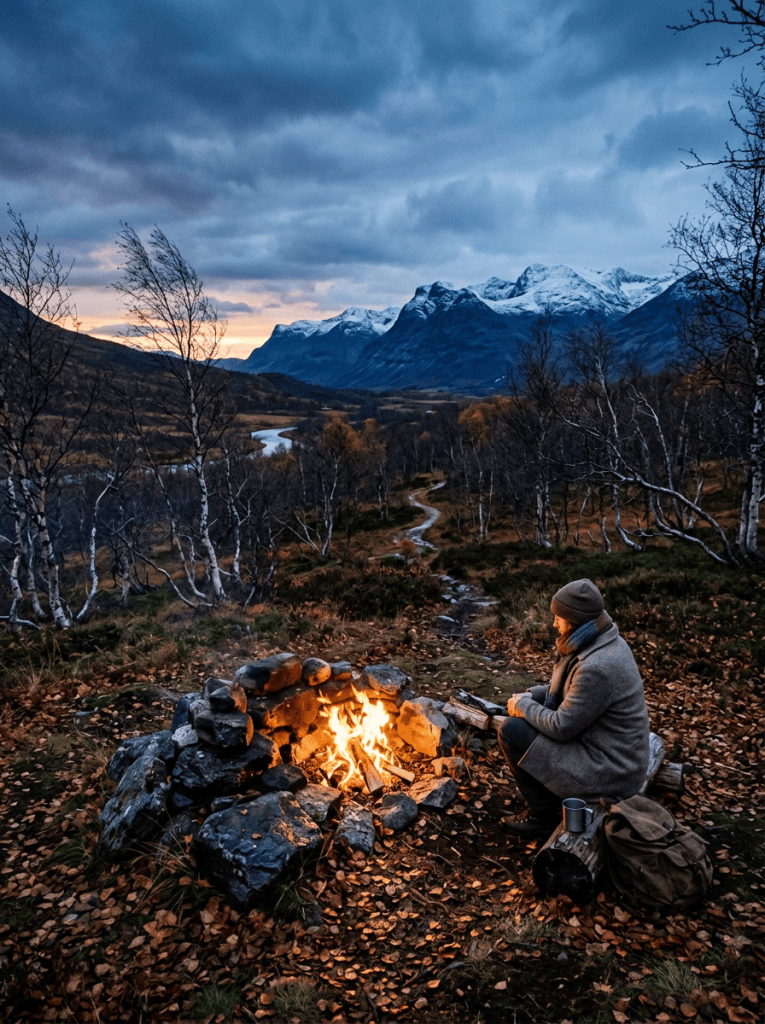
Camper sitting beside a fire in a birch forest beneath snowy mountains
A solitary camper warms up beside a crackling fire as a river winds toward snow-covered peaks.

Understanding Winter Nights and the Dísablót

Historically, the Norse divided the year into two main seasons: summer and winter. Vetrnætr was a three-day celebration welcoming winter and making offerings for protection, peace, and abundance through the coming dark months.

At the core of this festival was the Dísablót—a ritual sacrifice or offering made to the Dísir. The Dísir are collective protective spirits, often associated with female ancestors, fate (wyrd), and guardian spirits (fylgjur). Unlike the grand public sacrifices of spring or midwinter, the Dísablót during Winter Nights was intimately tied to the home, household, and family lineage.

Celebrating Vetrnætr is less about fearing the darkness and more about recognizing that darkness is necessary for rest, reflection, and future renewal.

3 Ways to Honor Vetrnætr in Modern Practice

You don’t need an elaborate setup or ancient tools to honor this seasonal threshold. Here are three practical ways to weave the energy of Winter Nights into your spiritual life today:
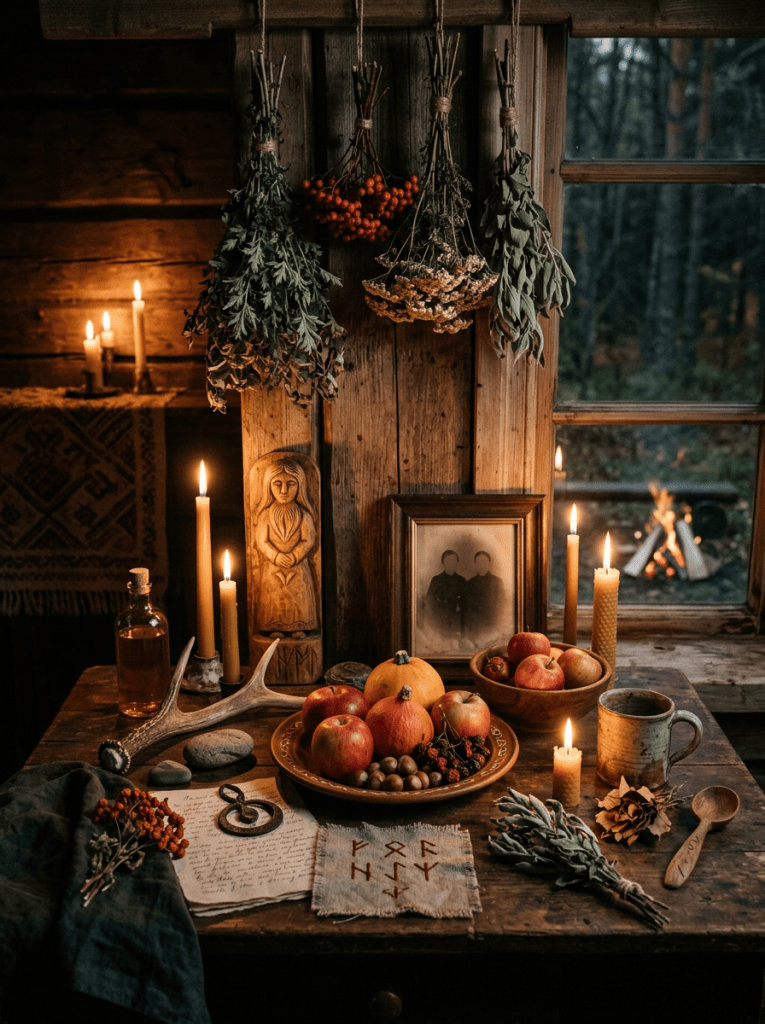
Rustic wooden table with candles, dried herbs, apples, and framed keepsakes
Candles, dried herbs, apples, and carved keepsakes create a warm rustic autumn altar.

1. Build a Sacred Ancestral Altar

Winter Nights is first and foremost a time of remembrance. Creating an altar or dedicated space allows you to hold space for those who came before you.

  • What to include: Photos of departed family members, heirlooms, fall foliage, candles, and a small dish for offerings (such as dark ale, mead, apples, or bread).
  • The practice: Light a candle each evening during late October. Speak your ancestors’ names aloud, express gratitude for their resilience, and invite their wisdom to guide you through the darker half of the year.

2. Seek Guidance Through Rune Divination

As outdoor activities quiet down, late autumn naturally invites introspective practices. In Norse tradition, wisdom and fate are deeply interconnected with the unseen world.

  • The practice: Set aside quiet time during Vetrnætr to pull a single rune or a three-rune spread. Ask questions focused on internal growth and preparation:
    • What energy should I release as winter begins?
    • Where should I direct my focus during this quiet season?
    • What ancestral wisdom can I draw upon right now?

3. Embrace the “Shadow Work” of the Fading Light

In modern spirituality, the thinning veil is an ideal time to look inward and address the parts of ourselves we often ignore in the busy, outward energy of summer.

  • The practice: Take time for reflective journaling. Consider what “harvest” from this past year you need to preserve, and what old habits or patterns you need to lay to rest. Allow yourself to rest without guilt—embracing the stillness of nature as a vital part of your personal cycle.

A Simple Vetrnætr Blessing

Whether you are performing a full ritual or simply lighting a single candle at dusk, you can use this brief blessing to ground your intention:

“Hail to the Dísir, guardians of lineage and fate.

Hail to the ancestors who walked the path before us.

As the light fades and winter takes hold,

We offer gratitude for the harvest and ask for strength in the quiet dark.

May our homes be warm, our minds be sharp, and our spirits be steadfast.”
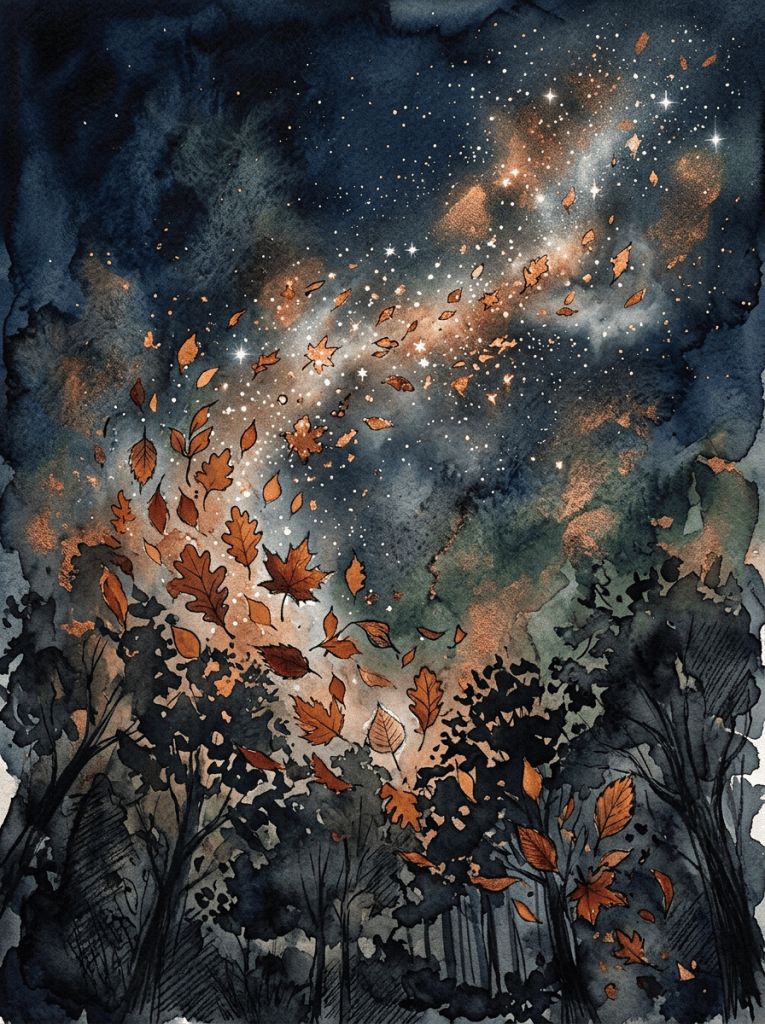
Autumn leaves drifting above a dark forest beneath a starry sky
Copper-colored autumn leaves drift through a glowing, star-filled woodland sky.

Stepping Into the Winter Months

Vetrnætr reminds us that darkness is not something to be feared; it is the soil in which new beginnings quietly wait. By taking time to honor your roots, listen to your intuition, and align with nature’s rhythm, you can enter the winter season grounded, protected, and inspired.

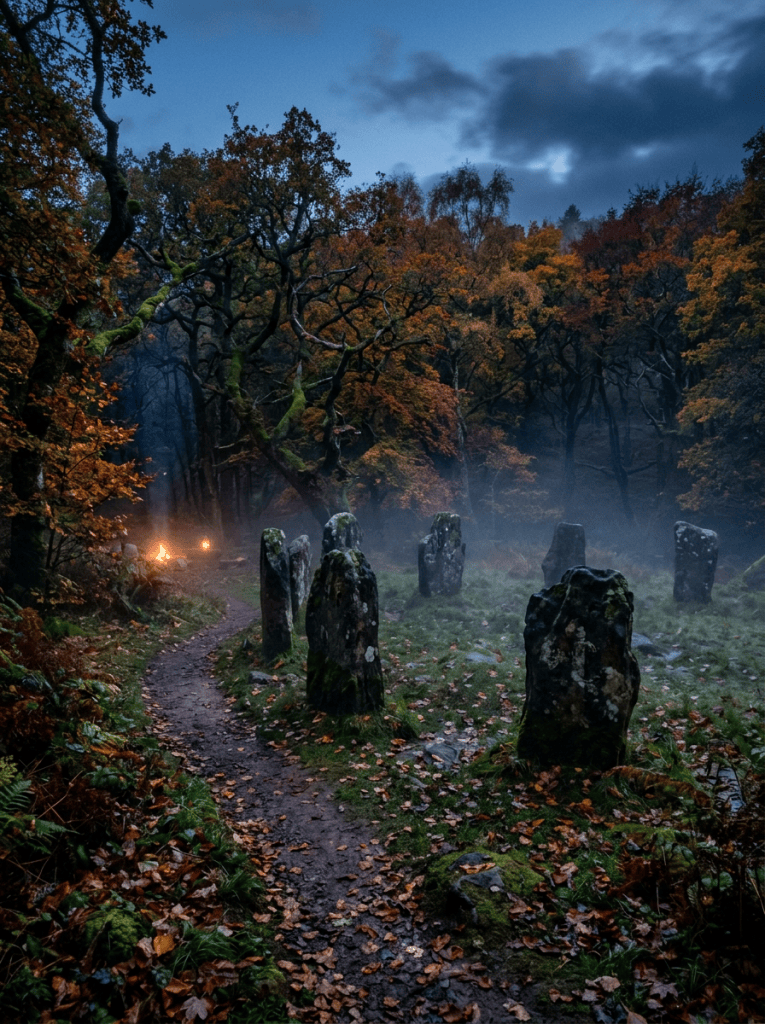
Beyond the Costume: Deconstructing Samhain, Liminality, and the Pagan New Year

When October 31st arrives, modern culture paints the night in plastic skeletons, jump scares, and neon orange lights. Halloween has become a commercial holiday synonymous with horror, spookiness, and things that go bump in the night.

But if you strip away the plastic and trace the roots back two thousand years to the pastoral landscapes of ancient Ireland, Scotland, and the Isle of Man, you discover a profound, highly sophisticated spiritual threshold: Samhain (pronounced SOW-in).

Misty autumn woodland path surrounded by moss-covered standing stones
A misty forest path winds through ancient standing stones beneath vivid autumn trees.

For the ancient Celts, Samhain wasn’t a night of terror. It was the Pagan New Year, a sacred pause in the wheel of time, and a quiet masterclass in the power of liminality.

The Celtic Calendar: Darkness Precedes the Light

To understand Samhain, you have to understand how the Celts measured time.

Unlike our modern Gregorian calendar—which starts the day at midnight and the year in January—the Celtic day began at sunset. Every cycle started in darkness. The dark was not viewed as inherently evil or dead; it was the fertile womb of creation. Just as a seed must sit in the dark earth before sprouting, the year had to begin in the dark half.

Samhain translates directly to “Summer’s End.” It marked the final harvest, the butchering of livestock for winter survival, and the turning of the key into the dark months. Because it stood precisely between the autumn equinox and the winter solstice, it was considered a day that belonged to neither the old year nor the new year.

It existed out of time.

The Power of Liminality: Being “In-Between”

In anthropology and esotericism, the word liminal comes from the Latin limen, meaning “threshold.” A liminal state is a space of transition—the coastline between land and sea, dusk between day and night, or the doorway between two rooms.

Samhain was the ultimate liminal threshold of the year.

Because the day was neither fully past nor fully future, the Celts believed the energetic structure of reality softened. The invisible boundary—often called “the veil”—between the physical world (Midgard/Earth) and the spiritual realm (the Otherworld) thinned.

  [ THE PHYSICAL REALM ]  <====== The Thin Veil ======>  [ THE OTHERWORLD ]
     (Living / Earth)            (Liminal Space)          (Ancestors / Spirit)
Candlelit rustic table with apples, bread, bowl, and autumn leaves by an open door
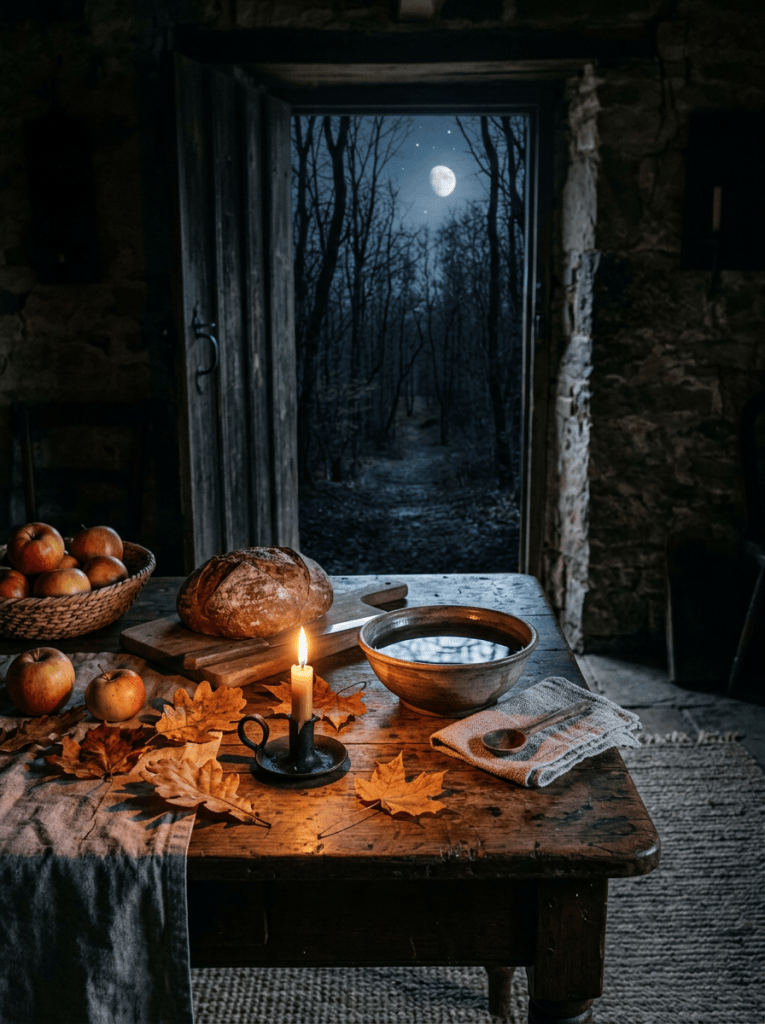
A candlelit rustic table sets a warm autumn scene against a moonlit forest.

Why the Celts Didn’t Fear the Spirits

Modern Halloween movies tell us that when the veil thins, monsters come through to harm us. But the ancient Celts had a vastly different, more integrated relationship with death and spirit.

To the Celts, the dead were not monstrous; they were family.

  • Ancestral Wisdom: The dark months of winter brought cold, hardship, and isolation. The Celts welcomed the spirits of their ancestors back to the hearth on Samhain because those spirits possessed the wisdom of the ages. They came seeking warmth, but they left behind guidance, comfort, and protection for the living.
  • The Dumb Supper: Families would set extra places at the dinner table, leave the doors unlocked, and keep the hearth fires burning bright. Food was shared, and quiet respect was paid.
  • Guising & Protection: What about the scary masks? The Celts did acknowledge that not every spirit coming through a thin veil was friendly. To protect themselves from mischievous nature spirits (Aos Sí) or disoriented souls, they wore simple costumes of animal skins or blackened their faces with hearth ash (a practice called guising). It wasn’t to look spooky—it was energetic camouflage to blend into the night.

The Modern Takeaway: Finding Comfort in the Threshold

We live in a culture that demands constant light, high output, and endless summer productivity. We are taught to fear the dark, fear stillness, and fear aging or death.

Samhain invites us to deconstruct that fear.

Standing on the threshold of winter doesn’t mean everything is dying; it means nature is taking a breath. When you look at Samhain through the lens of liminality, the thinning of the veil becomes an invitation to:

  1. Honor those who came before you: Acknowledge the lineage, wisdom, and hardships of your ancestors.
  2. Embrace your own “in-between” spaces: If you are currently in a transition period in your life—between jobs, relationships, or mindsets—remember that liminal space is where real transformation happens.
  3. Rest without guilt: Welcome the dark half of the year as a period of necessary rest, reflection, and quiet inner alchemy.