Beyond the Costume: Deconstructing Samhain, Liminality, and the Pagan New Year

When October 31st arrives, modern culture paints the night in plastic skeletons, jump scares, and neon orange lights. Halloween has become a commercial holiday synonymous with horror, spookiness, and things that go bump in the night.

But if you strip away the plastic and trace the roots back two thousand years to the pastoral landscapes of ancient Ireland, Scotland, and the Isle of Man, you discover a profound, highly sophisticated spiritual threshold: Samhain (pronounced SOW-in).
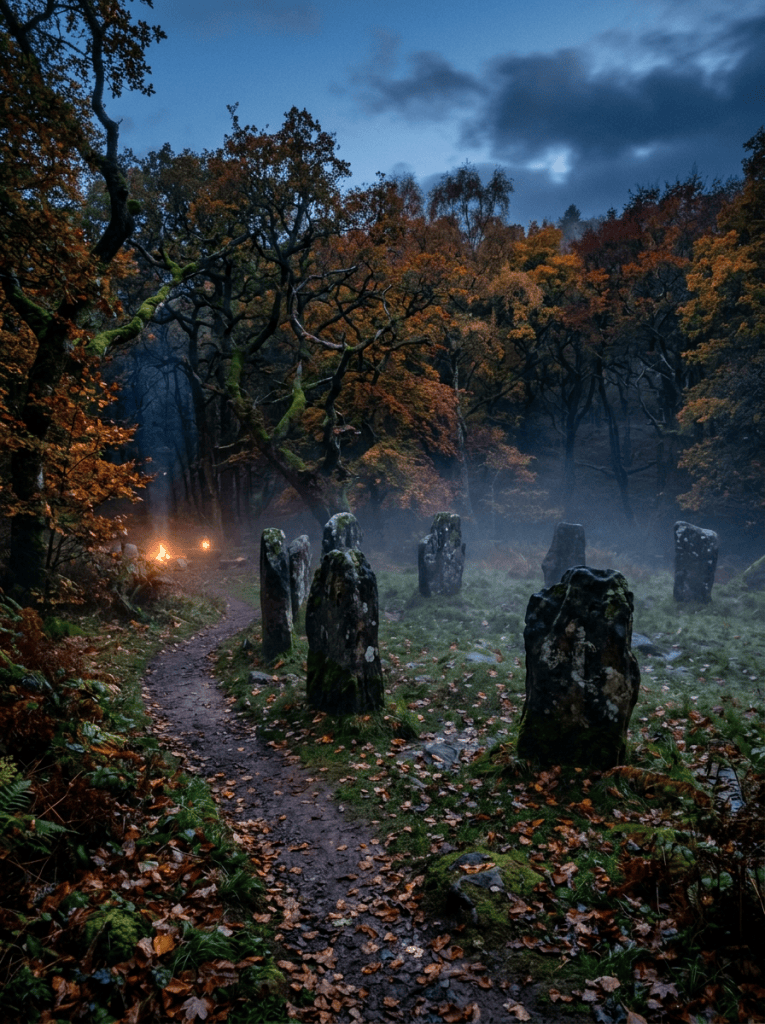
Misty autumn woodland path surrounded by moss-covered standing stones
A misty forest path winds through ancient standing stones beneath vivid autumn trees.

For the ancient Celts, Samhain wasn’t a night of terror. It was the Pagan New Year, a sacred pause in the wheel of time, and a quiet masterclass in the power of liminality.

The Celtic Calendar: Darkness Precedes the Light

To understand Samhain, you have to understand how the Celts measured time.

Unlike our modern Gregorian calendar—which starts the day at midnight and the year in January—the Celtic day began at sunset. Every cycle started in darkness. The dark was not viewed as inherently evil or dead; it was the fertile womb of creation. Just as a seed must sit in the dark earth before sprouting, the year had to begin in the dark half.

Samhain translates directly to “Summer’s End.” It marked the final harvest, the butchering of livestock for winter survival, and the turning of the key into the dark months. Because it stood precisely between the autumn equinox and the winter solstice, it was considered a day that belonged to neither the old year nor the new year.

It existed out of time.

The Power of Liminality: Being “In-Between”

In anthropology and esotericism, the word liminal comes from the Latin limen, meaning “threshold.” A liminal state is a space of transition—the coastline between land and sea, dusk between day and night, or the doorway between two rooms.

Samhain was the ultimate liminal threshold of the year.

Because the day was neither fully past nor fully future, the Celts believed the energetic structure of reality softened. The invisible boundary—often called “the veil”—between the physical world (Midgard/Earth) and the spiritual realm (the Otherworld) thinned.

  [ THE PHYSICAL REALM ]  <====== The Thin Veil ======>  [ THE OTHERWORLD ]
     (Living / Earth)            (Liminal Space)          (Ancestors / Spirit)
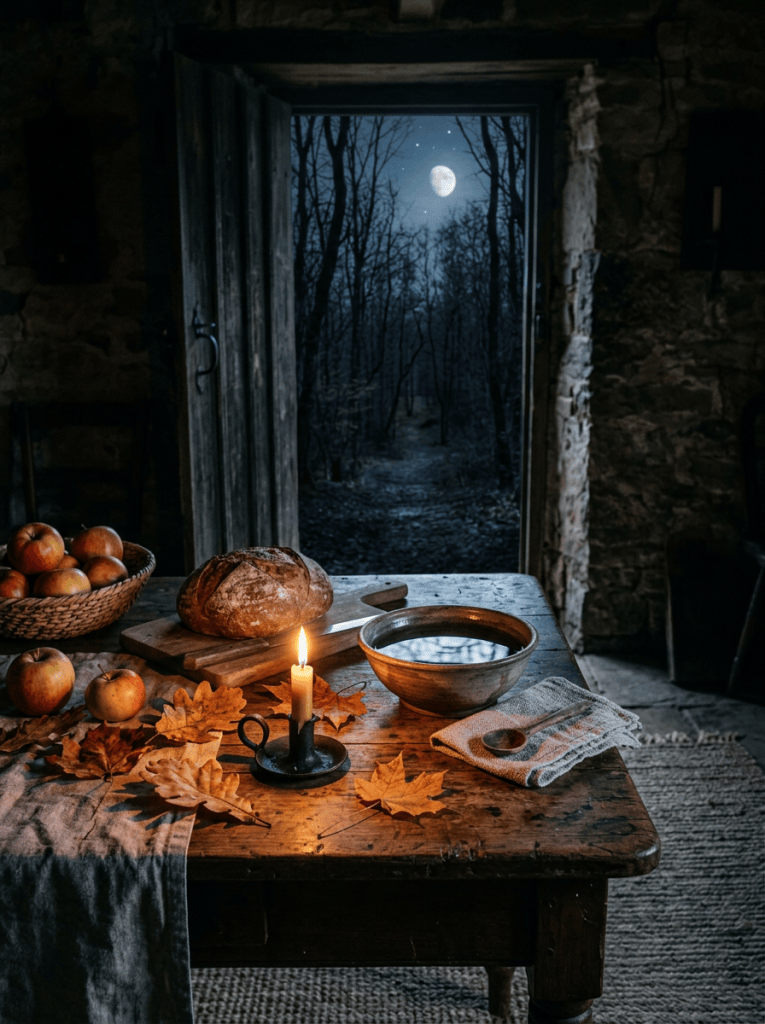
Candlelit rustic table with apples, bread, bowl, and autumn leaves by an open door
A candlelit rustic table sets a warm autumn scene against a moonlit forest.

Why the Celts Didn’t Fear the Spirits

Modern Halloween movies tell us that when the veil thins, monsters come through to harm us. But the ancient Celts had a vastly different, more integrated relationship with death and spirit.

To the Celts, the dead were not monstrous; they were family.

  • Ancestral Wisdom: The dark months of winter brought cold, hardship, and isolation. The Celts welcomed the spirits of their ancestors back to the hearth on Samhain because those spirits possessed the wisdom of the ages. They came seeking warmth, but they left behind guidance, comfort, and protection for the living.
  • The Dumb Supper: Families would set extra places at the dinner table, leave the doors unlocked, and keep the hearth fires burning bright. Food was shared, and quiet respect was paid.
  • Guising & Protection: What about the scary masks? The Celts did acknowledge that not every spirit coming through a thin veil was friendly. To protect themselves from mischievous nature spirits (Aos Sí) or disoriented souls, they wore simple costumes of animal skins or blackened their faces with hearth ash (a practice called guising). It wasn’t to look spooky—it was energetic camouflage to blend into the night.

The Modern Takeaway: Finding Comfort in the Threshold

We live in a culture that demands constant light, high output, and endless summer productivity. We are taught to fear the dark, fear stillness, and fear aging or death.

Samhain invites us to deconstruct that fear.

Standing on the threshold of winter doesn’t mean everything is dying; it means nature is taking a breath. When you look at Samhain through the lens of liminality, the thinning of the veil becomes an invitation to:

  1. Honor those who came before you: Acknowledge the lineage, wisdom, and hardships of your ancestors.
  2. Embrace your own “in-between” spaces: If you are currently in a transition period in your life—between jobs, relationships, or mindsets—remember that liminal space is where real transformation happens.
  3. Rest without guilt: Welcome the dark half of the year as a period of necessary rest, reflection, and quiet inner alchemy.

The Alchemist’s Kitchen: Apple Magic & A Simmer Pot for Protection & Abundance

There is a distinct kind of alchemy that happens in the home during autumn. As the air outside turns crisp and the evening darkness creeps in earlier, our focus naturally shifts back to the hearth—the ancient heart of the home.

While modern autumn decor often leans heavily into standard pumpkin spice, witches, folk magic practitioners, and home herbalists have long turned to a different sacred symbol of the fall harvest: the humble apple.

Long before it was a staple in fall baking, the apple was revered as a powerful tool for divination, protection, and transformation. Today, we’re stepping into the kitchen alchemist’s domain to explore the hidden symbolism of the apple and craft a slow, aromatic simmer pot designed to fill your home with warmth, abundance, and clear energy.

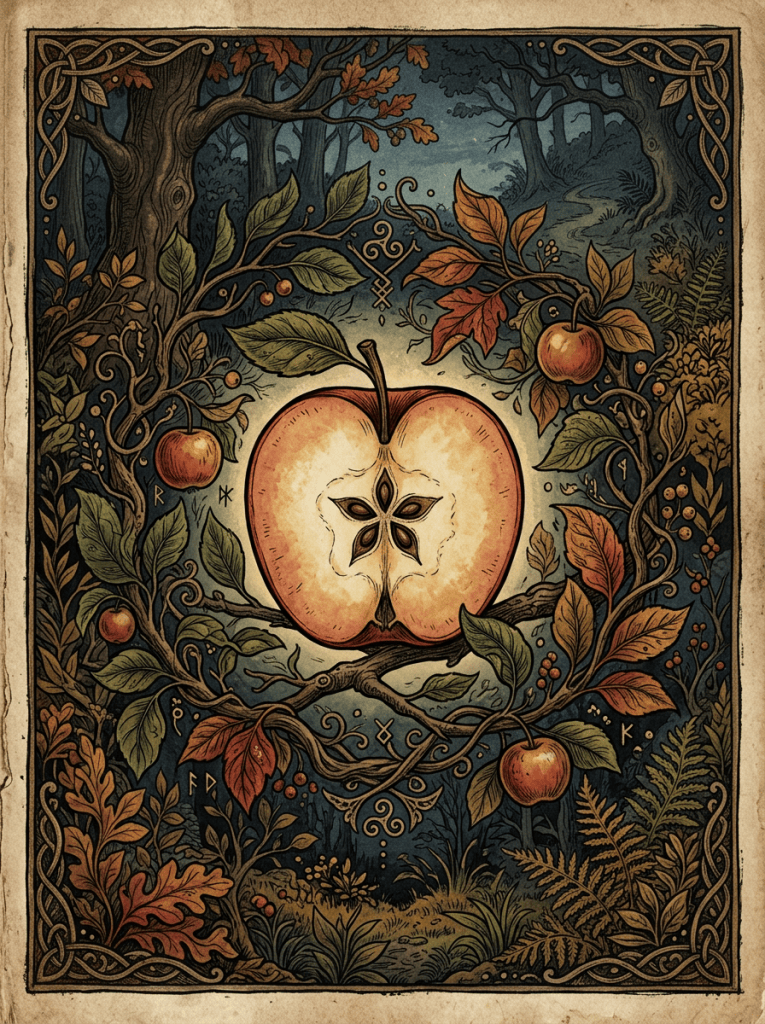
Sliced apple folklore illustration in dusky woodland

The Secret in the Core: Apple Folklore & Sacred Geometry

If you slice an apple horizontally through its center rather than vertically from stem to base, you’ll uncover one of nature’s most famous hidden secrets: a perfect, natural five-pointed star (pentagram) formed by the seed chambers.

In ancient Celtic and European traditions, this five-pointed star made the apple a symbol of divine protection, knowledge, and the five elements (Earth, Air, Fire, Water, and Spirit).

  • Avalon & The Otherworld: The legendary island of Avalon—a realm of healing, magic, and rebirth—translates literally to “The Island of Apples.” In myth, eating an apple from Avalon granted immortal wisdom and spiritual safe passage.
  • Apples as Wards: Hanging dried apple garlands across entryways or leaving fresh apples near doors was traditionally believed to ward off negative energy and welcome benevolent spirits.
  • Love & Divination: Old folk traditions used apple peels to predict future loves, tossing a continuous peel over the shoulder to see what initial it formed on the ground.

When you cook with apples in the fall, you aren’t just preparing food—you’re engaging with centuries of hearth magic.

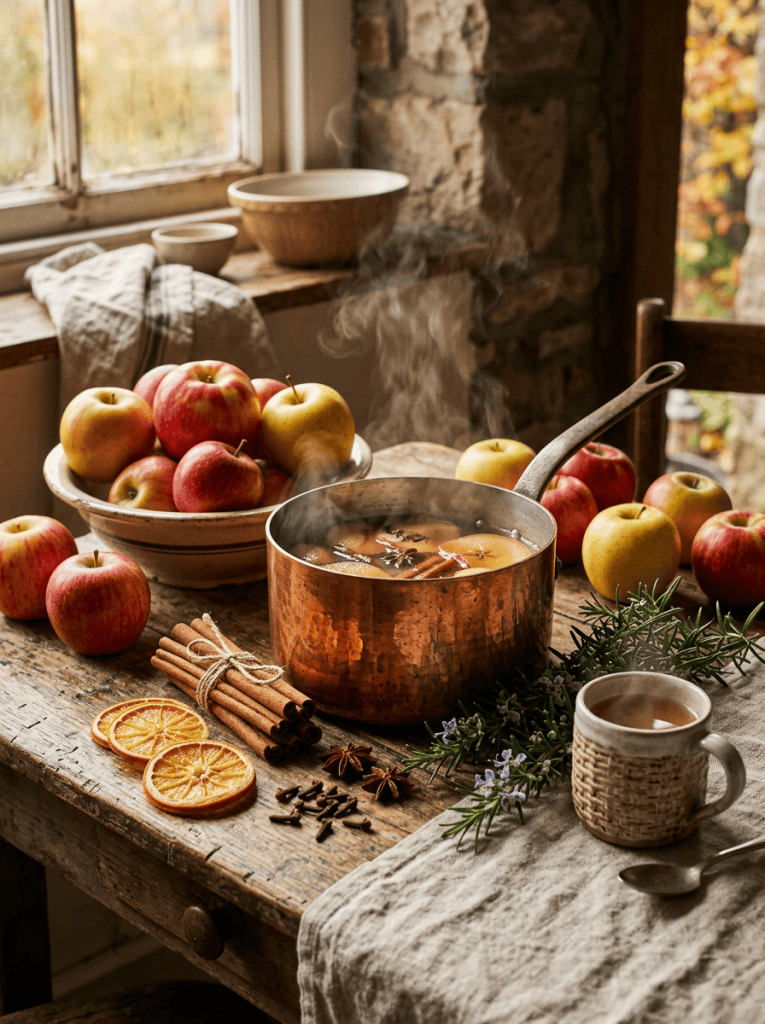
Autumn simmer pot still life with apples and spices

Kitchen Alchemy: The Abundance & Protection Simmer Pot

A simmer pot (sometimes called stove-top potpourri) is one of the easiest, most accessible ways to practice kitchen magic. As the water heats, the plant materials release their essential oils, filling your living space with rich aromas while broadcasting your intentions into your home.

This blend pairs the protective pentagram energy of the apple with warm, uplifting spices to draw in comfort, prosperity, and peace.

Ingredients & Their Spiritual Properties:

  • 1–2 Fresh Apples (or saved peels and cores): For protection, health, love, and heart-centered magic. Be sure to slice at least one horizontally to reveal the five-pointed star.
  • 2–3 Cinnamon Sticks: Known for raising spiritual vibrations, accelerating intentions, and attracting abundance and warmth.
  • 1 tablespoon Whole Cloves: A classic protective botanical used to drive away stagnant energy, banish gossip, and secure the home space.
  • 3–4 Whole Star Anise: Enhances psychic intuition, brings good fortune, and mirrors the star energy of the apple core.
  • 1 small Orange (sliced) or Dried Citrus: To bring the radiant energy of the sun into the darkening season, promoting joy and vitality.
  • Fresh Rosemary sprigs (Optional): For clarity, memory, and clearing away heavy atmosphere.
  • Filtered Water

Step-by-Step Simmer Pot Ritual

  1. Prepare Your Space: Clear off your stove or set up a small slow cooker. Take a slow, grounding breath as you gather your botanicals.
  2. Slice with Intention: As you slice your apple horizontally, pause to admire the five-pointed star in the center. Mentally set an intention for your home—such as peace, warmth, protection, or financial ease.
  3. Assemble the Pot: Place your ingredients into a medium pot or slow cooker. Cover them with water, leaving an inch or two at the top.
  4. Stir & Simmer: Bring the water to a gentle boil, then immediately lower the heat to a low simmer. As you stir the pot clockwise (the traditional direction for inviting positive energy), visualize the steam lifting away tension and filling your room with golden, protective light.
  5. Maintain the Brew: Keep an eye on your pot throughout the day, topping it off with warm water every couple of hours so the ingredients don’t burn.

Safety Note: Never leave a stove simmer pot unattended. If you need to leave the house or go to sleep, turn off the burner or use a low-heat slow cooker on a heat-safe counter.

Composting the Magic

When your simmer pot has given all its fragrance (usually after a day or two of gentle re-heating), do not simply toss the botanicals into the trash. Express gratitude to the plants for their energy and aroma, and return them to the earth by adding them to your garden compost or burying them beneath a yard tree.

By honoring the rhythm of the season in small, intentional ways, we turn everyday household tasks into moments of quiet magic and profound comfort.