Plates for the Past: The Comfort of an Ancestral Dumb Supper

As October draws to its close, the autumn air settles into a quiet, heavy stillness. The leaves have fallen, the sun dips below the horizon before dinner, and our homes become sanctuaries against the chill.

In modern pop culture, Halloween night is painted as frantic, loud, and spooky. But the older tradition of Samhain offers a very different rhythm: an invitation to slow down, dim the lights, and gather around the hearth.

One of the most powerful and comforting ways to honor this threshold night is through a practice known as a Dumb Supper (where “dumb” takes its traditional meaning of silent).

Far from being a terrifying seance, a Dumb Supper is a deeply peaceful, heart-centered meal. It is an act of sacred hospitality—a way to pull up an extra chair, set a plate for those who came before us, and nourish both the living and the dead.
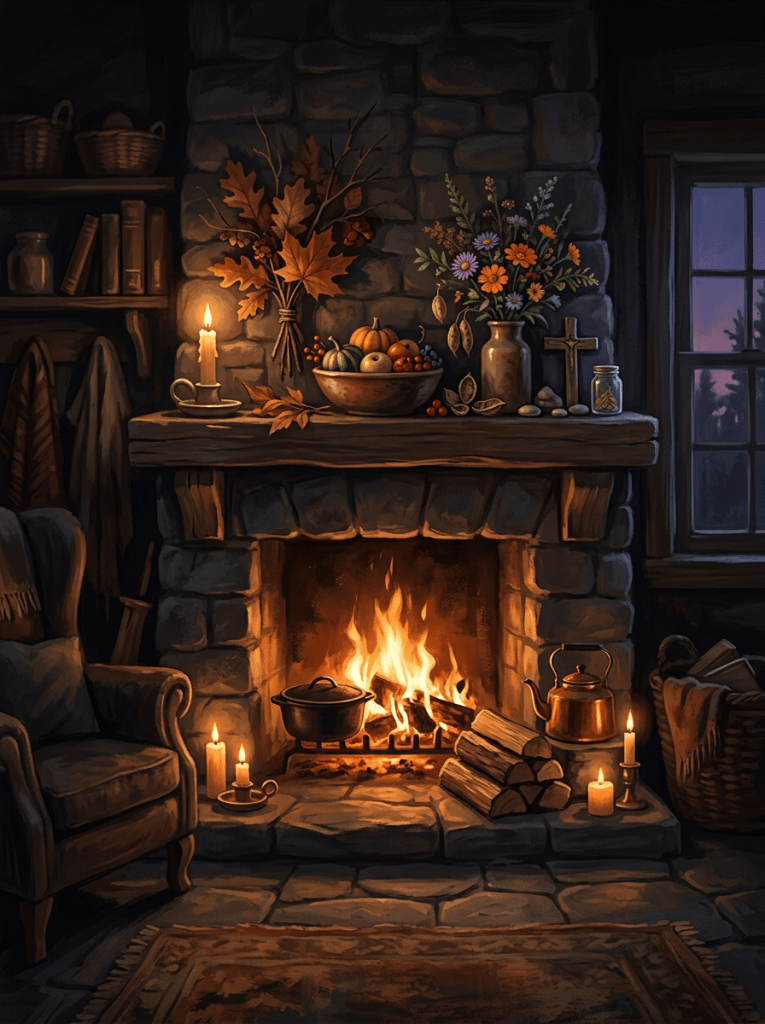
Cozy stone fireplace decorated with autumn leaves, candles, flowers, fruit, and a kettle
A glowing stone fireplace creates a welcoming autumn retreat filled with candles, harvest fruits, flowers, and rustic details.

The Anatomy of the Hearth Ritual

At its core, a Dumb Supper is a quiet feast held in total or near silence. In ancient Celtic and folk traditions, spirit was believed to travel on the wind and speak through quiet intuition. By hushing our everyday chatter, we create room to feel the presence of memory, love, and lineage.

It is not about summoning ghosts; it is about honoring the roots of your family tree—both known ancestors and the forgotten ones whose resilience made your existence possible.

Designing Your “Plates for the Past” Evening

To host your own peaceful ancestral meal, you don’t need elaborate tools or rigid ceremonial rules. You only need intention, warm light, and simple, nourishing food.

1. The Menu: Grounding Earth Foods

Choose warm, slow-cooked dishes that reflect the final harvest. Root vegetables that grow beneath the dark earth are naturally grounding and symbolic of deep roots.

  • Main: Roasted root vegetable stew (parsnips, carrots, potatoes, and garlic) or a rich mushroom pie.
  • Bread: Dark rye, soda bread, or a crusty sourdough served with salted butter.
  • Drink: Hot spiced apple cider, red wine, or dark herbal teas (like roasted dandelion root or elderberry).

2. The Ancestor Shrine & Setting the Table

Clear your dining space of modern distractions. Turn off overhead lights and phones, relying instead on candles, warm string lights, or a crackling fireplace.

Set the table as you normally would, but add one dedicated place setting at the head or center of the table—The Ancestor Plate.

  • Place a blank card, a photo of loved ones who have passed, or a simple white candle at this setting.
  • As you serve the meal, serve the Ancestor Plate first, placing small portions of each dish on their plate as an offering of gratitude.
                  [ ANCESTOR PLACE SETTING ]
             (Photo / Candle / First Served Plate)
                               │
       ┌───────────────────────┴───────────────────────┐
  [ Living Guest ]                               [ Living Guest ]
       └───────────────────────────────────────────────┘
                     (Silent / Candlelight)

The Flow of the Silent Supper

  1. The Entrance: Light the candles at the table. Before sitting down, take a collective deep breath to leave the noise of the outside world behind.
  2. The Quiet Meal: Eat the dinner in complete silence. Without speech, your senses heighten—you notice the warmth of the bowl, the rich scent of spices, the flicker of candle flame, and the comforting weight of being present in your home.
  3. The Unspoken Connection: Use this time to inwardly speak to your ancestors. Express gratitude for their endurance, ask for quiet wisdom during the coming winter, or simply hold their memory in your heart.
  4. Breaking the Silence with Storytelling: Once the meal is finished and the Ancestor Plate is cleared, break the silence with a soft chime or by blowing out a central candle. Now comes the cozy shift: pour hot drinks, gather near the hearth or comfortable seating, and share stories, memories, or family lore late into the evening.

Returning the Offering

After the supper, the food served on the Ancestor Plate is traditionally not eaten by the living. Because its subtle, energetic essence was offered to spirit, the physical food is returned to nature the following morning—placed under a tree or added to the compost as an act of reverence to the earth.

Holding space for those who came before isn’t about fear or sorrow; it is about remembering that we are part of a long, unbroken thread of human warmth.

Beyond the Costume: Deconstructing Samhain, Liminality, and the Pagan New Year

When October 31st arrives, modern culture paints the night in plastic skeletons, jump scares, and neon orange lights. Halloween has become a commercial holiday synonymous with horror, spookiness, and things that go bump in the night.

But if you strip away the plastic and trace the roots back two thousand years to the pastoral landscapes of ancient Ireland, Scotland, and the Isle of Man, you discover a profound, highly sophisticated spiritual threshold: Samhain (pronounced SOW-in).

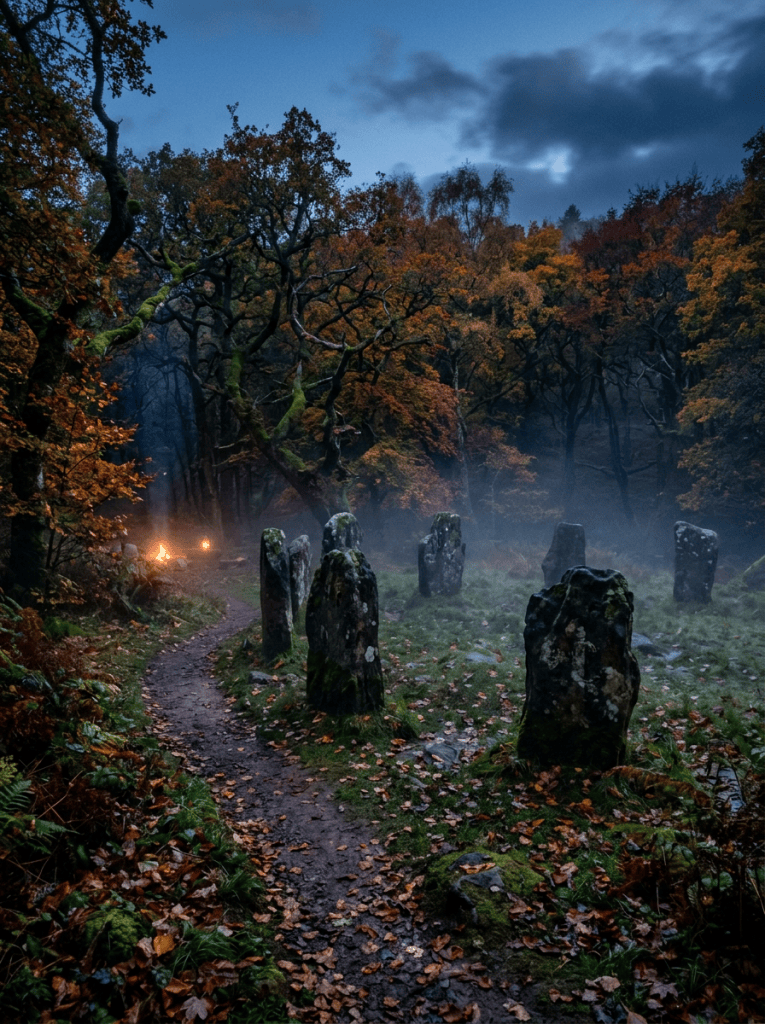
Misty autumn woodland path surrounded by moss-covered standing stones
A misty forest path winds through ancient standing stones beneath vivid autumn trees.

For the ancient Celts, Samhain wasn’t a night of terror. It was the Pagan New Year, a sacred pause in the wheel of time, and a quiet masterclass in the power of liminality.

The Celtic Calendar: Darkness Precedes the Light

To understand Samhain, you have to understand how the Celts measured time.

Unlike our modern Gregorian calendar—which starts the day at midnight and the year in January—the Celtic day began at sunset. Every cycle started in darkness. The dark was not viewed as inherently evil or dead; it was the fertile womb of creation. Just as a seed must sit in the dark earth before sprouting, the year had to begin in the dark half.

Samhain translates directly to “Summer’s End.” It marked the final harvest, the butchering of livestock for winter survival, and the turning of the key into the dark months. Because it stood precisely between the autumn equinox and the winter solstice, it was considered a day that belonged to neither the old year nor the new year.

It existed out of time.

The Power of Liminality: Being “In-Between”

In anthropology and esotericism, the word liminal comes from the Latin limen, meaning “threshold.” A liminal state is a space of transition—the coastline between land and sea, dusk between day and night, or the doorway between two rooms.

Samhain was the ultimate liminal threshold of the year.

Because the day was neither fully past nor fully future, the Celts believed the energetic structure of reality softened. The invisible boundary—often called “the veil”—between the physical world (Midgard/Earth) and the spiritual realm (the Otherworld) thinned.

  [ THE PHYSICAL REALM ]  <====== The Thin Veil ======>  [ THE OTHERWORLD ]
     (Living / Earth)            (Liminal Space)          (Ancestors / Spirit)
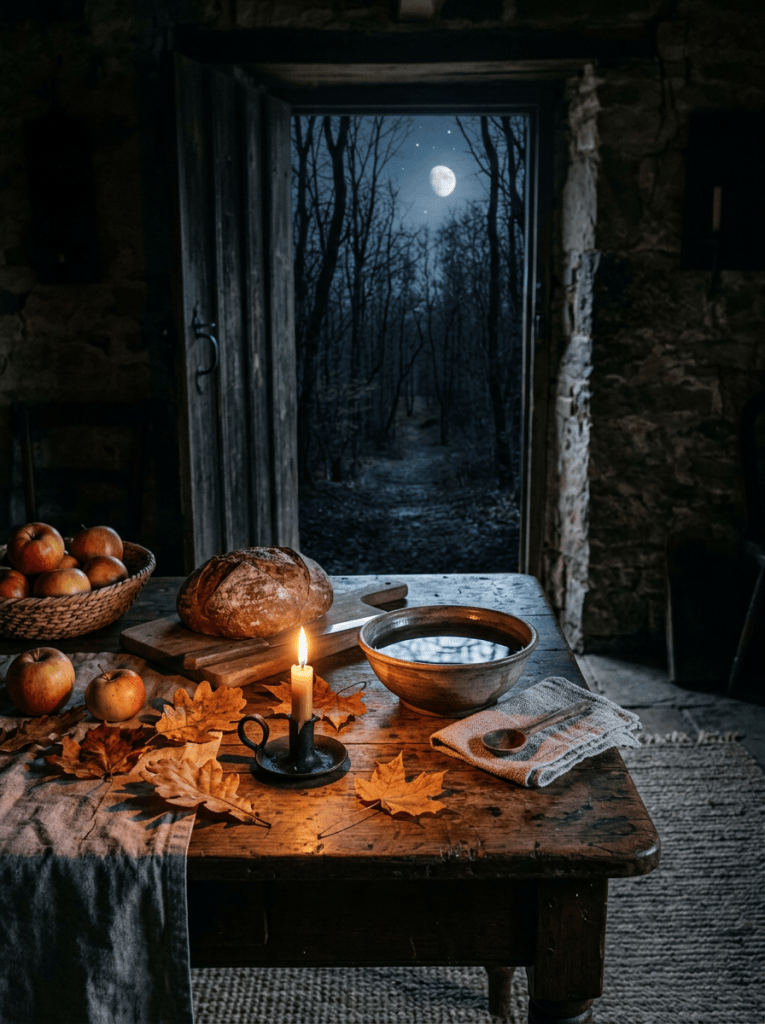
Candlelit rustic table with apples, bread, bowl, and autumn leaves by an open door
A candlelit rustic table sets a warm autumn scene against a moonlit forest.

Why the Celts Didn’t Fear the Spirits

Modern Halloween movies tell us that when the veil thins, monsters come through to harm us. But the ancient Celts had a vastly different, more integrated relationship with death and spirit.

To the Celts, the dead were not monstrous; they were family.

  • Ancestral Wisdom: The dark months of winter brought cold, hardship, and isolation. The Celts welcomed the spirits of their ancestors back to the hearth on Samhain because those spirits possessed the wisdom of the ages. They came seeking warmth, but they left behind guidance, comfort, and protection for the living.
  • The Dumb Supper: Families would set extra places at the dinner table, leave the doors unlocked, and keep the hearth fires burning bright. Food was shared, and quiet respect was paid.
  • Guising & Protection: What about the scary masks? The Celts did acknowledge that not every spirit coming through a thin veil was friendly. To protect themselves from mischievous nature spirits (Aos Sí) or disoriented souls, they wore simple costumes of animal skins or blackened their faces with hearth ash (a practice called guising). It wasn’t to look spooky—it was energetic camouflage to blend into the night.

The Modern Takeaway: Finding Comfort in the Threshold

We live in a culture that demands constant light, high output, and endless summer productivity. We are taught to fear the dark, fear stillness, and fear aging or death.

Samhain invites us to deconstruct that fear.

Standing on the threshold of winter doesn’t mean everything is dying; it means nature is taking a breath. When you look at Samhain through the lens of liminality, the thinning of the veil becomes an invitation to:

  1. Honor those who came before you: Acknowledge the lineage, wisdom, and hardships of your ancestors.
  2. Embrace your own “in-between” spaces: If you are currently in a transition period in your life—between jobs, relationships, or mindsets—remember that liminal space is where real transformation happens.
  3. Rest without guilt: Welcome the dark half of the year as a period of necessary rest, reflection, and quiet inner alchemy.