We all know breakfast is the most important meal of the day, but let’s be honest: mornings are chaotic. Between catching the bus, remembering homework, and getting out the door, breakfast often gets left behind.
In the Child Nutrition Services department, we see the direct link between a good morning meal and academic focus. But we also know that expecting every student to arrive 20 minutes early for a traditional sit-down meal in the cafeteria isn’t always realistic.
That is why we are redefining what school breakfast looks like. By breaking down the morning barrier with alternative serving models, we meet students where they are. We are moving beyond the standard bowl of cereal toward protein-rich options—think savory breakfast bowls, warm wrapped sandwiches, and drinkable yogurts—that keep students full until lunch. When we make breakfast accessible and appealing, we give our kids the brain food they need to tackle the day.
Young students enjoying a nutritious breakfast together in their classroom
Implementation Guide: Expanding Breakfast Access
Moving breakfast out of the cafeteria increases participation exponentially. Here is how to make alternative models work:
Breakfast in the Classroom (BIC):
The Setup: Meals are delivered to classrooms via insulated cooler bags right before the bell rings.
The Trick: Get custodial and teacher buy-in early. Provide dedicated trash cans for food waste and supply classrooms with wipes to ease concerns about messes.
Grab-and-Go Carts:
The Setup: Mobile kiosks placed at high-traffic entryways or near the gym.
The Trick: Speed is everything. Bundle items (e.g., a muffin, cheese stick, and juice) into clear bags so students can grab a fully reimbursable meal without slowing down the hallway traffic.
Second Chance Breakfast:
The Setup: Serving breakfast after first period for students who weren’t hungry right when they woke up or who arrived late.
The Trick: Utilize the passing period. Keep the menu highly portable (smoothies, breakfast burritos) so students can eat on their way to second hour.
When the morning bell rings in Public Schools, our students bring more than just their backpacks into the classroom—some bring the invisible weight of food insecurity.
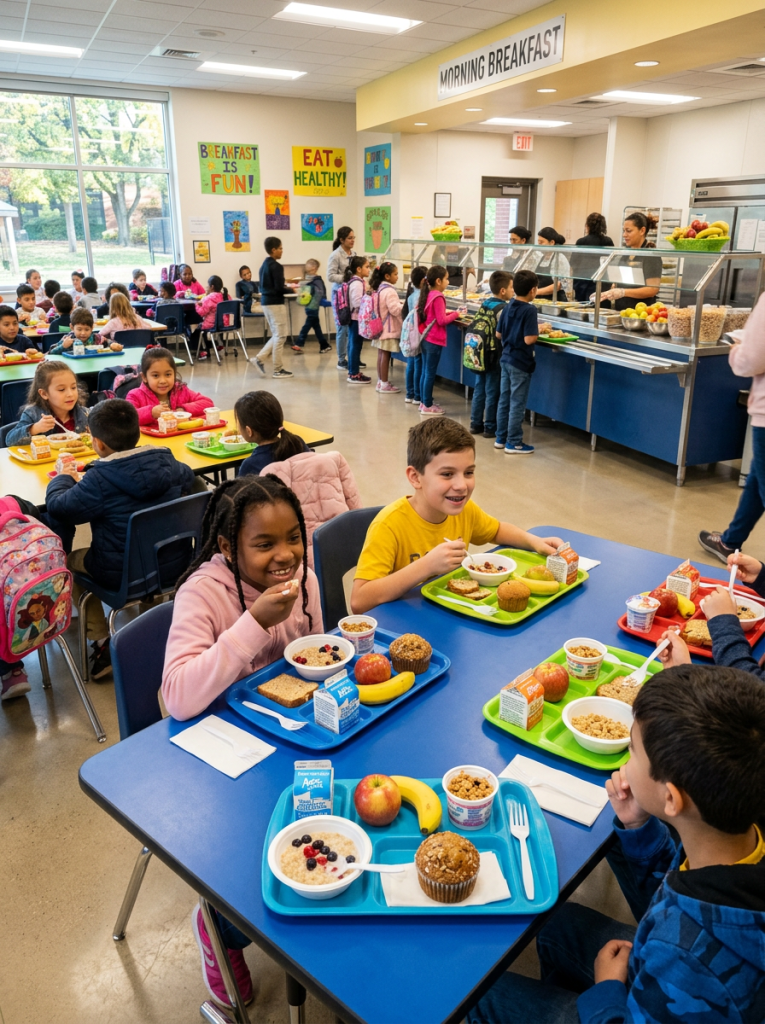
Kids enjoy a nutritious morning breakfast together in a cheerful school cafeteria
As a community, we often think of hunger as something happening far away, but the reality is that the weekend gap is a very real hurdle for many local families. For some of our students, the meals they receive in our cafeterias are the most reliable, nutrient-dense food they will eat all day.
School meals are about so much more than convenience. Programs that provide universal free meals or community-wide support completely change the culture of the cafeteria. They eliminate the stigma of “who can pay” and “who can’t,” turning the lunchroom into a place of community rather than division. When we ensure every child has access to a balanced meal, we aren’t just feeding them—we are leveling the playing field. A fed student is ready to learn, ready to engage, and ready to thrive.
Action Plan for Nutrition Teams: Bridging the Hunger Gap
A backpack filled with an assortment of nutritious snacks and drinks for outdoor adventures
Implementing broader food security measures requires community buy-in and strategic planning. Here is how schools can take action:
Maximize CEP Eligibility: The Community Eligibility Provision (CEP) allows schools in low-income areas to serve breakfast and lunch at no cost to all enrolled students. Work with your state agency to regularly pull direct certification data (SNAP, Medicaid) to ensure your district maximizes its claiming percentages.
Launch a “Share Table”: Set up a designated station where students can return whole, unbitten, factory-sealed items (like milk cartons, string cheese, or whole fruit) they choose not to eat. Other students who are still hungry can take from this table, reducing both food waste and afternoon hunger.
Establish a Weekend Backpack Program: Partner with a local food bank (like Feeding America) or community sponsors to discreetly slip bags of non-perishable food into the backpacks of vulnerable students on Friday afternoons.
Destigmatize the Line: If universal free meals aren’t possible, ensure all students go through the same line and use the same point-of-sale system (like a PIN pad or ID scan) so that free/reduced status is completely invisible to peers.
Sunlit bedroom corner featuring a bedside table with art and a cup of coffee
To celebrate, I’m sharing my new favorite birthday ritual that anyone can borrow. I call it The Knockout Year Routine. If it’s your special day, give this a try:
The Morning Shadowbox: Start the day by throwing a few combinations in the mirror to wake up your nervous system. (Bonus points if you play Survivor’s “Eye of the Tiger” — which happens to be the #1 Billboard song the exact week I was born! 🥊)
The Snuggle & Story: Carve out 20 minutes of quiet time for a good book, preferably with a pug curled up in your lap.
The Victory Feast: Treat yourself to your absolute favorite food without a single second thought. You’re the undisputed champ today!
Speaking of being born on July 20 the year of my birth… the universe was doing some pretty cool things that day. There was an actual partial solar eclipse across the Northern Hemisphere! I like to think it was the cosmos winking at my arrival. 🌒
And before I sign off to go celebrate, I’ll leave you with a quick joke:
Why did the pug refuse to get in the boxing ring?Because he was already completely out of breath! 🐶💨
While all three water signs share a baseline of deep intuition, rich emotional lives, and incredible empathy, they express their water element in entirely different ways.
The easiest way to understand the difference is to look at the state of the water they represent.
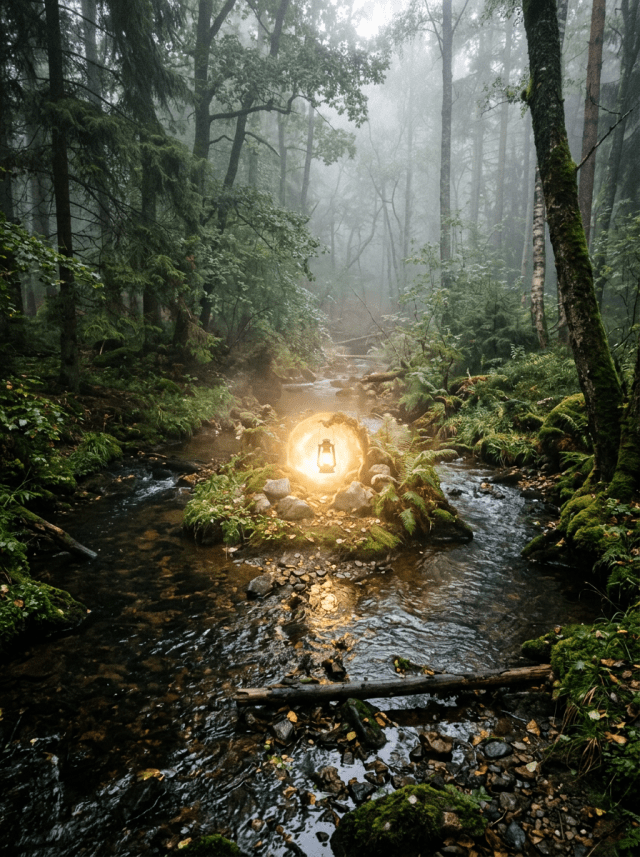
A glowing lantern illuminates a misty forest stream, creating a magical ambiance.
The Water Signs at a Glance
The variations between them come down to their modality (how they operate and move through the world) and their planetary rulers (the celestial bodies that flavor their personality).
Sign
Modality
Planetary Ruler
The Water Analogy
Core Focus
Cancer
Cardinal (The Initiator)
The Moon
A refreshing, protective stream
Emotional security, home, nurturing, and roots
Scorpio
Fixed (The Stabilizer)
Pluto & Mars
A deep, mysterious, underground well
Transformation, power, intimacy, and truths
Pisces
Mutable (The Adapter)
Neptune & Jupiter
The vast, boundless, misty ocean
Spirituality, dreams, artistic expression, and unity
1. Cancer: The Protective Stream
Because Cancer is a cardinal sign, it likes to take action and build things. For Cancer, that means building a secure emotional foundation. They use their emotional intelligence to protect the people they love and create spaces that feel entirely safe.
The Vibe: High-level intuition used for nesting, caretaking, and memory-keeping.
If they were a room: A candle-lit living room full of plush pillows, framed family photos, and the smell of fresh baking.
2. Scorpio: The Deep Well
Scorpio is a fixed sign, meaning their emotional energy is concentrated, intensely focused, and fiercely loyal. Scorpio isn’t interested in surface-level small talk; they want to dive straight into the deep end of the human psyche. They look for hidden motives, secrets, and absolute truth.
The Vibe: Hypnotic magnetism, absolute loyalty, and an all-or-nothing approach to relationships.
If they were a room: A hidden, soundproof library behind a bookshelf, filled with ancient mysteries and locked diaries.
3. Pisces: The Boundless Ocean
A calm ocean beach under a pastel-colored sunset sky
Pisces is a mutable sign, making them the chameleons of the water signs. Ruled by Neptune, the planet of dreams and illusions, Pisces has no emotional boundaries. They easily absorb the feelings of everyone in the room, which makes them incredibly empathetic but also prone to needing solo time to decompress.
The Vibe: Mystical, highly artistic, daydream-heavy, and deeply spiritual.
If they were a room: An art studio with floor-to-ceiling windows looking out at a foggy coastline, music playing softly in the background.
Summary: Cancer seeks to nurture and protect emotions, Scorpio seeks to probe and transform emotions, and Pisces seeks to transcend and merge emotions with the universe.
To understand your emotional blueprint, you have to look at the relationship between your Sun sign and your Moon sign.
Think of your birth chart as a play: if your Sun sign is the lead actor on stage (who you are learning to become and how you shine), your Moon sign is the director behind the scenes, running the lighting, the mood, and the gut reactions.
When your Moon is in a Water sign (Cancer, Scorpio, or Pisces), your emotional world operates on a completely different frequency than your outer personality.
Sun vs. Moon: The Core Dynamic
Your Sun Sign (Your “Outer” Self): This is your conscious ego. It represents your active energy, your goals, and how you express yourself to the world.
Your Moon Sign (Your “Inner” Self): This is your subconscious. It is how you react when you are startled, how you self-soothe, and what you need to feel emotionally secure. Many people only see your Moon sign when they get close to you.
Having a Water Moon means that no matter how logical, loud, or practical your Sun sign is, your default setting is deep feeling. You don’t just think about things; you feel them in your body first.
Vibrant glowing swirls creating an abstract pattern of fluid energy.
The Three Water Moon Blueprints
Every Water Moon experiences the world through a lens of high sensitivity, but how they process and protect those feelings varies wildly:
🦀 Cancer Moon: The Nurturing Harbor
In astrology, the Moon is “at home” (in domicile) in the sign of Cancer. If you have this placement, your emotional intelligence is incredibly refined.
How you process emotions: You experience them like shifting tides. You might feel joy, nostalgia, and melancholy all in the span of an hour.
How you self-soothe: You need a physical sanctuary (your “shell”). Cooking a warm meal, nesting in a cozy bedroom, or spending quiet time with a few trusted loved ones is how you reset.
The Blueprint: You find safety in comfort, familiarity, and maternal energy.
🦂 Scorpio Moon: The Deep Trench
Scorpio is a sign of extremes, and when the Moon is here, emotions are felt with intense, almost volcanic passion. You are highly protective of your inner world and rarely let people in immediately.
How you process emotions: You feel everything deeply but quietly. You possess an internal “lie detector” and can instantly read the hidden motives of others.
How you self-soothe: You need privacy and psychological depth. You process feelings by diving into them completely—listening to intense music, journaling, or engaging in deep, vulnerable conversations where nothing is held back.
The Blueprint: You find safety in absolute truth, loyalty, and emotional control.
🐟 Pisces Moon: The Endless Sponge
Because Pisces has no natural boundaries, a Pisces Moon is the ultimate emotional chameleon. You don’t just empathize with other people’s pain—you literally absorb it into your own system.
How you process emotions: You experience feelings as a vast, misty landscape. It can sometimes be hard for you to distinguish between your own feelings and the energy of the room you just walked into.
How you self-soothe: You need a healthy escape. Creative expression (art, writing, music), meditation, being near the water, or simply daydreaming is crucial to clearing your “emotional sponge.”
The Blueprint: You find safety in spiritual connection, creative release, and ultimate empathy.
The Sun-Moon Clash:
If you have a fiery Sun (like Leo or Aries) but a Water Moon, you might feel a constant tug-of-war. Your outer self wants to charge forward and be bold, while your inner self is quietly whispering, “Wait, let’s go home and process this first.” Learning to honor both is the key to cosmic balance.
Grab your favorite cozy blanket, brew a warm cup of chamomile, and let your feelings flow — Cancer season is officially here.
A crab moves along a moonlit beach under a starry night sky
Running from June 21 to July 22, this period marks a distinct shift in the celestial energy. After the chaotic, fast-paced social butterfly vibes of Gemini season, Cancer arrives like a warm hug, gently nudging us to slow down, head home, and reconnect with our innermost selves.
Whether you have Cancer placements in your birth chart or you’re just trying to navigate the emotional waters of the next few weeks, here is everything you need to know about the season of the Crab, complete with a cozy ritual to try.
4 Fun Facts About the Sign of the Crab
To understand Cancer energy, you have to look at what makes this archetype tick. Here are a few cosmic secrets about our favorite cardinal water sign:
Ruled by the Moon: While most zodiac signs are ruled by planets, Cancer is ruled by our closest celestial neighbor: the Moon. Because the Moon governs our emotions, intuition, and subconscious, Cancers are incredibly sensitive to the shifting tides of energy around them.
The Protective Shell: The Crab isn’t just a cute symbol; it represents the classic Cancer dynamic. Cancers often sport a “hard shell” of self-protection when you first meet them, but underneath, they possess one of the softest, most nurturing hearts in the entire zodiac.
Masters of Nostalgia: If you need someone to remember a obscure memory from ten years ago, ask a Cancer. Linked to the Fourth House of home and heritage, they are the memory-keepers of the zodiac, deeply connected to history, family, and the past.
Cardinal Water: People often mistake water signs for being passive, but Cancer is a cardinal sign. This means they are initiators. They don’t just feel their feelings; they use emotional intelligence to lead, protect, and build secure spaces for the people they love.
The “Cosmic Cup” Ritual (Anyone Can Do This!)
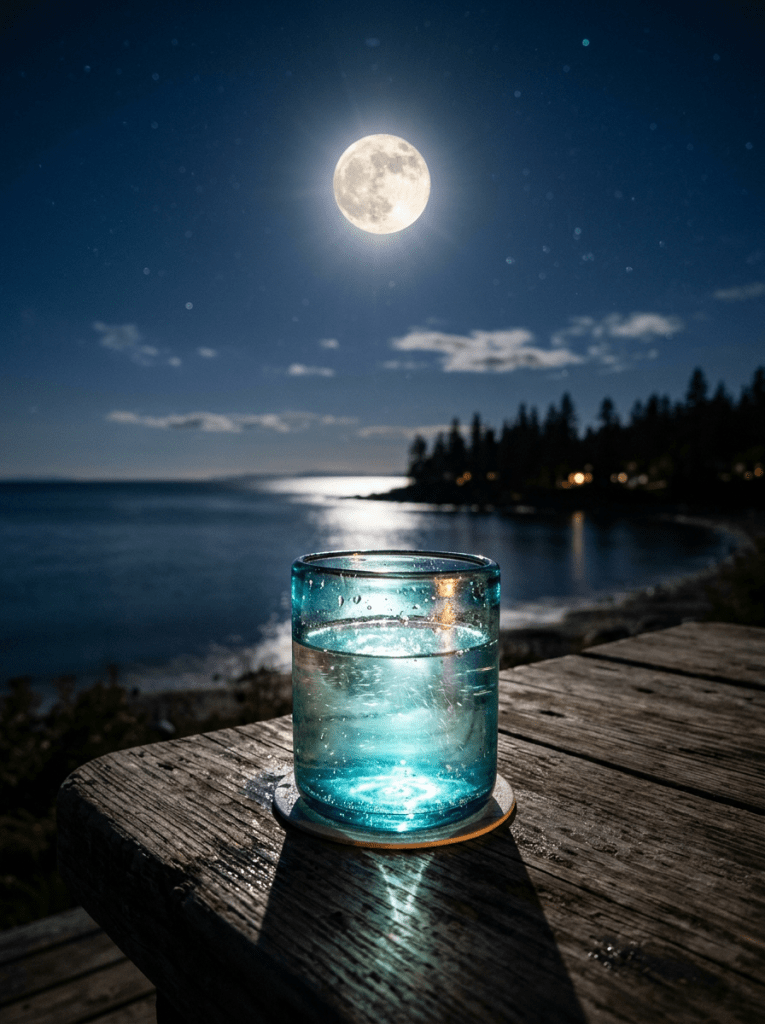
A glowing glass of water on a wooden table under a full moon by the coast
Because Cancer is a water sign ruled by the Moon, water is the perfect medium for a simple, nurturing ritual. This quick practice is designed to help you release emotional weight and “charge” yourself with comfort and security.
1.Choose Your Vessel:Prerequisite.
Find a favorite mug, cup, or glass. It should be something that feels comforting to hold. Fill it with water, herbal tea (like chamomile or mint), or warm lemon water.
2.Whisper Your Intention:2 minutes.
Hold the cup in both hands. Close your eyes and take three deep breaths. Think of one quality you want to bring into your life right now (e.g., peace, protection, self-love, or clarity). Speak that word directly into the water, imagining the liquid absorbing that specific frequency.
3.Charge It Under the Moonlight:Optional, 10 minutes.
If it’s evening, set your cup on a windowsill where it can catch the moonlight. Let it sit for a few minutes to metaphorically soak up that intuitive, gentle lunar energy.
4.Drink and Integrate:3 minutes.
Slowly sip the water. As you swallow, visualize that intention filling up your entire body, starting from your chest and moving down to your fingertips and toes. You are literally digesting your own magic.
A Quick Reminder for the Season:
“Crying is not a sign of weakness; it’s a sign of a high-functioning heart. Don’t be afraid to let the emotional tides roll in and out this month.”
Happy Cancer season! Let yourself feel, rest up, and take care of your inner sanctuary.













You must be logged in to post a comment.