Mabon: The Art of the Sacred Pause & The Descent of Persephone

There is a distinct moment in late September when the light shifts. The harsh, expansive glare of summer softens into a golden, cinematic glow, and the shadows grow just a little bit longer.

This is the Autumn Equinox, known in many Pagan traditions as Mabon.

Astronomically, it is a moment of perfect equilibrium—a fleeting day where light and dark hold equal space across the earth. Spiritually, it is a threshold. It is the time of the “Second Harvest.” While Lughnasadh in August celebrated the first grain, Mabon asks us to harvest the fruits of our internal labor. It is a time to look at what we planted in the spring and ask: What has come to fruition? And what needs to be composted?

To truly understand the energy of the Autumn Equinox, we have to look past the cozy sweaters and pumpkin patches, and look toward one of the most misunderstood archetypes of the ancient world: Persephone.

Close-up of a split pomegranate revealing juicy red seeds, with whole pomegranates and scattered seeds in a dark, glossy background.

The Mythic Blueprint: Reframing the Descent

In the traditional Greek myth, Persephone is the maiden of spring, abducted by Hades and dragged into the Underworld. Because she eats the seeds of a pomegranate while there, she is bound to spend half the year in the dark, causing winter on Earth.

For centuries, this was taught as a story of victimhood. But esoteric traditions view myths not as historical events, but as psychological blueprints.

When we look at Persephone through the lens of inner alchemy, the story shifts. Persephone wasn’t just a captive; she became the Queen of the Underworld. Her descent represents the necessary journey we must all take into our own subconscious. You cannot have the limitless outward growth of summer forever without depleting the soil. True power requires us to go inward, face the dark, and integrate our shadow.

Open journal reading “Equinox Autumnal balance seeds, seeds” beside a candle and berries
An open equinox journal, candle, berries, and natural objects create a peaceful autumn ritual in the forest.

The Equinox & Shadow Work

Mabon is the doorway to this descent. As the wheel of the year turns toward winter, nature begins to pull its energy down into the roots. We are asked to do the same.

This is the season for Shadow Work. Coined by Carl Jung, the “shadow” consists of the parts of ourselves we have repressed or hidden—our fears, our unhealed wounds, our societal conditioning. Mabon teaches us that the dark is not something to be feared. The dark is the womb. It is the fertile soil where transformation happens.

When we consciously step into the darker half of the year, we are taking back our power, just as Persephone did. We are choosing to pause, reflect, and sit with our whole selves—both the light and the dark.

3 Ways to Practice the Sacred Pause

If you want to honor the Equinox and lean into this transitional energy, try incorporating these simple practices:

1. The Pomegranate Meditation

Purchase a pomegranate and slice it open. Before eating the seeds, sit with them. In esoteric tradition, seeds represent potential locked in darkness. As you eat the seeds, set a clear intention for what you want to nurture in your own “underworld” (your subconscious or inner life) during the winter months.

2. The Light & Dark Audit (Journaling)

Grab your journal and draw a line down the middle of the page. On the left side, list your “Sun” elements: what have you actively achieved, grown, or expressed outwardly this year? On the right side, list your “Shadow” elements: what feels heavy, unresolved, or in need of deep rest? Acknowledge both sides with equal gratitude.

3. Somatic Grounding

Your body feels the seasonal shift even if your conscious mind is distracted. Incorporate grounding movements into your routine. Slow, deliberate Pilates routines or Yin Yoga poses that focus on the root chakra and lower body are perfect right now. Breathe the crisp autumn air into your lungs, and as you exhale, visualize sending your roots deep into the earth.

Mabon is your invitation to stop producing and start integrating. The veil is beginning to thin, the nights are getting longer, and the earth is preparing to rest. Give yourself permission to do the same.

The Art of Walking Meditation: Simple ways to ground yourself when you can’t sit still

We’ve all been told that meditation requires sitting in silence, cross-legged, with a perfectly quiet mind. But what happens when your mind is racing and your body simply refuses to sit still?

Trying to force stillness can sometimes create more tension than peace. That’s where walking meditation comes in. It bridges the gap between movement and mindfulness, allowing you to anchor your attention while keeping your body in motion.

If traditional seated meditation feels restrictive, here is how you can use simple movement to ground yourself anytime, anywhere.

Hiker with backpack walking along a misty forest trail
A lone hiker follows a damp woodland trail through softly glowing morning mist.

What is Walking Meditation?

At its core, walking meditation is simply the practice of being intentionally aware of your body and surroundings as you move. Instead of walking to reach a destination, the walking itself is the destination. You aren’t checking your phone, listening to a podcast, or rushing to the next errand—you are simply present with every step.

4 Simple Steps to Start Your Practice

  • 1. Set a Purposeful Pace: Slow down slightly from your normal walking speed. You don’t need to move in slow motion, but slowing your pace helps shift your nervous system out of autopilot.
  • 2. Anchor in Physical Sensations: Focus your attention on the bottom of your feet. Notice the shift in weight from heel to toe, the contact with the ground, and the subtle rhythm of your legs moving. When your mind drifts to your to-do list, gently bring your focus back to the physical sensation of stepping.
  • 3. Sync Your Breath with Your Steps: Match your breathing to your movement. For example, take three steps for every inhale, and three steps for every exhale. This gives your mind a secondary anchor to rest on.
  • 4. Engage Your Senses: Broaden your awareness to what is around you without judgment. Notice the temperature of the air on your skin, the sounds nearby, or the movement of light around you. Observe, acknowledge, and let it pass.

How to Fit It Into Your Day

You don’t need a secluded nature trail to practice. A hallway at work, a quick trip to the mailbox, or a ten-minute loop around the block all work perfectly.

Next time you feel restless or overwhelmed, step away from your desk or routine. Take ten deliberate, mindful steps, and notice how quickly your energy grounds itself.

Grounded & Ready: A Back-to-School Mindfulness Guide for Teachers and Students

The start of a new school year brings an undeniable buzz of excitement, but it also arrives with a heavy wave of sensory overload, anticipation, and first-day jitters. Whether you are standing at the front of the classroom or sitting at a desk, transitioning from the open space of summer to the structured rhythm of the school year requires an internal recalibration.

Students collaborating at tables in a vibrant classroom with abstract wall art and large windows
Students engage in group work and discussions in a bright, colorful classroom

Mindfulness doesn’t have to mean sitting on a cushion in total silence for twenty minutes. In a busy school environment, the most effective practices are short, physical, and easy to weave directly into the school day.

Here is a practical guide to back-to-school mindfulness—featuring grounding rituals for teachers before the bell rings, and quick, engaging exercises to help students reset and focus during class.

Part 1: Educator Realignment (Practices for Teachers Before the Bell)

Hands tracing a star shape engraved on a stone slab beside a terracotta pot with green succulent
Hands carving a star into a garden stone near a potted succulent

Before you can create a calm, regulated atmosphere for twenty-plus students, your own nervous system needs a solid anchor. Use these micro-practices during those quiet morning minutes before the hallways fill with noise.

1. The “Threshold Reset”

Before you turn the handle to enter your classroom each morning, pause with your hand on the doorframe.

  • Take one deep breath in through your nose, exhaling slowly through your mouth.
  • Mentally set an intention for the space you are entering (e.g., “In this room, we move with patience today” or “I am steady, present, and capable”).
  • Cross the threshold consciously. Let the physical act of walking into the room signify dropping morning commute stress or home distractions outside the door.

2. Desk-Anchored Box Breathing

During morning prep, sit at your desk with both feet flat on the floor and hands resting on your thighs. Box breathing immediately signals your nervous system to down-regulate cortisol levels.

  • Inhale through your nose for 4 counts.
  • Hold your breath at the top for 4 counts.
  • Exhale steadily through your mouth for 4 counts.
  • Hold at the bottom for 4 counts.
  • Repeat for 3 to 4 rounds (takes less than 2 minutes).

3. Senses & Sound Check

Before the students arrive, stand in the middle of your empty classroom. Close your eyes and notice three physical sensations: the weight of your feet on the floor, the temperature of the air, and the feeling of your breath in your chest. Taking ten seconds to inhabit your physical body stops the mental runaway train of to-do lists.

Part 2: Classroom Focus (Quick Exercises for Students)

Classroom mindfulness corner with colorful floor cushions in a circle and books on breathing
A cozy mindfulness corner with colorful cushions arranged in a circle on a rug

Children and teenagers metabolize stress and distraction through movement and touch. These brief, engaging exercises help students shift from high-energy transitions (like recess or lunch) into focused academic work without feeling like a chore.

1. “5-Finger Star Breathing” (Best for Elementary & Middle School)

This tactile exercise uses touch to sync breath and attention, giving restless hands something concrete to do.

          Trace Up (Inhale)
/\ Trace Down (Exhale)
/ \
/ \
Thumb / \ Index Finger
  • How to do it:
    1. Have students hold up one hand with fingers spread out like a star.
    2. With the index finger of their opposite hand, trace up the outside of the thumb while taking a slow inhale.
    3. Trace down the inside of the thumb while taking a slow exhale.
    4. Continue tracing up and down all five fingers, matching the movement to deep breaths.
  • Why it works: Combining tactile feedback with controlled respiration quickly anchors wandering attention.

2. The “Feet on the Floor, Hands on the Desk” Grounding Reset (Best for All Ages)

When class energy becomes chaotic or unfocused, pause instruction for a 30-second physical reset.

  • How to do it:
    1. Ask everyone (including yourself) to stop typing or writing.
    2. Instruct students to place both feet flat on the floor and palm their hands flat on top of their desks.
    3. Say: “Press your feet firmly into the ground. Feel the weight of your hands on the wood/metal. Take a deep breath in through your nose, expand your belly, and let it out with a quiet sigh.”
  • Why it works: It breaks the momentum of distraction by forcing students to notice gravity and physical contact points.

3. “3-Senses Mindful Minute” (Best for High School & Middle School)

Older students often carry internal stress about tests, social dynamics, or packed schedules. This exercise rapidly pulls them out of anxious overthinking and back into the present moment.

  • How to do it: Call for one quiet minute before starting a lecture or test. Ask students to mentally identify:
    • 3 things they can see in the room right now.
    • 2 things they can physically feel (e.g., the texture of their notebook, their sweater).
    • 1 sound they can hear in the distance.
  • Why it works: It engages sensory processing pathways in the brain, turning down the volume on internal chatter and anxiety.

Building the Habit

Mindfulness isn’t about eliminating classroom noise or teacher stress entirely—it’s about creating small, repeatable moments of pause so you can respond rather than react.

Pick one teacher practice and one student exercise to introduce during the first week of school. Once those feel natural, layer in others as needed.

Meditation mat, cup, sandals, and bowl on grassy field with mountain sunrise

Tuning Your Temple: How Frequense Aligns Cellular Health with Spiritual and Meditation Practice

When we step onto a spiritual path, we quickly learn that true mindfulness extends far beyond the cushion or the meditation mat. Everything in the universe—from the thoughts we entertain to the food and supplements we nourish our bodies with—carries a specific vibration and energy.

In my own meditation practice, I’ve found that high-vibrational living requires tuning our physical “instrument” so that energy flows without blockage or brain fog. That is precisely why I feel so deeply aligned with Frequense.

Frequense doesn’t just create high-impact, result-driven nutritional products; they tune their formulas with 11 different harmonic frequencies using a proprietary method. By eliminating electromagnetic interferences and supporting our body’s bioenergy, they help us maintain our natural frequency. When your physical energy is grounded and tuned, your spiritual connection and mental clarity naturally elevate.

Here is a look at the Frequense lineup and how these products can elevate your daily wellness and meditation rituals:

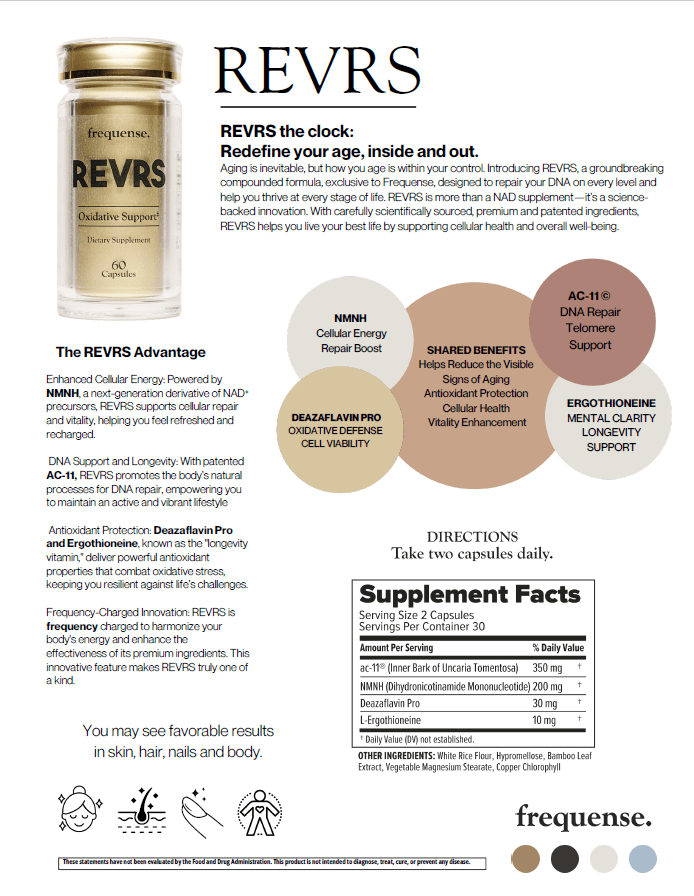
1. REVRS: DNA Repair & Longevity Support

  • The Energy: Deep Renewal & Vitality
  • Key Ingredients: NMNH (Dihydronicotinamide Mononucleotide), AC-11®, Deazaflavin Pro, L-Ergothioneine
  • How It Enhances Practice: Meditation teaches us that we can constantly renew ourselves from within. REVRS works at the cellular and DNA level, providing powerful antioxidant protection and promoting cellular energy repair. By combating oxidative stress and supporting telomere health, it gives your body the resilience it needs to feel vibrant, refreshed, and recharged.

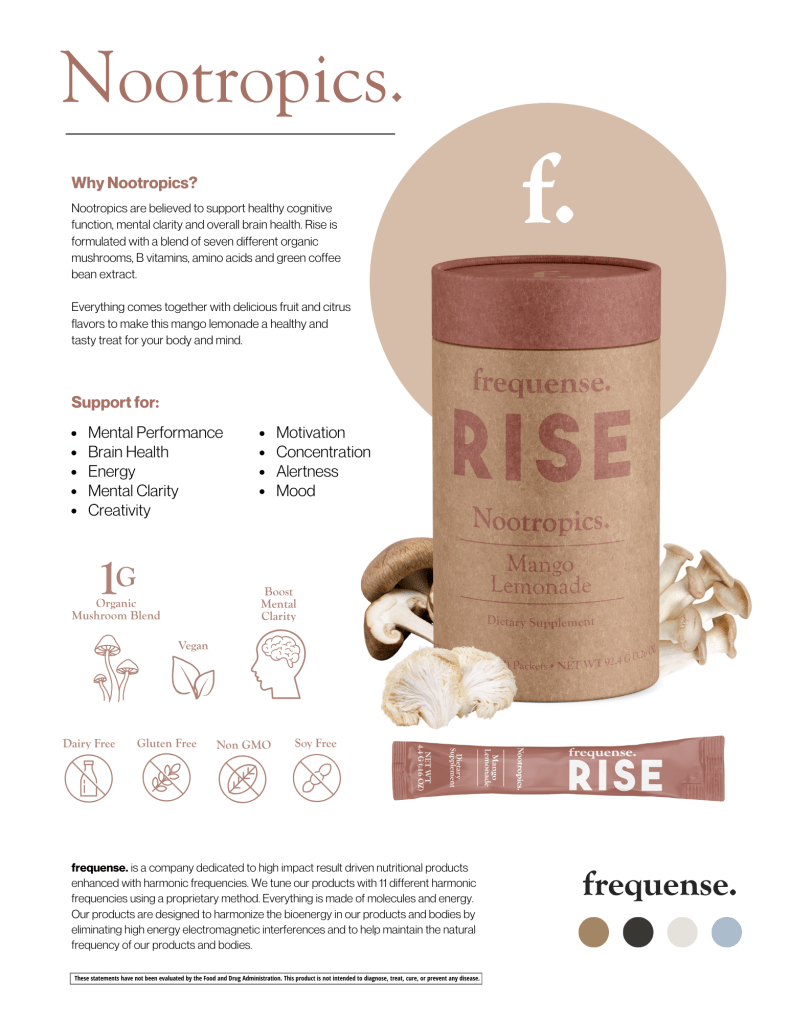
2. RISE (Mango Lemonade): Nootropics for Higher Focus

  • The Energy: Presence & Mental Clarity
  • Key Ingredients: 7 Organic Mushroom Blend, B-Vitamins, Amino Acids, Green Coffee Bean Extract
  • How It Enhances Practice: Staying focused during stillness or breathwork can be challenging when brain fog sets in. RISE is a delicious nootropic drink that supports concentration, motivation, creativity, and alertness without jittery overstimulation. It acts as a bridge to quiet the mental chatter and enter deeper states of meditation.

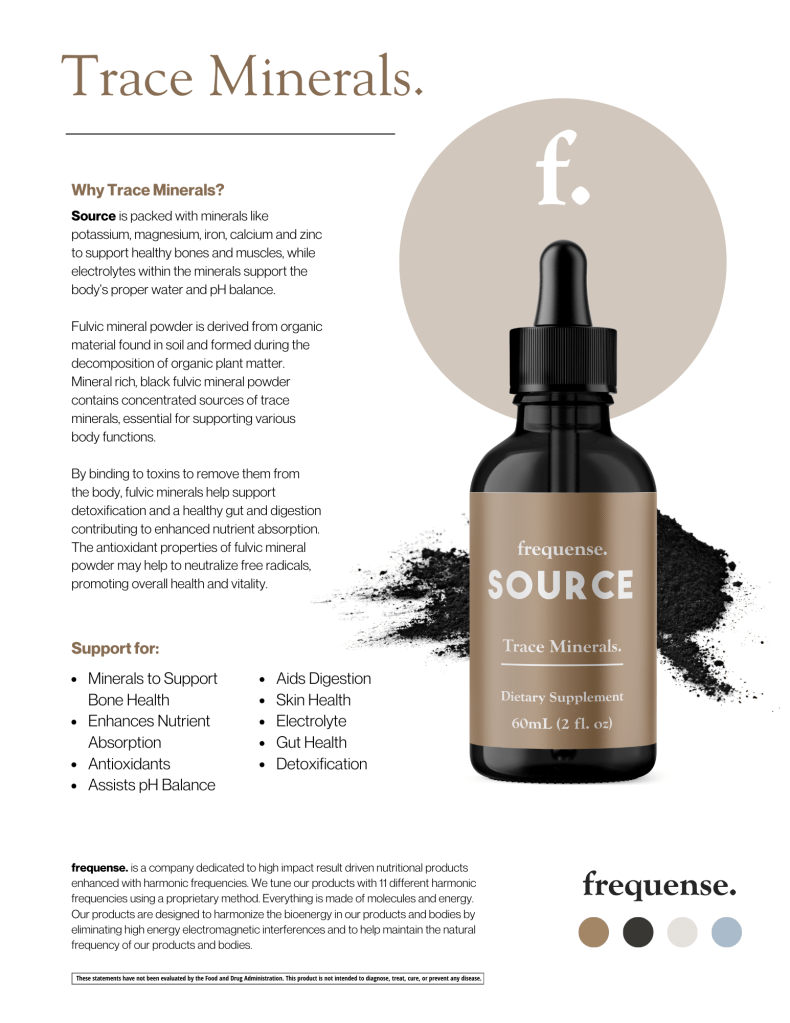
3. SOURCE: Fulvic Trace Minerals

  • The Energy: Grounding & Rooted Alignment
  • Key Ingredients: Fulvic Mineral Powder, Essential Trace Minerals (Magnesium, Potassium, Calcium, Zinc)
  • How It Enhances Practice: You cannot reach high spiritual states without being deeply grounded in your physical form. Derived from organic soil matter, SOURCE replenishes trace minerals and electrolytes that facilitate body detoxification, gut health, and pH balance. It acts as a spiritual anchor, helping you feel rooted, centered, and physically balanced.

4. BALANCE & RELIEVE CREAM: CBD x CBG Synergy

  • The Energy: Homeostasis & Bodily Ease
  • Key Focus: Endocannabinoid System Support
  • How It Enhances Practice: Physical discomfort during seated meditation can easily pull you out of the present moment. By pairing CBD and CBG, BALANCE (tincture) and RELIEVE CREAM work together to produce an “entourage effect” that supports a healthy inflammatory response and eases physical aches. It helps bring your nervous system back to total equilibrium.

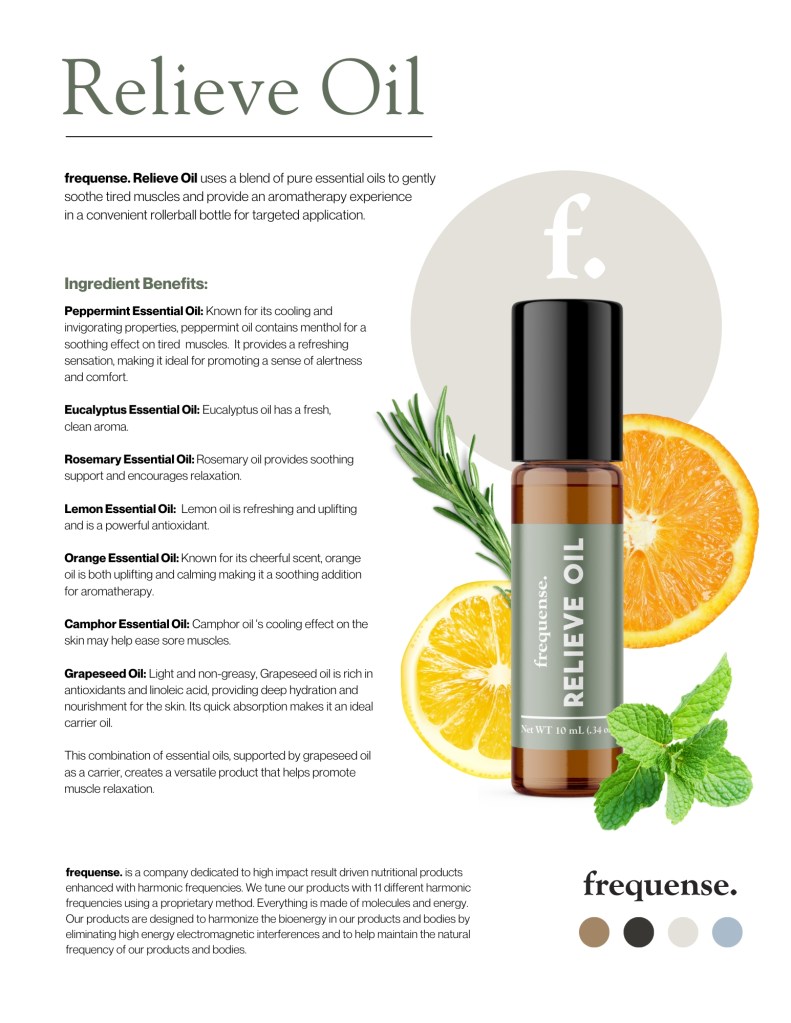
5. RELIEVE OIL: Essential Oil Rollerball

  • The Energy: Aromatherapeutic Presence
  • Key Ingredients: Peppermint, Eucalyptus, Rosemary, Lemon, Orange, Camphor, and Grapeseed Oil
  • How It Enhances Practice: Scent is one of the most immediate ways to shift our mood and energy field. Rubbing this cooling essential oil blend onto your pulse points or tired muscles before a session immediately stimulates alertness, relaxes tension, and opens the breath for meditation.

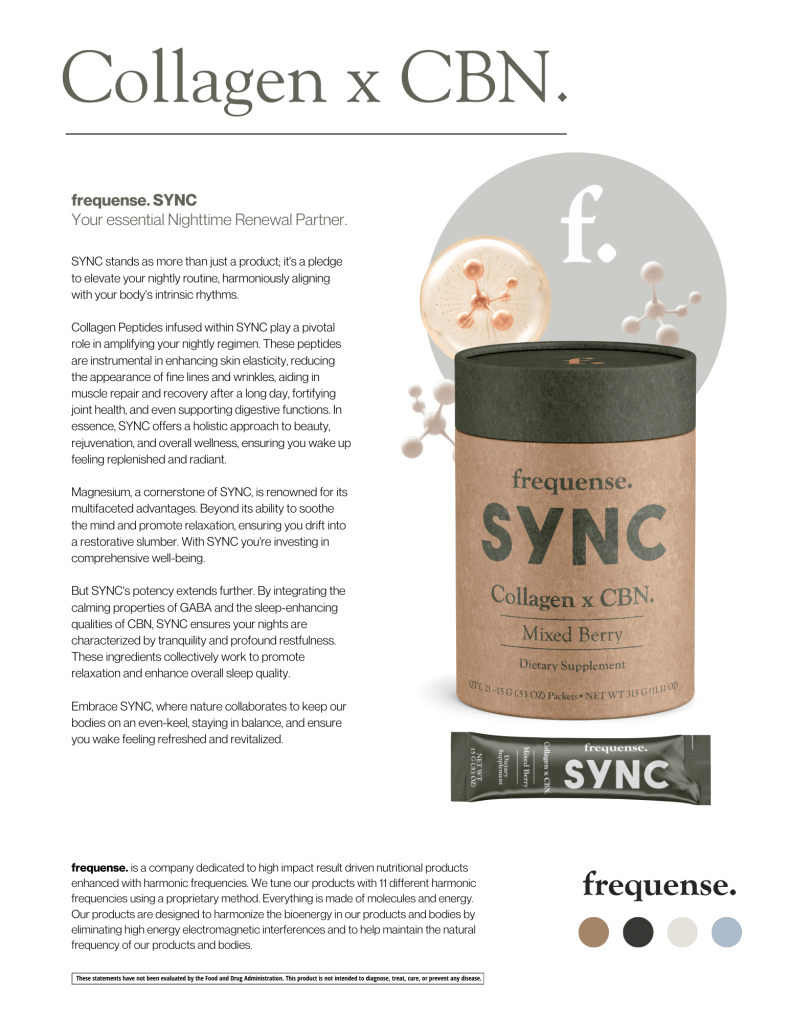
6. SYNC: Collagen x CBN Nighttime Renewal

  • The Energy: Deep Rest & Restorative Sleep
  • Key Ingredients: Collagen Peptides, Magnesium, GABA, CBN (Mixed Berry Flavor)
  • How It Enhances Practice: Spiritual growth requires deep, restorative sleep so the physical body can process the day’s energetic shifts. SYNC blends relaxing magnesium, calming GABA, and sleep-enhancing CBN to ease the mind into restful slumber while collagen peptides repair your body overnight.

Final Thoughts: Living in Harmony

True holistic wellness isn’t just about taking vitamins—it’s about honouring the synergy between physical nutrition and energetic resonance. Incorporating Frequense into my morning and evening rituals has helped me clear energetic blocks, support my physical body, and deepen my mindfulness path.

How are you nourishing your natural frequency today? Let me know in the comments below!

5 Simple Habits for Weekend Self-Care

It’s time to hit the “Do Not Disturb” button on the world for a minute! 🧘‍♀️✨

With everything buzzing around in the news and our feeds lately, it’s easy to feel a little scattered. This weekend, let’s make a collective pact to stop, breathe, and find our center again. Self-care isn’t just a luxury; it’s how we keep our batteries charged so we can keep showing up as our best selves.

If you’re looking for some simple ways to ground yourself, here are a few tiny habits that make a big difference:

  • The Morning Digital Fast: Try keeping your phone off for the first hour of the day. Coffee tastes way better when it’s not served with a side of “scrolling.” ☕
  • A “Sole” Connection: Step outside and put your feet in the grass for five minutes. It sounds hippie-ish, but reconnecting with the earth is a literal way to stay grounded. 🌱
  • The Five-Senses Check: When things feel overwhelming, stop and name 5 things you see, 4 you can touch, 3 you hear, 2 you smell, and 1 you can taste. It’s like a reset button for your brain.
  • Uninterrupted Reading: Pick up a physical book (remember those?) and get lost in a different world for a while. 📖
  • The Evening Decompress: Light a favorite candle and just sit in the quiet. No TV, no music, just you and the flickering flame. 🕯️

Let’s protect our peace this weekend. You can’t pour from an empty cup!

#SelfCareWeekend #ProtectYourPeace #FindYourCenter #WeekendVibes #Grounding #MentalHealthMatters