
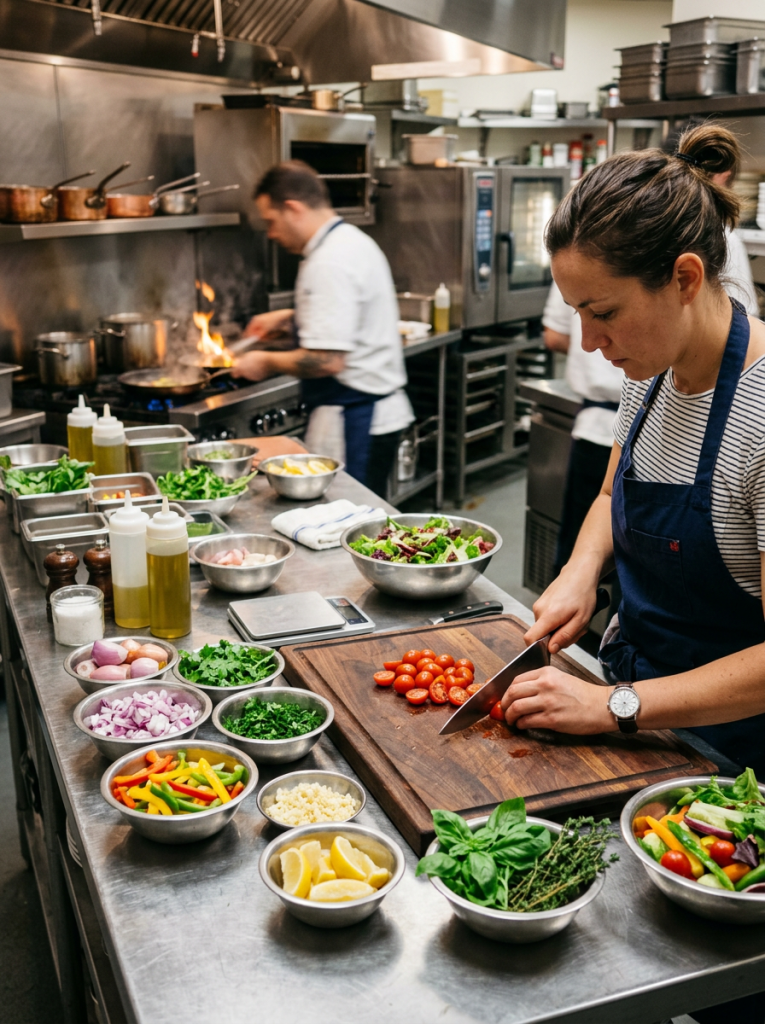
There is a lingering misconception that school lunches are nothing more than opening boxes and heating up pre-packaged food. If you spent a morning in one of our kitchens, you would quickly see a very different reality.
Transitioning toward scratch cooking in schools is a massive, rewarding undertaking. It requires intensive culinary training, major equipment upgrades, and incredibly precise time management to safely prepare food for hundreds of kids before the lunch bell rings. Our cafeteria staff are culinary professionals managing a high-volume restaurant every single day.
To bridge the gap between fresh ingredients and the realities of a busy school kitchen, our team utilizes “speed-scratch” cooking. This means taking high-quality, pre-prepped baseline ingredients and elevating them in-house with fresh vegetables and proteins. The next time your child mentions a great meal they had at school, know that it started hours before they sat down.
Blueprint for Scratch-Cooking Transitions
You do not have to flip your entire menu overnight. A phased approach is the most sustainable way to upgrade food quality without breaking the labor budget.
- Phase 1: Embrace Speed-Scratch. Start by making your own sauces or dressings. Use a low-sodium, canned tomato base and add fresh garlic, onions, and herbs. Transitioning from bottled ranch to house-made ranch using yogurt or buttermilk instantly elevates salads.
- Phase 2: Equipment Audits. Assess what your kitchen actually needs to cook from scratch. You likely need to trade older fryers and microwaves for high-volume prep equipment like tilt skillets, combi ovens, and commercial food processors. Look into USDA Equipment Assistance Grants to fund these purchases.
- Phase 3: Knife Skills and Cross-Training. Scratch cooking requires different skills than heat-and-serve. Invest in professional development days focused entirely on knife skills, batch cooking, and recipe standardization to build staff confidence.


