
When the morning bell rings in Public Schools, our students bring more than just their backpacks into the classroom—some bring the invisible weight of food insecurity.
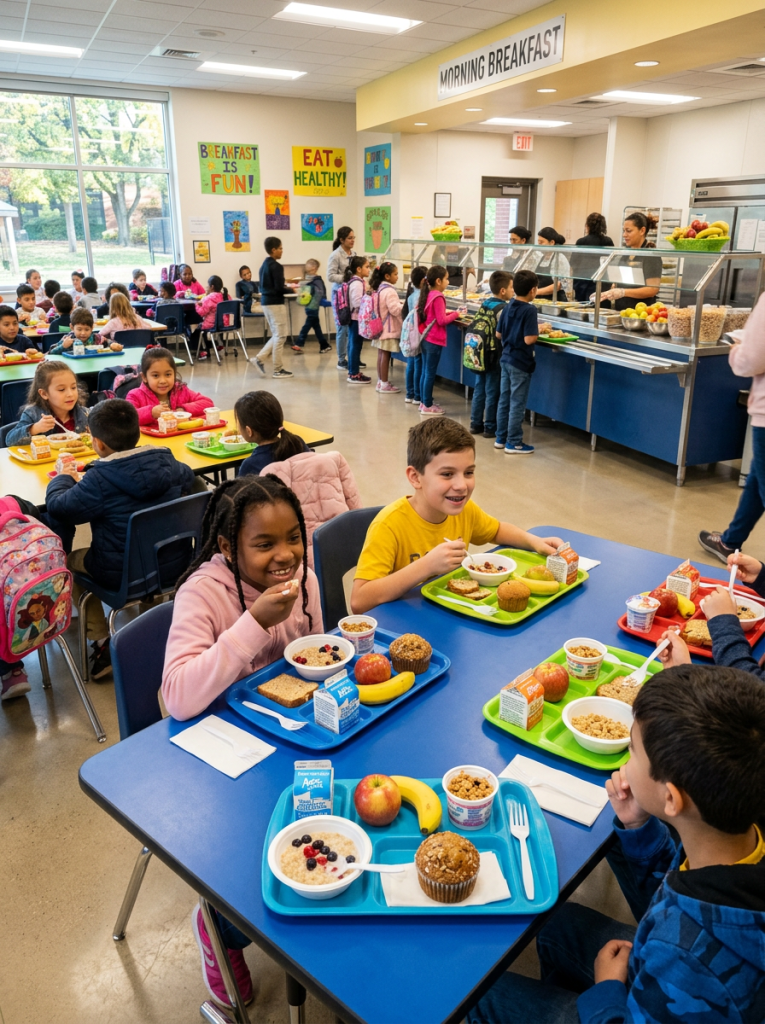
As a community, we often think of hunger as something happening far away, but the reality is that the weekend gap is a very real hurdle for many local families. For some of our students, the meals they receive in our cafeterias are the most reliable, nutrient-dense food they will eat all day.
School meals are about so much more than convenience. Programs that provide universal free meals or community-wide support completely change the culture of the cafeteria. They eliminate the stigma of “who can pay” and “who can’t,” turning the lunchroom into a place of community rather than division. When we ensure every child has access to a balanced meal, we aren’t just feeding them—we are leveling the playing field. A fed student is ready to learn, ready to engage, and ready to thrive.
Action Plan for Nutrition Teams: Bridging the Hunger Gap

Implementing broader food security measures requires community buy-in and strategic planning. Here is how schools can take action:
- Maximize CEP Eligibility: The Community Eligibility Provision (CEP) allows schools in low-income areas to serve breakfast and lunch at no cost to all enrolled students. Work with your state agency to regularly pull direct certification data (SNAP, Medicaid) to ensure your district maximizes its claiming percentages.
- Launch a “Share Table”: Set up a designated station where students can return whole, unbitten, factory-sealed items (like milk cartons, string cheese, or whole fruit) they choose not to eat. Other students who are still hungry can take from this table, reducing both food waste and afternoon hunger.
- Establish a Weekend Backpack Program: Partner with a local food bank (like Feeding America) or community sponsors to discreetly slip bags of non-perishable food into the backpacks of vulnerable students on Friday afternoons.
- Destigmatize the Line: If universal free meals aren’t possible, ensure all students go through the same line and use the same point-of-sale system (like a PIN pad or ID scan) so that free/reduced status is completely invisible to peers.

 Anna Godfrey
You must be logged in to post a comment.