The Hidden Danger of Visceral Fat and How to Combat It

Hi, all!
If you have been reading our posts, you probably picked up on us addressing  visceral fat.  I would like to expand upon that. 

Visceral fat isn’t something you see in the mirror and it’s more than just a number on the scale—it’s the fat that is deeper in your body.  Unlike subcutaneous fat, which sits just under your skin, visceral fat wraps around your vital organs like the liver, pancreas, ntestines, etc.

I found out its considered toxic, so the research nerd that I am had to go read up on why.  Visceral fat is highly active and produces inflammatory chemicals called cytokines. These “cytokines” increase the risk of chronic diseases like heart disease, type 2 diabetes, and even certain cancers.  With the filter health history I have…this is an eye opener.

When visceral fat is in abundance it makes your cells less responsive to insulin, leading to higher blood sugar levels and thus opening the door to diabetes. (Insert Wilford Brimley reference here 🥹).

Lets move on to hormonal disruption.  That visceral fat can throw off your hormones, whuch affect everything from stress levels (unbalanced cortisol anyone?) to appetite control, making weight loss even harder.

One of the things that concerned me most is that by surrounding your organs, visceral fat can cause fatty liver disease and impair liver function, whuch in turn adds extra strain to your heart. 

Of course check with your medical professionals.  Ask the questions. 
You can reduce visceral fat through a balanced diet, regular exercise, and stress management. If you need additional support, well-sourced supplements and ingredients that have clinical studies and science to back them up are good to add to your health arsenal.

So when you see me get really excited about my latest addition in my supplement line-up, now you know why. It targets visceral fat and stubborn belly fat. It’s a GLP-1 agonist meaning it’s designed to support balanced blood sugar levels and overall metabolic health. Yes. It’s a natural option to the Semiglutide shots. And I’m not a fan of 💉 so… I’m good with 2 morning pills a day, instead!

If you have read this far and want to learn more or want the link to get this GLP-1 SYNERGIZER that is a game changer for weightloss… drop a 🔥 in the comments or send me a DM. Happy to help get you started!

#thegoalishealth  #VisceralFat #glp1 #Akkermansia #postbiotic #zipburn  #guthealth  #preventionoverprescription

Fish Pose (Matsayasana)

What is Fish Pose?
Fish pose, or matsayasana in Sanskrit, is a backbend that opens the chest and lungs. From a supine position, the practitioner supports the torso on the forearms while the chest lifts toward the sky. It’s commonly used as a counterpose to shoulderstand, or sarvangasana.
Instructions
Lie on the back with the legs together.Place the hands under the buttocks, palms down.Inhale and lift the heart toward the sky. Rest on the forearms. Lean the head back so that it touches the floor. Do not rest on the head.Breathe while holding the pose.

Discover Your Numerology Life Path Number and Uncover Life’s Secrets

“Only when you can be extremely pliable and soft can you be extremely hard and strong.”

Have you ever caught yourself glancing at the clock precisely at 11:11? Or perhaps you’ve noticed a pattern of meeting people born on the same day of the month? Maybe your lucky number keeps showing up in the most unexpected places. These occurrences could be more than mere coincidences. They might be clues from the ancient and powerful system of numerology, which has been guiding people for thousands of years. Through numerology, you can calculate Life Path Numbers, Destiny Numbers, and other fundamental numerological concepts to gain insights into your life.

How to Calculate Your Numerology Life Path Number

The best way to begin your journey with numerology is by analyzing your date of birth. Numerology is focused on finding the root number, which involves reducing numbers until you reach a single-digit number (with the exceptions of 11 and 22, known as Master Numbers). This single digit is your Life Path Number.

Your Life Path Number is akin to your Sun Sign in astrology. It reveals key aspects of your identity, including your strengths, weaknesses, talents, and ambitions. It also provides insight into the tone of your experiences and the reasons behind events in your past, present, and future. In essence, it offers a structured system that illuminates your lived experiences.

Step-by-Step Guide to Calculating Your Life Path Number

Let’s walk through the calculation using an example. Suppose your birthday is August 18, 1989. Here’s how you can calculate your Life Path Number:

  1. Reduce the month to a single digit:
    • August is the 8th month, so it remains 8.
  2. Reduce the day to a single digit:
    • 18 is reduced by adding 1 + 8 = 9.
  3. Reduce the year to a single digit:
    • 1989 is reduced by adding 1 + 9 + 8 + 9, which equals 27.
    • Then, reduce 27 by adding 2 + 7 = 9.
  4. Add the reduced numbers together:
    • Add the month, day, and year: 8 + 9 + 9 = 26.
    • Finally, reduce 26 by adding 2 + 6 = 8.

So, if you were born on August 18, 1989, your Life Path Number is 8.

Why It Matters

Understanding your Life Path Number can provide profound insights into your character and the trajectory of your life. It helps you understand the core of who you are and why you experience certain events. This awareness can empower you to make informed decisions and navigate life’s challenges with greater clarity and confidence.

If you’re still unsure about the calculation, don’t worry! It may seem daunting at first, but seeing it written out step-by-step makes it much simpler. For additional help, check out this VIDEO on how to calculate your Life Path Number.

Embrace the journey of discovering your numerological blueprint, and unlock the secrets that the universe has in store for you!

Setting Personal Boundaries: How to Establish and Communicate Your Needs

“When you realize nothing is lacking, the whole world belongs to you.”

Everybody has personal boundaries with which they would feel more at ease navigating life and relationships. The problem is that not everyone has the same boundaries, and most people aren’t able to infer what the boundaries of another individual might be.

This is especially true for people who may have lower emotional intelligence (EQ). Furthermore, they frequently stand to gain the most from having their own boundaries made explicit to them.

Simply said, setting boundaries is telling someone else what you need in order to engage in good conversation. It’s not always simple. It’s possible that not everyone appreciates or comprehends your boundaries or the rationale behind them. However, you can’t expect them to be obeyed if you don’t establish those boundaries.

It often takes courage and strength to set boundaries, but when you do so, you can feel comfortable knowing your lines have been set. Your needs have been communicated. You would also have the right to put more distance between you and that individual if they continued to cross your boundaries.

Nobody is allowed to cross your limits. (However, it’s equally important to remember that you do not have the right to walk on someone else’s property aswell.)

Tips for setting personal boundaries

Although they are crucial, boundaries are not always simple to draw. Many times, people are unsure about how to start or express their requirements to others.

If you’re looking for a way to set your own personal boundaries, it may be a good idea first to consider what type of boundary you’re setting.

Emotional boundaries
We don’t always think to set emotional boundaries until after one has already been crossed, and they frequently have to do with how other people treat and speak to us. This is OK, though.

Imagine that you had a disagreement with someone and they called you a derogatory name. The greatest method to establish an emotional boundary with that individual when you have both calmed down is to:

-Approach them.
-Ask to speak about the argument.
-Own any part you may have played in the argument going awry.
-Tell them that you are not OK with name-calling and that you will need them to engage without stooping to that level in the future.

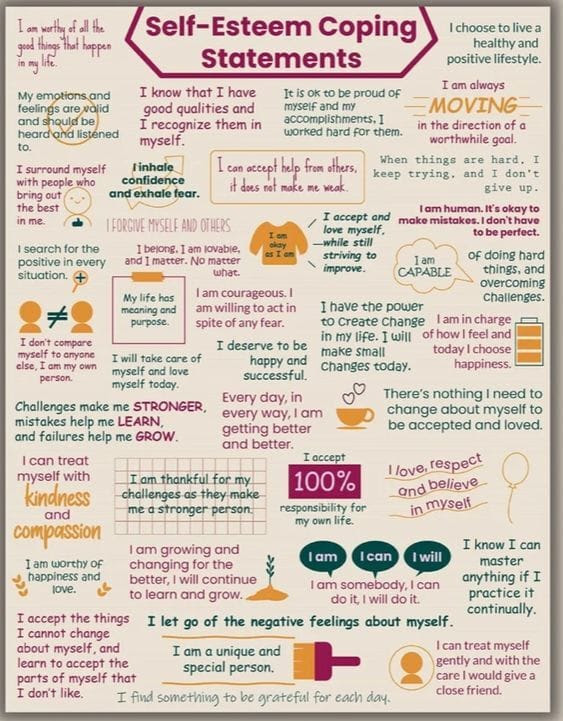
Boost Your Self-Esteem: 12 Tips for a More Radiant Life

The more we attune to peace, the more radiant our lives become.

If you suffer from low self-esteem, it may be comforting to know that you are not alone. Fortunately, those struggling with negative self-images can develop a more positive outlook through counseling, challenging negative self-talk, and acknowledging their strengths.
Here are some useful suggestions for raising your self-esteem:
Consider how past experiences impact lack of self-worth: Recognizing possible reasons for poor self-esteem is the first step toward long-term improvement. You have the power to overcome these obstacles and boost your confidence.

Think about your strengths, skills, and abilities: To break out of a negative perspective, consider your positive values and strengths. Making a list of these qualities can assist in creating and maintaining a positive self-image.

Seek advice and reassurance from loved ones: When you find yourself at a loss for positive traits, ask your loved ones what they find admirable in you. The qualities you have undervalued or disregarded can surprise you.

Pretend you are talking to a family member or friend: Would you talk to people the same manner that you talk to yourself? You may realize how poorly you treat yourself when you think about saying negative things to people you love.

Challenge negative self-talk: Just like brushing your teeth, your self-talk has become second nature to you. Turning the tide on low self-esteem can be achieved in part by challenging negative self-talk.

Stop comparing yourself to others: If you automatically make comparisons, it can be difficult to overcome them. But you can refocus on the special and lovely qualities of your personality by slowing down the process and being present.

Stay physically active: Exercise is an external action to reinforce the idea you deserve to be healthy.

Work on being assertive: Speaking out for oneself will foster compassion, resilience, and self-assurance. As you express your demands, allow yourself to acknowledge and embrace the fact that everyone deserves respect and assistance.

Identify your triggers: You may set limits and treat yourself with grace in trying times by being aware of what brings on your low self-esteem.

Surround yourself with positive people: Negativity and viewing the worst in people and circumstances are the lifeblood of low self-esteem. Having a positive support system around you can help you see things differently in life.

Accept compliments: Hearing a new narrative from others can help you challenge negative internal beliefs.

Be patient with yourself: It takes time to develop and maintain self-worth. Knowing that you are moving in the correct way, concentrate on what you can do to get better right now.