Wild thing pose, or camatkarasana in Sanskrit, challenges both strength and balance. A relatively newer pose and commonly practiced in vinyasa classes, the yogi enters wild thing pose from downward dog, lifting one leg up and behind so that the heart opens to the sky.
Instructions
Begin in downward-facing dog pose.Inhale and lift the right leg and hand off the floor.Exhale and reach the right leg up and over so that the foot rests on the floor behind the left leg.Inhale and reach the right hand toward the sky.Breathe while holding the pose.
One evening as Shichiri Kojun was reciting sutras a thief with a sharp sword entered, demanding either money or his life. Shichiri told him: “Do not disturb me. You can find the money in that drawer.” Then he resumed his recitation. A little while afterwards he stopped and called: “Don’t take it all. I need some to pay taxes with tomorrow.” The intruder gathered up most of the money and started to leave. “Thank a person when you receive a gift,” Shichiri added. The man thanked him and made off. A few days afterwards the fellow was caught and confessed, among others, the offence against Shichiri. When Shichiri was called as a witness he said: “This man is no thief, at least as far as I am concerned. I gave him money and he thanked me for it.” After he had finished his prison term, the man went to Shichiri and became his disciple.
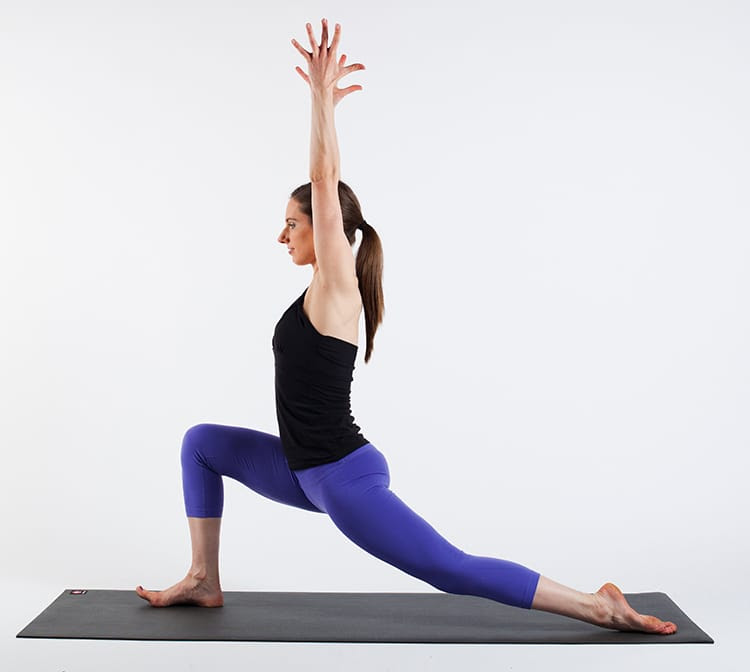
Arrow lunge is a variation of anjaneyasana, or low lunge. It’s particular to the Forrest Yoga tradition. Rather than balancing on the ball of the back foot, it’s the back of the back foot that presses toward the floor. The pose gives a deep hip stretch and develops balance.
Instructions
Begin in a low lunge with the left leg forward. Keep the fingertips on the floor.Slide the right knee back so that it’s behind the right hip. Make sure that the right foot points straight back.Press into both feet and lift the right knee from the floor. Engage the legs to keep a lift in the lower body.Slowly lift the hands from the floor and reach them overhead.Breathe while holding the pose.Exhale and release. Change sides.
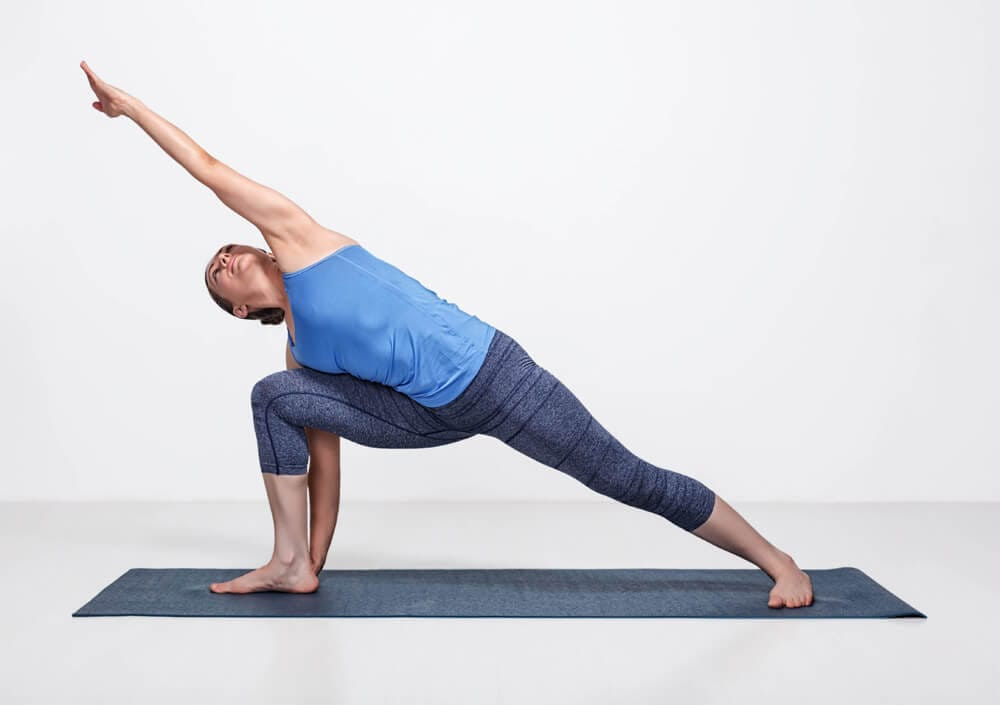
Extended side angle pose, or utthita parsvakonasana in Sanskrit, is a standing pose that’s often sequenced in between warrior poses. From warrior two, the yogi leans their torso toward their bent leg and reaches their arm in line with the torso. The pose provides a deep stretch to the groin and hamstrings.
Instructions
Begin in warrior two with the right leg bent.Exhale and lean the torso to the right. Rest the right forearm on the right thigh and reach the left arm overhead.To deepen the pose, exhale and lower the right fingertips to the floor. Stretch the left arm alongside the ear so that it’s in line with the torso.Breathe while holding the pose.Inhale and return to warrior two. Change sides and repeat.
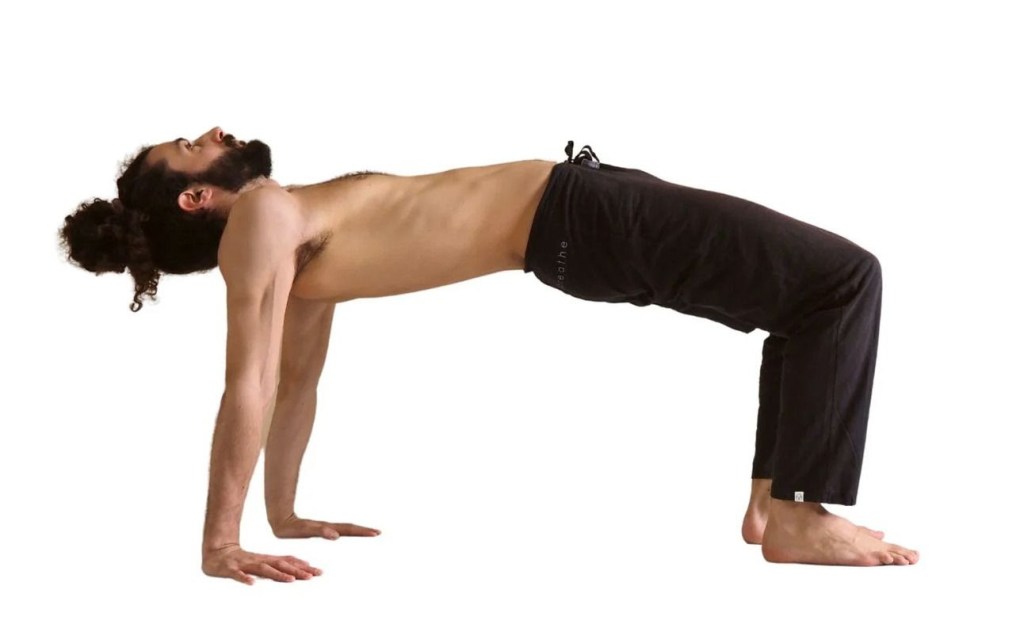
Crab pose, also known as reverse table top and ardha purvottanasana in Sanskrit, is a mild beginner’s backbend that strengthens the arms and improves posture. With the hands aligned under the shoulders and feet under the knees, the yogi uses strength to keep their front body lifted toward the sky.
Instructions
Sit on the buttocks with the knees bent, feet hip distance wide and flat on the floor.
Place the hands on the floor behind you, shoulder distance wide and fingers pointing in.
Inhale and lift the hips, bringing the torso parallel to the floor. The feet should be under the knees and hands under the shoulders.





 Anna Godfrey
You must be logged in to post a comment.