
Fueling Active Families: Quick, high-protein meal prep strategies for packed schedules.

Life moves fast between full-time jobs, school activities, and workout routines. When schedules get packed, nutrition is usually the first thing to slipβ€”leading to drive-thru runs or quick, low-protein snacks that leave everyone crashing an hour later.
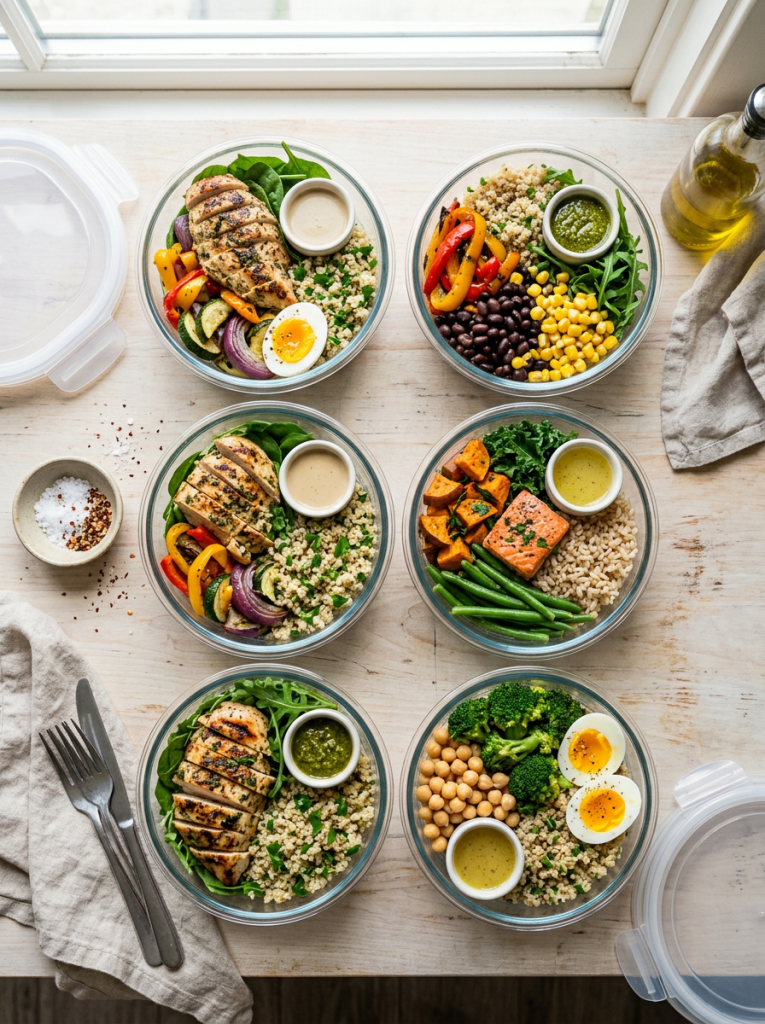
Six meal-prep bowls with grains, proteins, vegetables, eggs, and dressings
Six vibrant meal-prep bowls combine grains, proteins, vegetables, and flavorful dressings for balanced eating.

Hitting solid protein goals doesn’t require spending your entire Sunday prepping endless Tupperware containers of plain chicken and rice. Here are quick, practical meal prep strategies to keep active families fueled all week.

The 3 Core Rules of High-Protein Prep

  • Batch the Bases, Not Whole Meals: Prep versatile individual ingredients instead of fully assembled dishes. A batch of seasoned lean ground turkey or roasted chicken thighs can turn into tacos, grain bowls, or wraps across three different nights.
  • Anchor Every Meal at 30 Grams: Aim for 30+ grams of protein per adult serving (and 15–20g for kids) to support muscle recovery, maintain stable energy, and keep hunger at bay.
  • Leverage High-Protein Shortcuts: Store-bought shortcuts like rotisserie chickens, cottage cheese, canned wild salmon, egg whites, and greek yogurt cut prep time in half without sacrificing nutrition quality.

Strategy 1: “Mix & Match” Protein Bowls

Build-your-own bowls are the ultimate family hackβ€”minimal effort for you, and complete customization for picky eaters.

Protein ComponentComplex CarbFiber & ColorHigh-Protein Sauce
Shredded Rotisserie ChickenQuinoa or Brown RiceRoasted Broccoli & PeppersGreek Yogurt Ranch (Greek yogurt + ranch seasoning)
Lean Ground Beef (90/10)Roasted Sweet Potato WedgesBlack Beans & CornCottage Cheese Queso (Blended cottage cheese + salsa)
Baked Tofu or EdamameRice Noodles or Jasmine RiceShredded Carrots & EdamamePeanut Lime Sauce (PB2 + soy sauce + lime juice)

Strategy 2: High-Protein Breakfasts on Auto-Pilot

Mornings are usually the most chaotic window. Prepping these ahead eliminates the morning rush:

  • Egg & Turkey Bacon Cups: Whisk 12 eggs (or 6 whole eggs + 1 cup liquid egg whites), pour into a greased muffin tin with diced bell peppers, spinach, and turkey bacon. Bake at 350Β°F (175Β°C) for 20 minutes. Yields 12 cups (~15g protein per 2 cups).
  • Whipped Greek Yogurt Parfait Jars: Layer 0% plain Greek yogurt with a scoop of vanilla protein powder, berries, and a sprinkle of chia seeds or high-protein granola in mason jars. ~35g protein per jar.

Strategy 3: Grab-and-Go Snacks for the Car & Gym Bag

Keep active kids and parents fueled on the way to practice with quick, non-perishable or low-prep snacks:

  • Hard-boiled eggs paired with string cheese (~13g protein)
  • Edamame pods tossed with sea salt (~18g protein per cup)
  • Roasted chickpeas or high-protein trail mix with almonds and pumpkin seeds
  • Jerky strips (beef, turkey, or salmon) with an apple

Quick 3-Step Action Plan for This Week

  1. Pick 2 main proteins to cook in bulk on Sunday (e.g., 3 lbs chicken breast + 2 lbs lean ground turkey).
  2. Prep 1 high-protein sauce (blended cottage cheese or Greek yogurt-based) to elevate simple dishes.
  3. Pre-portion snacks into individual bags or containers so they’re ready to grab on the way out the door.

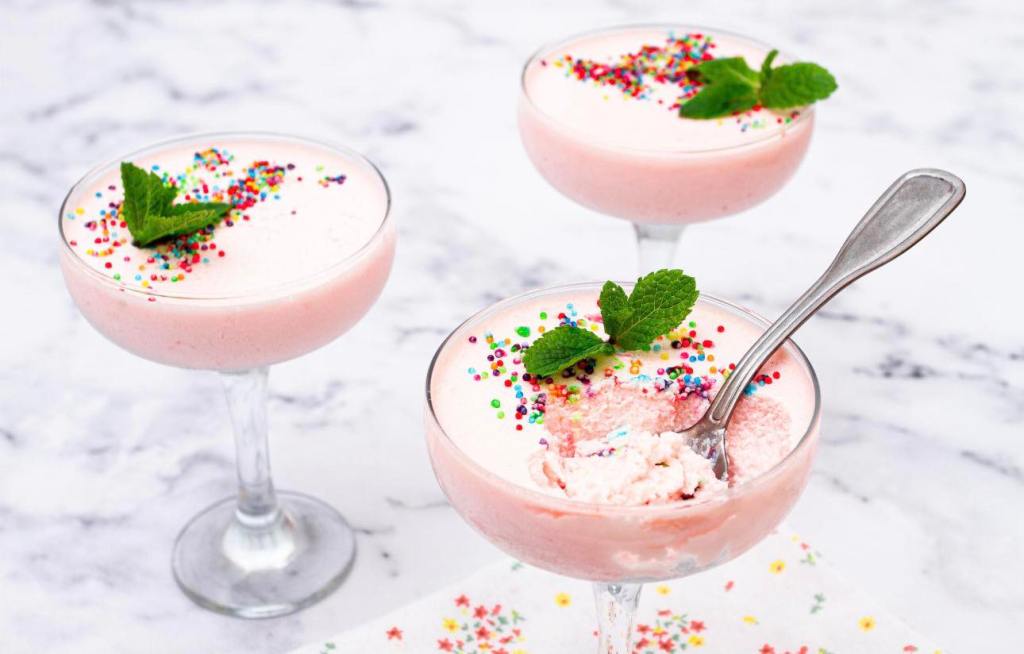
Protein Jell-O Fluff Recipe: Light and Creamy Dessert

Protein Jell-O Fluff

Creamy β€’ Light β€’ Sweet without the sugar

Ingredients

β€’ 1 cup cottage cheese (small curd works best)

β€’ 1 box sugar-free Jell-O (any flavor you love)

β€’ 2–3 tbsp water (or unsweetened almond milk, optional)

β€’ Optional add-ins:

β€’ Fresh berries πŸ“

β€’ Sugar-free whipped topping

β€’ A splash of vanilla extract

Instructions

1. Add cottage cheese to a blender or food processor.

2. Sprinkle in the dry sugar-free Jell-O powder.

3. Add a little water or almond milk for smoother texture.

4. Blend until completely smooth and fluffy.

5. Chill for 30–60 minutes to set slightly (optional, but recommended).

How it tastes

Think cheesecake-meets-mousse 😍

Light, creamy, and perfect as:

β€’ A high-protein dessert

β€’ A sweet snack

β€’ A GLP-1 friendly treat

Flavor ideas

β€’ Strawberry Jell-O β†’ Strawberry cheesecake vibes πŸ“

β€’ Lemon Jell-O β†’ Lemon cream pie πŸ‹

β€’ Raspberry Jell-O β†’ Berry mousse energy πŸ’—

The Powers of Protein

π™π™€π˜Όπ˜Ύπ™ƒπ™„π™‰π™‚ π™π™π™€π™Žπ˜Ώπ˜Όπ™”π™Ž /Β  The Power of Protein


Why is Protein so important?


The older we get the more easily we lose muscle, and the more difficult it becomes to rebuild it.


If someone needs to build lean mass,Β  extra protein likely will be a huge difference.Β 
Proteins are the building blocks for our muscles, enzymes, and hormones. They also help grow and maintain our hair, skin, and nails. We must get nine of the twenty amino acids from our diet, because we can’t synthesize them.


The first thing you need to know about protein is that the standard recommendations for daily consumption are a joke. Right now the US recommended dietary allowance (RDA) for protein is 0.8 Grams / kg of body weight.


This may reflect how much protein we need to stay alive, but it is a far cry from what we need to thrive.


How much protein do we actually need?
It varies from person to person and the ideal amount can vary. The data suggests that for active people with normal kidney function, one gram per pound of bodyweight per day (or 2.2 g / kg/ day) is a good place to start, nearly triple the recommendation.


How much protein you need depends on your sex, body weight and lean body mass, activity level, and other factors, including age.


There is some evidence that older people might require more protein because of the anabolic resistance that develops with age – that is, their greater difficulty in gaining muscle


To achieve this might be very challenging for most people to consume 4 meals with animal protein. Typically many of my clients will have a whey protein shake as one of the meals (just seems easier for many reasons).


You could make the case that protein is a performance-enhancing macro-nutrient. Other studies have found that boosting protein intake even moderately above the RDA can slow the progressive loss of muscle mass in older people.


Beyond its role in building muscle, protein may have beneficial effects on our metabolism.


Another study in men with type 2 diabetes found that doubling their protein intake from 15 to 30 percent of total calories, while cutting carbohydrates by half, improved insulin sensitivity and glucose control.
Eating protein also helps us feel satiated, inhibiting the release of the hunger inducing hormone ghrelin, so we eat fewer calories overall.


Bottom line:
Don’t ignore protein. It’s the one macronutrient that is essential to our goals.
It will improve metabolic health in every way.
It will help you regulate your appetite.
It will help you maintain muscle mass while you are losing fat.