
Sweat feeds the drive; stillness feeds the system. When high-intensity training (HIIT, heavy lifting, endurance runs) isn’t paired with intentional recovery, the body eventually pays the tab in burnout, chronic inflammation, and plateaued performance. Balancing fiery intensity with grounding, restorative movement isn’t about working out less—it’s about training smarter by honoring both sides of the nervous system.
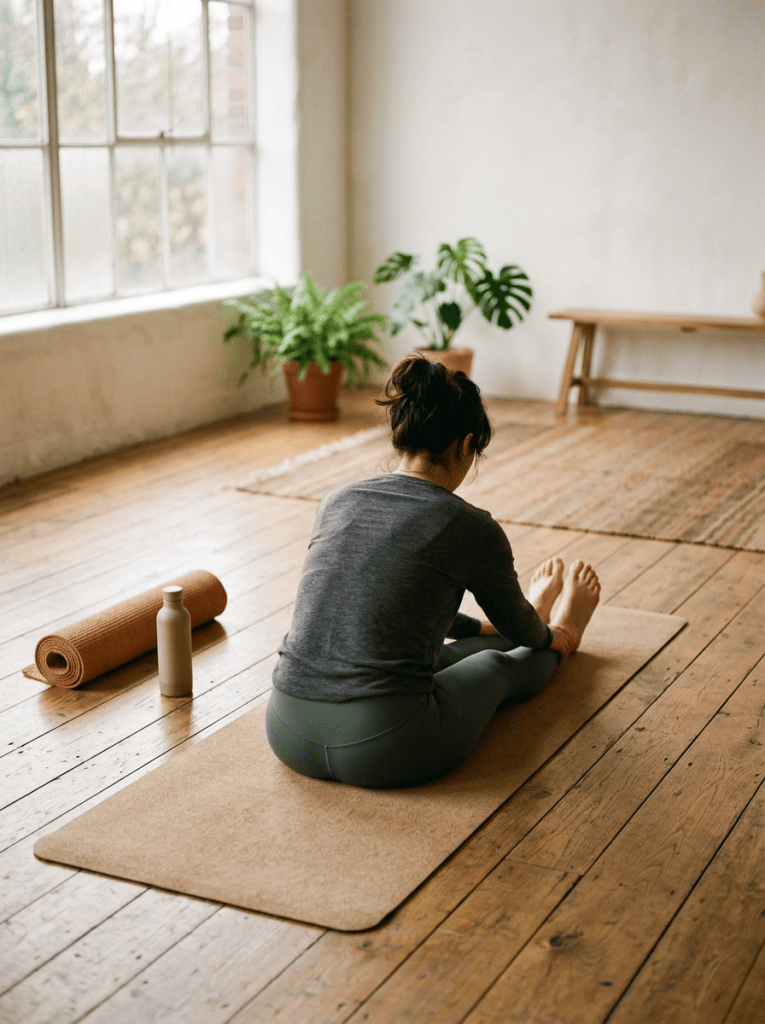
Here are four practical rituals to integrate into your weekly routine to balance high effort with deep rest.
The Warm-Down: Micro-Somatic Release
High-intensity work leaves the sympathetic nervous system (“fight or flight”) operating on high volume. Stopping abruptly and hopping straight into your car or back to a desk keeps cortisol circulating.
- The Exercise: Immediately following your final set, lie flat on your back with your legs elevated on a bench or wall (Viparita Karani).
- The Ritual: Place one hand on your chest and one on your belly. Perform a 4-7-8 breathing pattern: Inhale through the nose for 4 seconds, hold for 7, and exhale with an audible sigh for 8. Complete 5 cycles. This sends an immediate physical signal to the brain that the threat has passed, shifting you into a parasympathetic state before you step out of the gym.
The Mid-Week Pivot: Slow Flow & Myofascial Unwinding
Instead of using active recovery days for light cardio that still stresses the joints, dedicate one mid-week session to slow, intentional tissue hydration and joint mobility.
| Element | High-Intensity Days | Restorative Days |
| Pacing | Fast, explosive, timed | Slow, unhurried, breath-led |
| Focus | Muscular output & power | Fascial release & joint space |
| Nervous System | Sympathetic drive | Parasympathetic tone |
- The Exercise: Combine target foam rolling with slow dynamic holds. Spend 90 seconds rolling the thoracic spine, quads, and glutes, stopping on points of tension. Follow each roll with a 2-minute passive hold in a dynamic stretch (like a Low Lunge or Half Pigeon).
- The Ritual: Treat this session like a meditation. Turn off bright overhead lights, put away your phone, and move without a timer. Let your body tell you where it needs to linger.

The Weekly Reset: Barefoot Outdoor Grounding
Artificial surfaces, rigid training shoes, and indoor environments limit sensory feedback. Reconnecting your body directly to natural terrain restores natural gait mechanics and quiets mental chatter.
- The Exercise: A 20-minute slow, barefoot walk on natural terrain (grass, sand, or dirt).
- The Ritual: Leave all tracking devices, music, and metrics behind. Focus entirely on foot articulation—feeling the heel strike, rolling through the arch, and pushing off the toes. Pay attention to how the uneven surface naturally engages your core and ankles without forced effort.
The Evening Wind-Down: Bedtime Somatic Scanning
Intensity in the morning or afternoon can spill over into nighttime restlessness if the body hasn’t fully discharged residual tension.
- The Exercise: Progressive Somatic Contraction & Release.
- The Ritual: Once in bed, start at your feet. Squeeze your toes tightly for 5 seconds, then completely release them, noticing the sensation of warmth and gravity pulling them into the mattress. Move upward: calves, quads, glutes, abdomen, shoulders, jaw. End with 3 deep abdominal breaths, feeling heavy, grounded, and fully supported.

 Anna Godfrey