
We all know breakfast is the most important meal of the day, but let’s be honest: mornings are chaotic. Between catching the bus, remembering homework, and getting out the door, breakfast often gets left behind.
In the Child Nutrition Services department, we see the direct link between a good morning meal and academic focus. But we also know that expecting every student to arrive 20 minutes early for a traditional sit-down meal in the cafeteria isn’t always realistic.
That is why we are redefining what school breakfast looks like. By breaking down the morning barrier with alternative serving models, we meet students where they are. We are moving beyond the standard bowl of cereal toward protein-rich options—think savory breakfast bowls, warm wrapped sandwiches, and drinkable yogurts—that keep students full until lunch. When we make breakfast accessible and appealing, we give our kids the brain food they need to tackle the day.
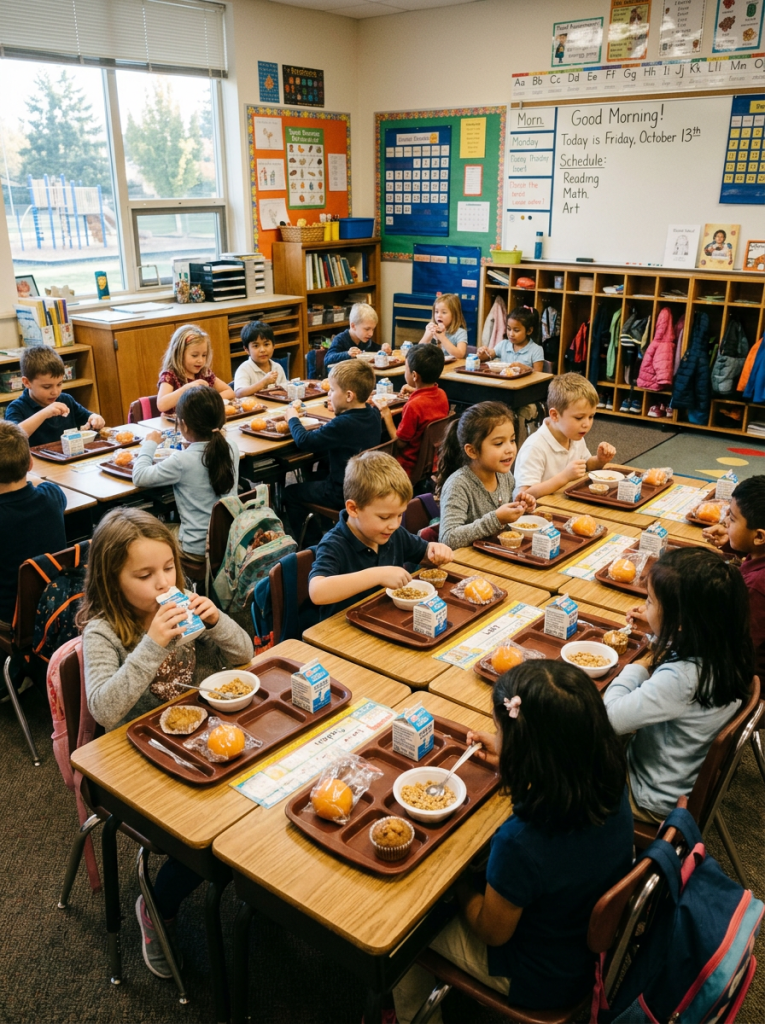
Implementation Guide: Expanding Breakfast Access
Moving breakfast out of the cafeteria increases participation exponentially. Here is how to make alternative models work:
- Breakfast in the Classroom (BIC):
- The Setup: Meals are delivered to classrooms via insulated cooler bags right before the bell rings.
- The Trick: Get custodial and teacher buy-in early. Provide dedicated trash cans for food waste and supply classrooms with wipes to ease concerns about messes.
- Grab-and-Go Carts:
- The Setup: Mobile kiosks placed at high-traffic entryways or near the gym.
- The Trick: Speed is everything. Bundle items (e.g., a muffin, cheese stick, and juice) into clear bags so students can grab a fully reimbursable meal without slowing down the hallway traffic.
- Second Chance Breakfast:
- The Setup: Serving breakfast after first period for students who weren’t hungry right when they woke up or who arrived late.
- The Trick: Utilize the passing period. Keep the menu highly portable (smoothies, breakfast burritos) so students can eat on their way to second hour.

 Anna Godfrey