ZipBURN™: The GLP-1 Synergizer™ – Revolutionizing Weight Loss Trends!

The Historic Launch of ZipBURN™!
Dear Friends,
With the launch of ZipBURN™ – The GLP-1 Synergizer™ this month, we are at the forefront of one of the biggest trends ever in weight loss and metabolic health and that is enhancing your body’s ability to naturally produce GLP-1.  GLP-1 stands for the weight-friendly hormone glucagon-like-peptide-1 and recent science has found that it plays multiple roles in helping maintain a healthy weight and a number of other important health benefits. This trend is already reaching billions of dollars in sales and is expected to grow 15X by 2030!

GLP-1 decreases with age, stress, poor diet and lifestyle.  So taking steps to naturally increase GLP-1 can be extremely important if you want to become fitter, healthier and happier.

ZipBURN is a proprietary, cutting-edge supplement that contains 5 key herbal ingredients that have been scientifically shown to naturally increase GLP-1 levels, along with a new, bioactive postbiotic that fights abdominal fat and toxic visceral fat.

Our formula is totally exclusive to Beyond Slim and not available anywhere else.

 It starts with our award-winning, patented postbiotic called BPL1 HT (heat-treated Bifidobacterium animalis subspecies lactis CECT8145).  I know that’s a mouthful but the science of this ingredient is stunning!  

With 9 years of development by a multibillion-dollar company, it has been shown in clinical research to significantly reduce belly fat and toxic visceral body fat in only 12 weeks! This study was published in the highly respected, peer-reviewed International Journal of Obesity.
It has also been shown to support healthy Akkermansia levels in your gut for metabolic, digestive, and overall health.  Akkermansia has been featured in 3000+ scientific publications and has been found to increase GLP-1 levels. Taking Akkermansia capsules is dubious at best as Akkermansia dies when exposed to oxygen. So more times than not, it’s not benefiting you at all.

ZipBURN does not have that challenge because BPL-1 does not contain Akkermansia. Instead, our exclusive formula works by helping you naturally increase Akkermansia levels in your gut!

ZipBURN also includes our proprietary GLP-1 Synergizer Blend (900 mgs).  
Each of the 5 ingredients in this blend has been extensively studied for their positive impacts on GLP-1 levels.  

In addition, they have been the subject of research for many other health benefits. The 5 herbal superstars include berberine, cinnamon bark extract, curcumin, organic ginger root, and green tea (decaffeinated).

We feel extremely fortunate to be on the cutting edge of science and this massive trend and we are thrilled to be the only company to bring the blessing of ZipBURN to millions who want to become fitter, healthier and happier!!
Keep Burning!!
~Ray

Moon Magic: Harnessing Lunar Energy for Transformation and Growth

“The less you open your heart to others, the more your heart suffers.”

The moon has fascinated humanity for ages with its ethereal glow and ever-changing phases. Across cultures and philosophies, the moon stands as a powerful symbol, weaving a rich tapestry of meaning and significance. From self-care routines aligned with each lunar phase to the resonant power of crystals, exploring the moon’s influence offers a cosmic adventure. Before diving into practical applications, let’s delve into the ancient wisdom and symbolism embodied by the moon.

The Symbolism of the Moon

Cycles and Phases

The moon’s ever-changing appearance symbolizes the cycles of life and the passage of time. It serves as a reminder of life’s constant change and the natural ebb and flow of existence.

Femininity and Motherhood

Often associated with female deities, the moon symbolizes femininity, motherhood, and nurturing energy. Its soft glow contrasts with the sun’s harsher, more masculine energy.

Emotions and Intuition

Linked to the emotional and subconscious aspects of the mind, the moon symbolizes intuition, dreams, and the unconscious.

Growth and Manifestation

The moon’s phases are often used to symbolize stages of growth and the process of manifesting desires, particularly in spiritual or mystical practices.

Illumination and Guidance

As a source of light in the darkness, the moon represents illumination, insight, and guidance, offering clarity in times of uncertainty.

Mystery and Magic

The moon’s connection to the night and its influence on tides and nature evoke associations with mystery, magic, and otherworldly power.

Duality and Balance

The moon symbolizes duality—light/dark, male/female, conscious/unconscious—highlighting the balance between opposites.

Transformation and Renewal

The moon’s phases from new to full and back again symbolize transformation, renewal, and rebirth.

The Phases of the Moon

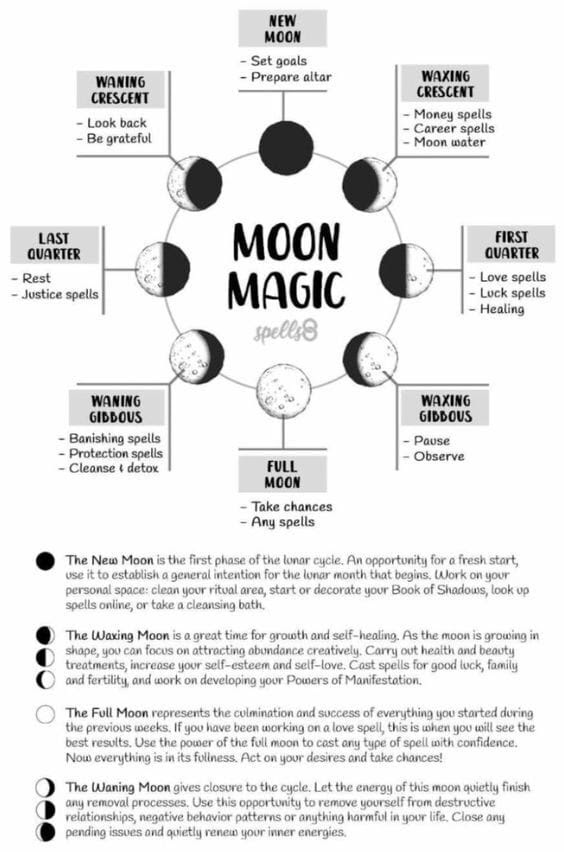
There are eight primary phases of the moon, each offering unique energy and opportunities:

New Moon

  • Appearance: The moon is entirely in shadow, appearing dark and nearly invisible.
  • Symbolism: New beginnings and pure potential.
  • Best for: Setting new intentions, planting seeds for future growth, and starting new projects.
  • Self-Care: Spend a quiet night in with a cozy blanket, journal about goals and intentions, and light a cleansing candle like Rosemary + Lemon.
  • Affirmation: “I am open to new beginnings.”
  • Crystal: Labradorite—helps regain energy, heal physically, and nourish the spirit.
  • Scent: Rosemary + Lemon—perfect for fresh starts and setting new intentions.
  • Ritual: Pull a tarot or affirmation card for guidance, or create a vision board for your intentions for the lunar month.
  • Journal Prompt: “What new beginnings am I ready to embrace?”

Waxing Crescent

  • Appearance: A thin silver crescent begins to appear on the right side of the moon.
  • Symbolism: Growth and progress.
  • Best for: Focusing on goals, building momentum, and visualizing success.
  • Self-Care: Engage in activities that support your goals and keep you motivated.
  • Affirmation: “I am growing and moving forward.”

First Quarter

  • Appearance: Half of the moon is illuminated, forming a right-hand semicircle.
  • Symbolism: Decision-making and action.
  • Best for: Taking decisive steps, overcoming obstacles, and making important choices.
  • Self-Care: Reflect on challenges and develop strategies to overcome them.
  • Affirmation: “I am strong and capable.”

Waxing Gibbous

  • Appearance: More than half of the moon is illuminated, but not yet full.
  • Symbolism: Refinement and patience.
  • Best for: Fine-tuning plans, staying focused, and practicing patience.
  • Self-Care: Maintain balance and stay persistent in your efforts.
  • Affirmation: “I am patient and persistent.”

Full Moon

  • Appearance: The entire face of the moon is illuminated, forming a bright, full circle.
  • Symbolism: Completion and celebration.
  • Best for: Harvesting rewards, celebrating achievements, and releasing what no longer serves.
  • Self-Care: Celebrate your successes and release any negativity.
  • Affirmation: “I celebrate my achievements and let go of the past.”

Waning Gibbous

  • Appearance: The moon starts to shrink, with illumination decreasing on the right side.
  • Symbolism: Gratitude and introspection.
  • Best for: Reflecting on accomplishments, expressing gratitude, and introspecting.
  • Self-Care: Practice gratitude journaling and reflect on your journey.
  • Affirmation: “I am grateful for my journey.”

Last Quarter

  • Appearance: Half of the moon is illuminated, forming a left-hand semicircle.
  • Symbolism: Release and forgiveness.
  • Best for: Letting go of burdens, forgiving others, and making space for new opportunities.
  • Self-Care: Practice forgiveness and decluttering.
  • Affirmation: “I release what no longer serves me.”

Waning Crescent

  • Appearance: A thin silver crescent on the left side, just before the new moon.
  • Symbolism: Rest and rejuvenation.
  • Best for: Resting, rejuvenating, and preparing for new beginnings.
  • Self-Care: Focus on rest and self-care routines.
  • Affirmation: “I am resting and rejuvenating.”

Embrace Moon Magic in Your Life

Harness the power of the moon’s phases to align with your goals and enhance your well-being. Whether you’re setting intentions during the new moon or reflecting and releasing under the full moon, lunar energy can guide you on your journey.

For a deeper exploration of the moon’s phases and their influence, check out our Ultimate Moon Journal & Guide. Embrace the magic of the moon and let its cycles illuminate your path.

Breaking Free from a Shame Spiral: A Guide to Reclaiming Your Self-Worth

“Learning to let go should be learned before learning to get. Life should be touched, not strangled. You’ve got to relax, let it happen at times, and at others move forward with it.”

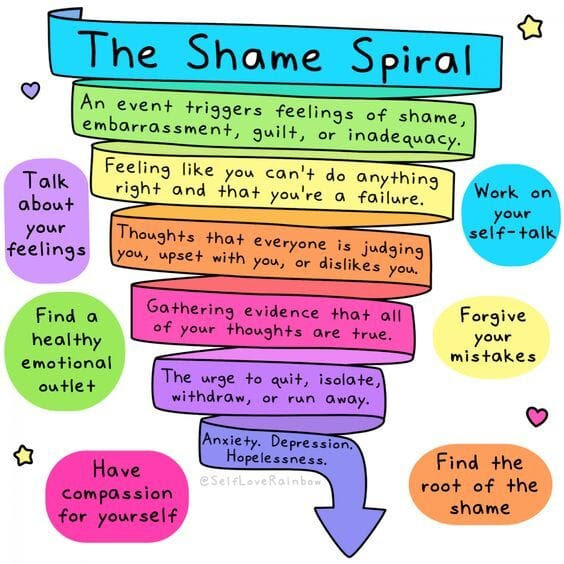
Shame spirals are powerful and destructive cycles of negative emotion, often triggered by feelings of embarrassment or unworthiness. They can lead to a cascade of emotions, including guilt, worthlessness, and isolation, making it challenging to escape their grip without help. Understanding how to recognize and break free from a shame spiral is essential for maintaining your mental health and well-being.

What Is a Shame Spiral?

A shame spiral is a specific type of negative emotional cycle characterized by deep feelings of shame and unworthiness. Triggers like rejection, failure, and disconnection often set off shame spirals, which are frequently rooted in perfectionism and anxiety. As these feelings intensify, they create a downward spiral that can be difficult to break without intervention.

Recognizing a Shame Spiral

Identifying a shame spiral can be challenging, especially if you regularly experience negative feelings toward yourself. However, certain indicators can help you recognize when you’re caught in one:

  • Intense feelings of shame and humiliation
  • Beliefs of worthlessness
  • Feelings of isolation and loneliness
  • Difficulty regulating emotions
  • Destructive behavior patterns

Steps to Break the Shame Spiral

While there is no one-size-fits-all solution to ending a shame spiral, several steps can be beneficial in helping you break free from its grip.

1. Acknowledge Your Feelings

The first step is recognizing and acknowledging your emotions. It can be hard to identify a shame spiral if you’re used to negative self-talk. Rather than ignoring these feelings, accept them and understand that you need to change your behavior to stop the negative thought process.

2. Talk to Yourself Like a Friend

Speaking to yourself in the third person can help break the cycle of negative self-talk. We tend to be much harsher on ourselves than on friends or strangers. Imagine you’re talking to a friend and extend the same mercy and forgiveness to yourself that you would to them. This shift in perspective can significantly reduce the intensity of your negative emotions.

3. Get Grounded

Grounding techniques can help you get out of your head and into your body. One effective method is focusing on your breath. Try inhaling for four seconds, holding for four seconds, and exhaling for four seconds. Repeat this cycle several times until you feel more centered. Additionally, observe your surroundings or focus on physical sensations to divert your attention from internal thoughts.

4. Seek Support from Someone You Trust

Isolation is a primary driver of shame spirals. Brene Brown, a renowned author and researcher, suggests that sharing your thoughts with others can diminish shame. Reach out to friends, family, a support group, or a therapist. Sharing your feelings can provide new perspectives, helping you see your thoughts more clearly and be kinder to yourself.

5. Take Action by Serving Someone Else

Although it may seem counterintuitive, serving others can significantly impact your mental health when you’re stuck in a shame spiral. Helping others fosters love, gratitude, and physical activity, counteracting self-pity. Even small acts of kindness can shift your focus and improve your overall mental state.

Conclusion

Breaking free from a shame spiral is challenging, but recognizing the signs and taking proactive steps can help you regain control over your emotions. Acknowledge your feelings, practice self-compassion, ground yourself, seek support, and engage in acts of service to disrupt the negative cycle. By implementing these strategies, you can reclaim your self-worth and move toward a healthier, more positive mindset.

Ayurveda Recipes: Tofu Scramble With Kale, Fennel & Tomato

Enjoy ‘Tofu Scramble with Kale, Fennel & Tomato’ for Sunday brunch. Combine this easy to prepare meal with the weekend newspapers and a hot cup of Body-Kind Coffee. Relax into your morning and enjoy a day of rest. Its light, dry and clear qualities will combat any congestion or feelings of brain fog. You will feel full, nourished and fresh after this meal.
Ingredients
1/2 tsp CUMIN
1 c FENNEL STALK
1 tbsp GHEE
1/2 lbs KALE
1/4 pinch RED PEPPER FLAKES (CHILI)
1 c TOFU
2 whole TOMATO
1/4 tsp TURMERIC
Instructions
1. Drain tofu and firmly pat dry with absorbent towels to remove moisture. Then, use a fork to crumble.
2. In a non stick pan, heat 1 tbsp ghee and gently fry cumin, turmeric and chilli powder for 1-2 minutes.
3. Saute chopped kale, tomato and fennel for 5 minutes, then add crumbled tofu.
4. Continue to cook for another 5 – 7 minutes until tofu is coated in spices and cooked through.

Healing From Past Relationship Trauma: A Journey to Reclaim Your Life

“Train your mind to see the good in every situation.”

Healing from a toxic relationship can be a tumultuous journey, often leaving a lasting impact on one’s mental and emotional well-being. Trauma from such relationships can manifest in various ways, making it challenging to trust others and navigate social interactions. Understanding and addressing this trauma is crucial for reclaiming your life and moving forward.

When Does Relationship Trauma Occur?

Relationship trauma isn’t limited to physical assault. Emotional and psychological abuse can also leave deep scars. Common forms of emotional and psychological abuse include:

  • One partner purposely humiliating the other
  • Making degrading comments in private or public
  • Constant criticism
  • Inducing guilt for things beyond the other’s control
  • Controlling behaviors, dictating what the other can and can’t do

Symptoms of Relationship Trauma

Low self-esteem is a hallmark of relationship trauma. Traumatized individuals may apologize excessively, experience unwanted or obsessive thoughts, and have trouble concentrating. Other common symptoms include:

  • Unwanted and recurring flashbacks to traumatic events
  • Feelings of shame or guilt
  • Sleep disturbances and nightmares
  • Trust issues
  • Hypervigilance and suspicion

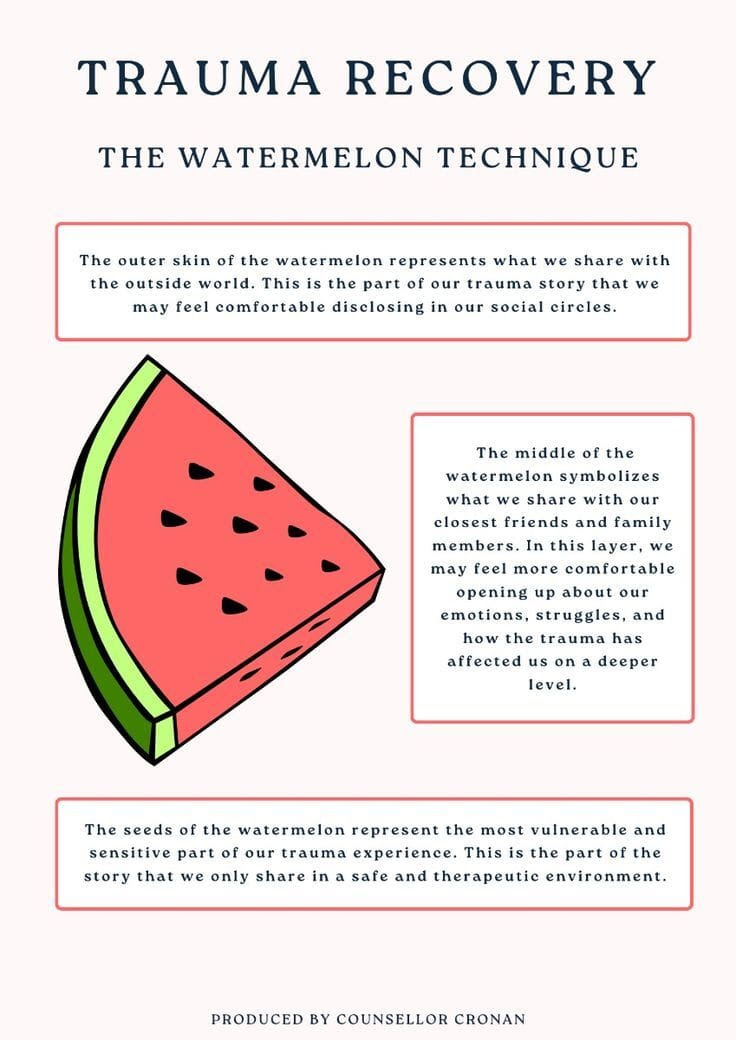
Tips to Let Go of the Past

Letting go of the trauma from past relationships is essential for healing and personal growth. Here are some strategies to help you release the bonds of trauma:

1. Make a Commitment to Let Go

Acknowledge that the past should not control your future. Resolve to let go of the past and focus on the present. This commitment is the first step towards healing.

2. Feel the Emotions

Memories of past events can trigger strong emotions. Instead of suppressing these feelings, allow yourself to experience them. Understanding these emotions can help you identify what went wrong. Talking to a therapist or a trusted friend about your feelings can be immensely beneficial.

3. Get Help

If you struggle to break free from negative mental patterns on your own, seek individual counseling. Therapy provides tools to manage overwhelming thoughts and emotions, aiding in your healing process.

4. Engage in Mindfulness

Mindfulness can help you stay grounded in the present. Focus on the little joys in life, schedule time for activities that matter, spend more time outdoors, and incorporate meditation into your daily routine.

5. Think Before Reacting

Before reacting to situations, take a moment to consider the consequences of your actions. This practice requires time and effort but can lead to more thoughtful and less reactive responses over time.

Conclusion

Healing from past relationship trauma is a challenging but essential process. By acknowledging your feelings, seeking help, practicing mindfulness, and committing to letting go of the past, you can begin to reclaim your life. Remember, the journey to healing is personal and unique, but with persistence and support, you can overcome the shadows of your past and embrace a brighter future.