Arrow Lunge (Anjaneyasana)

What is Arrow Lunge?
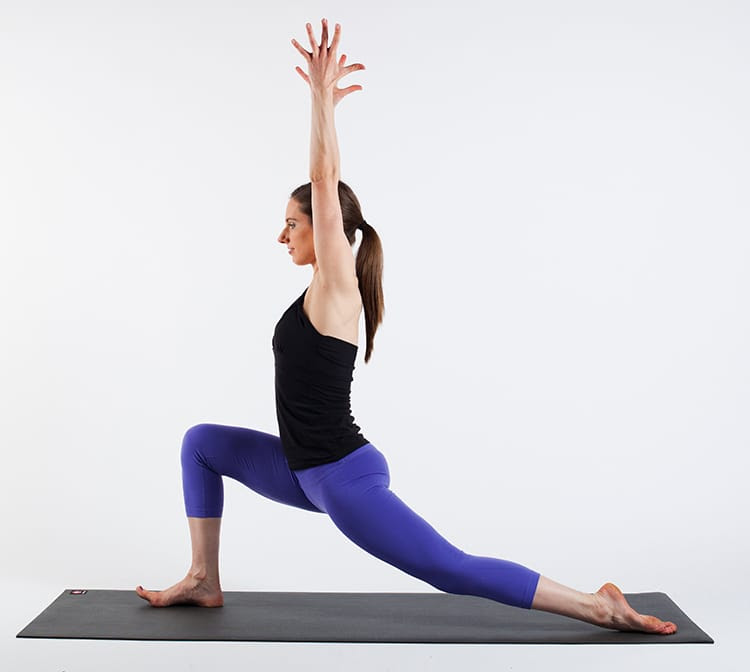
Arrow lunge is a variation of anjaneyasana, or low lunge. It’s particular to the Forrest Yoga tradition. Rather than balancing on the ball of the back foot, it’s the back of the back foot that presses toward the floor. The pose gives a deep hip stretch and develops balance.
Instructions
Begin in a low lunge with the left leg forward. Keep the fingertips on the floor.Slide the right knee back so that it’s behind the right hip. Make sure that the right foot points straight back.Press into both feet and lift the right knee from the floor. Engage the legs to keep a lift in the lower body.Slowly lift the hands from the floor and reach them overhead.Breathe while holding the pose.Exhale and release. Change sides.

Extended Side Angle Pose (Utthita Parsvakonasana)

What is Extended Side Angle Pose?
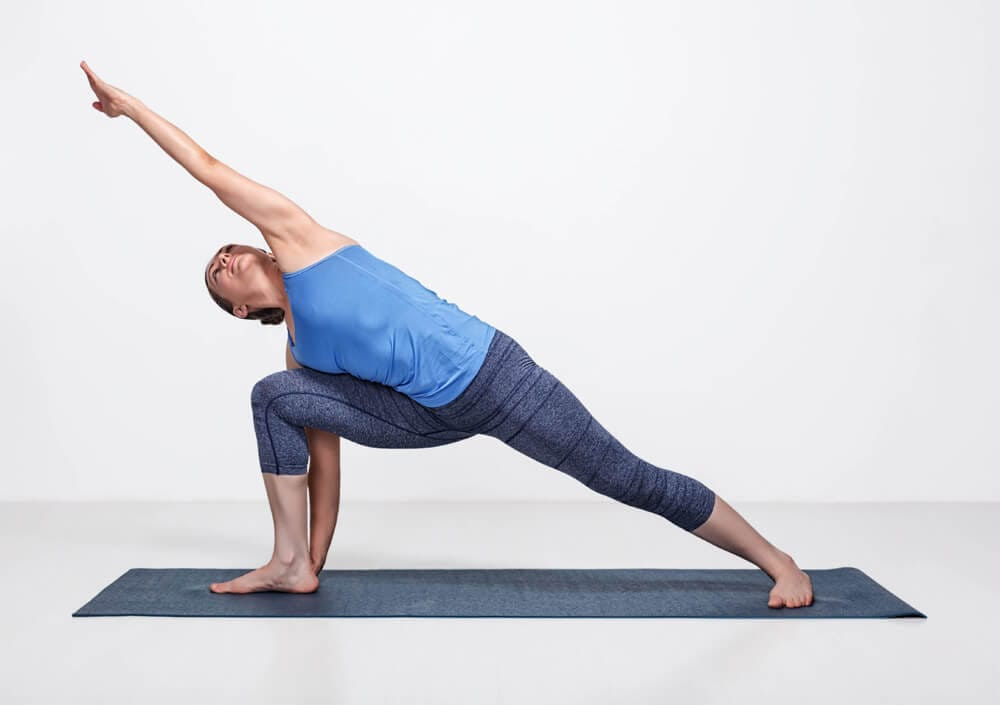
Extended side angle pose, or utthita parsvakonasana in Sanskrit, is a standing pose that’s often sequenced in between warrior poses. From warrior two, the yogi leans their torso toward their bent leg and reaches their arm in line with the torso. The pose provides a deep stretch to the groin and hamstrings.
Instructions
Begin in warrior two with the right leg bent.Exhale and lean the torso to the right. Rest the right forearm on the right thigh and reach the left arm overhead.To deepen the pose, exhale and lower the right fingertips to the floor. Stretch the left arm alongside the ear so that it’s in line with the torso.Breathe while holding the pose.Inhale and return to warrior two. Change sides and repeat.

Crab Pose (Ardha purvottanasana)

What is Crab Pose?

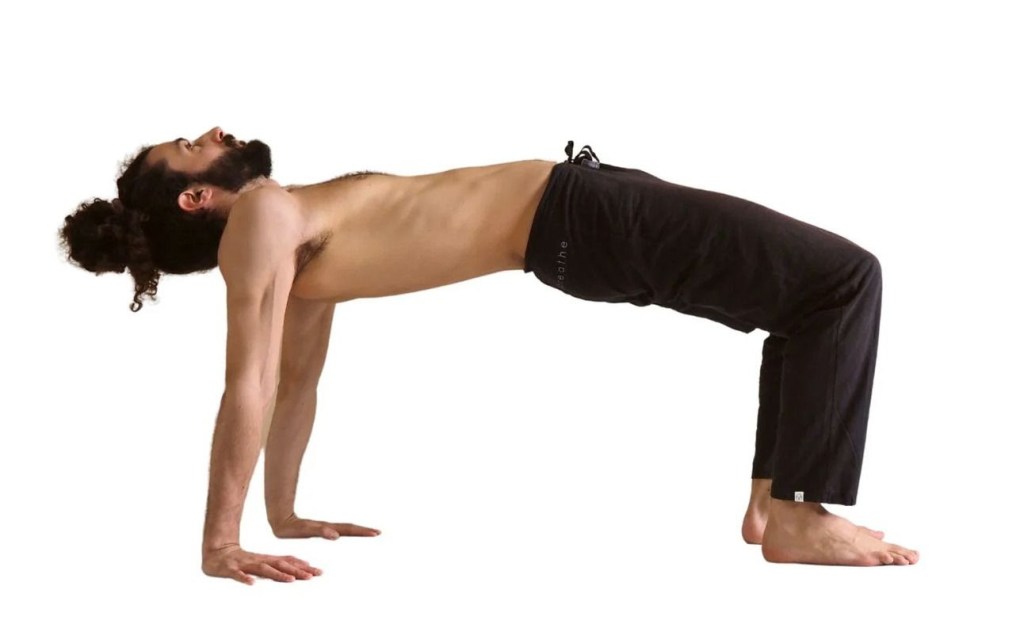
Crab pose, also known as reverse table top and ardha purvottanasana in Sanskrit, is a mild beginner’s backbend that strengthens the arms and improves posture. With the hands aligned under the shoulders and feet under the knees, the yogi uses strength to keep their front body lifted toward the sky.

Instructions

Sit on the buttocks with the knees bent, feet hip distance wide and flat on the floor.

Place the hands on the floor behind you, shoulder distance wide and fingers pointing in.

Inhale and lift the hips, bringing the torso parallel to the floor. The feet should be under the knees and hands under the shoulders.

Breathe while holding the pose.

Exhale and lower.

In the Hands of Destiny

A great Japanese warrior named Nobunaga decided to attack the enemy although he had only one-tenth the number of men the opposition commanded. He knew that he would win, but his soldiers were in doubt. On the way he stopped at a Shinto shrine and told his men: “After I visit the shrine I will toss a coin. If heads comes, we will win; if tails, we will lose. Destiny holds us in her hand.”

Nobunaga entered the shrine and offered a silent prayer. He came forth and tossed a coin. Heads appeared. His soldiers were so eager to fight that they won their battle easily.

“No one can change the hand of destiny,” his attendant told him after the battle.

“Indeed not,” said Nobunaga, showing a coin which had been doubled, with heads facing either way.

One-Legged King Pigeon Pose A (Eka Pada Rajakapotasana A)

What is One-Legged King Pigeon Pose A?
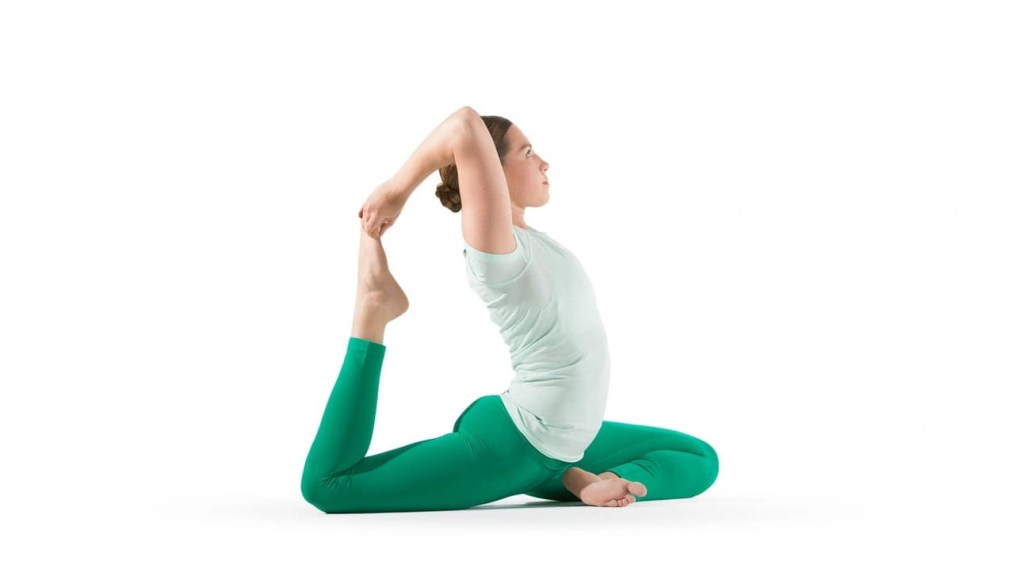
One-legged king pigeon poses A, or eka pada rajakapotasana A in Sanskrit, is a deep and challenging backbend that opens the chest and develops flexibility in the hips. From pigeon pose, the yogi bends the back foot in toward the buttocks, clasping the toes in a deep backbend.
Instructions
Begin in pigeon pose with the right foot back.Exhale and bend the right foot toward the buttocks.Inhale and reach the right arm (and left arm, if possible) up and back. Clasp the right toes with both hands.Breathe while holding the pose.