Are you finding that you’re taking things personally and being overly sensitive in your relationships with others? Do people generally think you overreact to the smallest thing, which leaves you feeling alone, confused, and upset? Do you require assistance controlling your emotions?
You might feel imprisoned by your own responses if this kind of circumstance keeps happening and spirals out of control. If this strikes a chord with you and you’re prepared to consider why this keeps happening to you, you might want to consider the reasons behind your emotional reactivity.
Signs that you are being emotionally reactive:
You take offense at the little thing.Frequently, your response is excessive for the circumstances.You frequently storm off in a cloud of self-righteousness when things aren’t going exactly to plan.You believe circumstances have CAUSED your reaction, leaving you feeling buffeted by the storms of life.People find you prickly and hard to be around.If you think someone has criticized you, you may get defensive and resentful.You can become consumed by rage at any time and in response to the smallest provocation.Your outbursts may have a theme, but you’re not sure what it is.
Some tips to support you to be less reactive
Think about responding rather than reacting
This can entail redefining your perspective on life. Remind yourself that you are not a victim of your circumstances and that you have the power to react differently when things don’t work out as planned.
Take a breath
Give yourself a millisecond’s grace before responding. When you sense that you are going to lose it or become furious over something, stop, take a deep breath, and analyze the problem from a different angle. Is it the situation, or is it some dynamic within the situation that is pressing on an old wound?
Get to know your triggers
Finding out what’s truly bothering you may take some time, but doing so might help you become far less reactive. Try to cultivate a part of yourself that “observes” what you’re doing, thinking, and feeling over time. Observe every moment you were about to respond and record it, rather than letting yourself react. After things have quieted down, consider your responses and try to identify the underlying feeling that might be behind them. The next time you sense an impending reaction, you may identify it for what it is: merely a trigger.
Replenish your energy
Because you have less energy reserves to work with when you’re feeling exhausted and depleted, you may become more irritable than usual. Schedule activities for your week that will refuel you instead of depleting it. This can include static, soothing hobbies like mindfulness or meditation; dynamic ones like fitness and exercise; and artistic endeavors like writing, coloring, sketching, cooking, or gardening. To feel more centered and in touch with yourself, it can also just require setting aside some time to check in with yourself and see how you’re feeling.
Re-phrase your script
Try accepting responsibility for your emotions and owning up to your feelings rather than placing blame on other people by expressing things like “you made me angry when you forgot to call me.” Try stating this instead: “I started to feel forgotten and disregarded when you didn’t call me at the time we’d agreed upon. What I’d like you to do is text me if you can’t call at the time we talked about.” Your communication style has a profound impact on your level of reactivity.
“When you give joy to other people, you get more joy in return. You should give a good thought to the happiness that you can give out.”
Eleanor Roosevelt
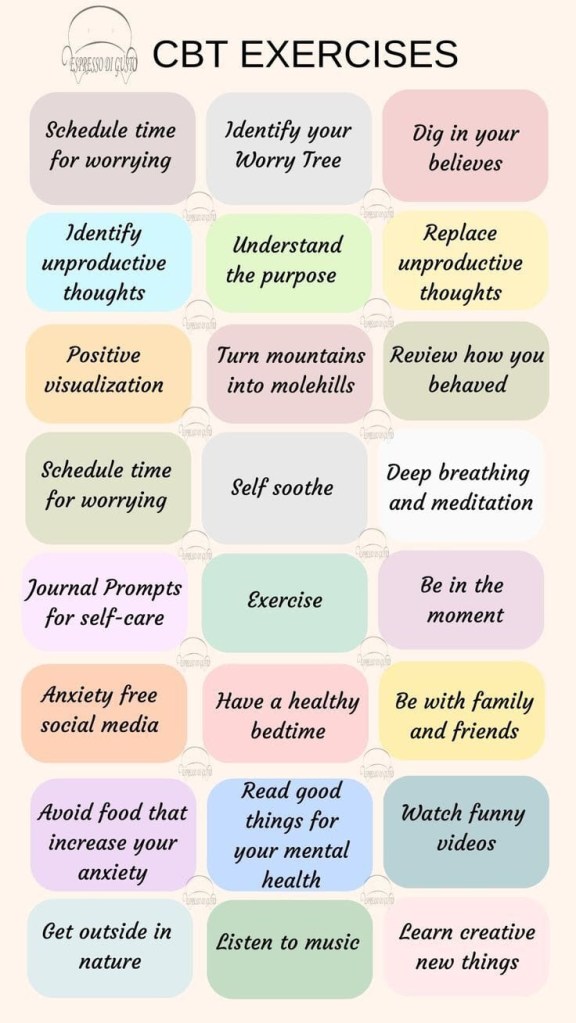
The holidays: a time for twinkling lights, festive cheer, and… overwhelming anxiety? If you find yourself dreading the holidays instead of enjoying them, you’re not alone. Juggling social commitments, navigating family dynamics, and facing financial pressures can make this time of year feel more like a burden than a blessing.
But don’t despair! Cognitive Behavioral Therapy (CBT) offers practical tools to help you reclaim your holiday joy. Here are some therapist-approved CDT exercises to keep your anxiety in check and make this season truly merry and bright:
Reframe Your Thinking:
CBT emphasizes the powerful link between thoughts and emotions. When anxiety creeps in, take a moment to examine the thought fueling it. Is it realistic? What evidence supports it? Could there be a different perspective?
For example, if you’re stressed about hosting the “perfect” holiday dinner, challenge that thought. Remind yourself: “The holidays are about connection, not perfection.” A simple shift in perspective can work wonders for your stress levels.
Breathe Your Way to Calm:
Anxiety often triggers our body’s fight-or-flight response. Counteract this with mindful breathing, a core CBT technique:
Inhale deeply for 4 seconds. Hold for 4 seconds. Exhale slowly for 6 seconds. Repeat this cycle until you feel your body relax. This practice grounds you in the present moment and calms racing thoughts.
Set Healthy Boundaries:
Family gatherings can be a minefield of anxiety triggers, especially when sensitive topics arise. CBT encourages clear communication to prevent conflict. Use “I statements” to express your needs assertively but respectfully:
“I feel overwhelmed when we discuss politics. Could we change the subject?” This approach promotes understanding and reduces tension.
Embrace Action Over Avoidance:
Anxiety often leads us to avoid situations that make us uncomfortable. Behavioral activation, a powerful CBT tool, encourages you to engage in meaningful activities despite your worries.
Dreading that holiday party? Break it down into smaller steps:
Choose your outfit. Commit to staying for a set amount of time. Focus on connecting with one person. This gradual approach builds confidence and helps you enjoy the experience.
Wrangle Your Worries:
Holiday stress can unleash a torrent of “what-ifs.” Instead of letting these worries run rampant, capture them in a “worry log”:
Schedule 10 minutes daily for “worry time.” Write down your concerns and brainstorm potential solutions. Containing your anxiety to a specific time prevents it from taking over your entire day.
This holiday season, don’t let anxiety steal your joy. By incorporating these CBT exercises into your routine, you can navigate the festivities with calm and confidence. Remember, it’s okay to prioritize your mental well-being and enjoy the holidays on your own terms.
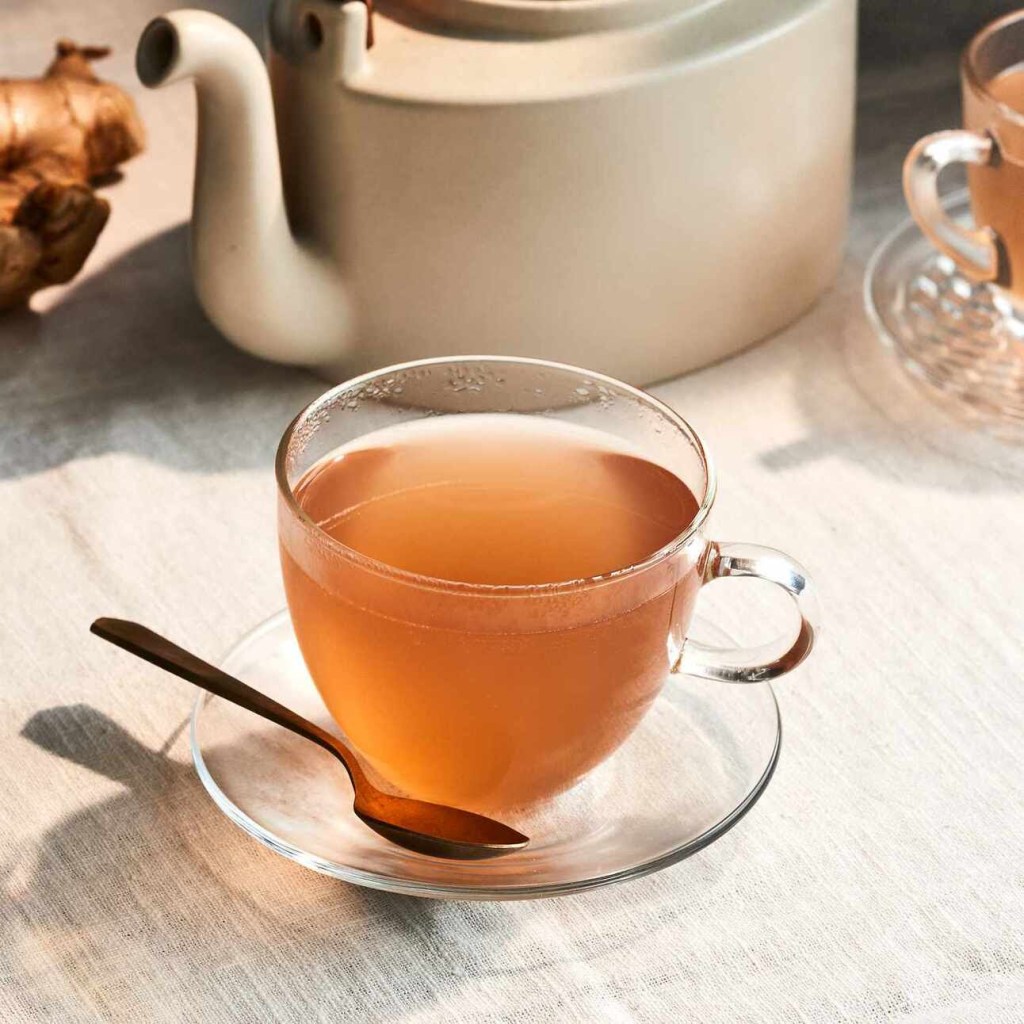
Enjoy the pungent and sweet aroma of ginger in this Vata balancing tea. Aromatic cardamom and lime juice bring springtime freshness with your first sip. The spices and the sweetness of the raw sugar brings a festive, smile-inducing flair.
This tea is perfect for the late afternoon when you are looking for a little pep and zing to break through your tiredness or brain fog. It will refresh your energy, wake you up and clear your mind. It will leave your mouth with a fresh and clean feel.
If you are experiencing a sluggish, heavy or cold digestion, drink this tea to give it a boost. It is warming, light and the pungency of the ginger will increase digestion. Cardamom stimulates a downward energy. And the sourness of lime releases secretions. This combination is absolutely perfect to improve digestion.
Wild thing pose, or camatkarasana in Sanskrit, challenges both strength and balance. A relatively newer pose and commonly practiced in vinyasa classes, the yogi enters wild thing pose from downward dog, lifting one leg up and behind so that the heart opens to the sky.
Instructions
Begin in downward-facing dog pose.Inhale and lift the right leg and hand off the floor.Exhale and reach the right leg up and over so that the foot rests on the floor behind the left leg.Inhale and reach the right hand toward the sky.Breathe while holding the pose.
One evening as Shichiri Kojun was reciting sutras a thief with a sharp sword entered, demanding either money or his life. Shichiri told him: “Do not disturb me. You can find the money in that drawer.” Then he resumed his recitation. A little while afterwards he stopped and called: “Don’t take it all. I need some to pay taxes with tomorrow.” The intruder gathered up most of the money and started to leave. “Thank a person when you receive a gift,” Shichiri added. The man thanked him and made off. A few days afterwards the fellow was caught and confessed, among others, the offence against Shichiri. When Shichiri was called as a witness he said: “This man is no thief, at least as far as I am concerned. I gave him money and he thanked me for it.” After he had finished his prison term, the man went to Shichiri and became his disciple.





 Anna Godfrey
You must be logged in to post a comment.