Worry Less Today: A Guide to Quieting Your Mind

Quote of the day:

Worry does not empty tomorrow of its sorrow. It empties today of its strength.

Corrie Ten Boom

We all worry. It’s a natural human response to uncertainty and the unknown. But excessive worry can be detrimental to our mental and emotional well-being.

Here are a few strategies to help you break free from the worry cycle:

1. Change Your Focus:

  • Break the cycle: When worry starts to creep in, actively change your focus. Instead of dwelling on your anxieties, engage in a different activity. Go for a walk, listen to music, read a book, or spend time with loved ones.
  • The “Newt Scamander” philosophy: Remember the wise words of Newt Scamander: “Worrying means you suffer twice.”

2. Ask Yourself the Right Questions:

  • Is this worry justified? Is it based on real concerns or is it fueled by fear and anxiety?
  • Will worrying solve the problem? Often, worry simply exacerbates the issue.
  • What can I do to address this situation? Focus on actionable steps and solutions.
  • Are there any positive possibilities to consider? Try to shift your focus from negative to positive outcomes.

3. Reflect on Past Worries:

  • Keep a worry journal: Jot down your worries as they arise. Later, review your journal and notice how many of your worries never materialized.
  • Learn from the past: Reflect on past worries and identify recurring patterns. This can help you recognize and address the root causes of your anxieties.

4. Differentiate Between Solvable Problems and Imagined Fears:

  • Identify solvable problems: Focus your energy on addressing issues that you can actually control or influence.
  • Challenge imagined fears: When negative thoughts arise, challenge them with positive counter-thoughts. For example, instead of “What if I fail?”, ask yourself “What if I succeed?”

5. Practice Self-Compassion:

Remember that everyone experiences worry. Be kind to yourself and don’t beat yourself up for having these thoughts.

By implementing these strategies, you can learn to manage your worries more effectively and cultivate a more peaceful and fulfilling life.

Disclaimer: This information is for general knowledge and informational purposes only and does not constitute medical advice. If you’re struggling with excessive worry or anxiety, please consult with a mental health professional.

Are You Still Waiting for Your Vitamin D to Kick In? There’s a Faster Way.

Did you know that a staggering billion people worldwide are estimated to have vitamin D deficiency or insufficiency? That’s a huge number, and it’s a problem that goes way beyond just bone health. We’re talking immune system support, brain function, muscle strength, and even mood regulation. Vitamin D is essential for so much of what keeps us feeling our best.

But here’s the frustrating truth: the standard vitamin D3 supplements many of us take can be surprisingly slow to work. You pop a pill, thinking you’re doing your body a favor, but it can take weeks for those benefits to truly manifest. Why? Because your body has to convert that vitamin D3 in your liver before it can actually use it. This conversion process leads to slow absorption, fluctuating levels, and that nagging feeling of “is this even working?”

Enter Calcifediol: The Speedy Solution

Imagine if you could bypass that slow conversion process and give your body the form of vitamin D it’s already ready to use. That’s exactly what calcifediol does.

Calcifediol is the pre-activated form of vitamin D. It skips the liver step, meaning it’s absorbed faster, raises your vitamin D levels more quickly, and maintains those levels for longer. In fact, studies show that calcifediol is 2.5 to 3.5 times more potent than regular vitamin D3.

Longer Lasting, Fewer Pills

Here’s another key difference: the half-life. Vitamin D3 has a relatively short half-life of about 15 hours, meaning your body starts breaking it down quickly. Calcifediol, on the other hand, boasts a half-life of 2 to 3 weeks. This translates to fewer pills, more stable vitamin D levels, and a much faster path to feeling the difference.

Why Make the Switch?

If you’re looking for:

  • Stronger immune support: Give your body the vitamin D it needs to fight off invaders.
  • Improved mood: Combat those winter blues and boost your overall well-being.
  • Faster results: Stop waiting weeks and start feeling the benefits sooner.

Then it’s time to consider upgrading your vitamin D game. Ditch the slow-acting D3 and embrace the efficiency of calcifediol.

The Convenience Factor

Imagine getting the equivalent of 8,000 to 10,000 IU of vitamin D with just one small, weekly calcifediol pill. And all of that for less than a dollar a day. That’s convenience and effectiveness rolled into one.

Disclaimer: While calcifediol is available without a prescription, it is always recommended that you consult with your physician before starting any new supplement regimen. They can help you determine the right dosage for your individual needs and ensure it won’t interact with any existing medications.

Monkey Pose (Hanumanasana)

What is Monkey Pose?
Monkey pose, or hanumanasana in Sanskrit, is the yogic version of the splits. In this advance seated posture, the legs are stretched forward and back, and the arms are lifted toward the sky. The pose both requires and develops flexibility in the legs and hips.
Instructions
Begin kneeling with the fingertips resting on the floor beside the knees.Exhale and stretch the left leg forward. At the same time stretch the right leg back. Keep the weight in the hands.Once the front hamstring and back thigh touch the floor, inhale and lift the arms to the sky.Breathe while holding the pose.Inhale and carefully return to kneeling. Change sides.

3 Signs Your Brain is Begging for Glutathione

We’ve all had those moments. You walk into a room, and poof! Your purpose vanishes. Or maybe you’re staring at your computer screen, battling a thick fog that clouds your thoughts. If you’re frequently experiencing brain fog, memory lapses, or difficulty focusing, your brain might be sending you a crucial message: it needs more glutathione.


What is Glutathione and Why Does Your Brain Need It?


Glutathione is often referred to as the “master antioxidant.” It’s a powerful substance produced naturally in your body, and it plays a vital role in protecting your cells from damage caused by free radicals. This protection is especially critical for your brain, which is highly susceptible to oxidative stress.


Here are three key reasons why your brain needs glutathione:


Memory Lapses and “Where Did I Go?” Moments:


Ever walk into a room and instantly forget why? This frustrating experience can be a sign of declining cognitive function. Glutathione helps protect brain cells from damage that can impair memory. Boosting your glutathione levels may help sharpen your memory and reduce those frustrating “blank” moments.


The Persistent Cloud of Brain Fog:


Brain fog is that frustrating feeling of mental sluggishness, difficulty concentrating, and a general lack of mental clarity. Glutathione’s antioxidant properties help clear out the oxidative stress that contributes to brain fog, allowing your mind to think more clearly and efficiently.


Struggling to Focus on One Task:


In today’s fast-paced world, distractions are everywhere. But if you find it increasingly difficult to focus on a single task, even without external distractions, it could be a sign of poor brain health. Glutathione helps support healthy neurotransmitter function, which is essential for maintaining focus and concentration.


What Can You Do?


If you’re experiencing any of these symptoms, it’s essential to consider how to boost your glutathione levels. While your body produces glutathione naturally, factors like stress, poor diet, and aging can deplete your levels.


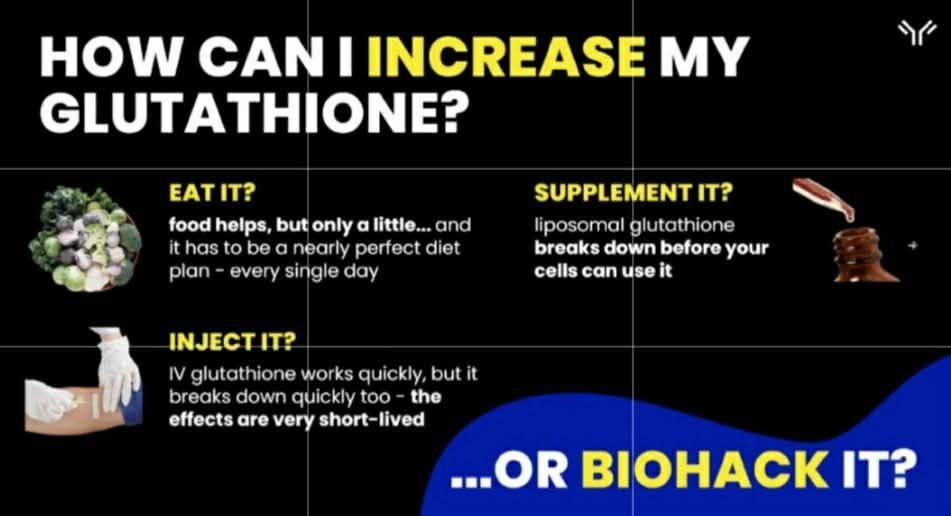
There are many ways to increase your glutathione. Some ways include eating foods rich in glutathione building blocks, and supplementation.


Take care of your brain, and it will take care of you. Boosting your glutathione is a crucial step towards maintaining optimal cognitive function and enjoying a sharper, clearer mind.

Heaven and Hell: A Zen Parable

The imposing samurai, known for his fierce demeanor and booming voice, stormed into the Zen master’s serene meditation chamber. “Tell me,” he demanded, “the nature of heaven and hell.”

The Zen master, unfazed, opened his eyes and regarded the samurai with a calm, unwavering gaze. “Why,” he replied, his voice steady and measured, “should I enlighten someone as uncouth and disrespectful as yourself? You, with your shabby appearance and your foul temper, dare to demand answers from me? Begone!”

Insulted and enraged, the samurai roared and drew his sword, preparing to strike down the master.

But as he raised his weapon, the Zen master spoke calmly, “That, my friend, is hell.”

The samurai froze, the sword hovering above him. He felt a surge of icy dread. His anger, he realized, had consumed him, blinding him to reason and driving him towards violence. He had, in that moment, created his own personal hell – a realm of rage, hatred, and self-destruction.

Tears welled up in the samurai’s eyes. He lowered his sword, shamefaced. “Thank you, Master,” he said, bowing deeply. “You have shown me the true nature of hell.”

The Zen master smiled gently. “And that,” he replied, “is heaven.”