Breaking Free from a Shame Spiral: A Guide to Reclaiming Your Self-Worth

β€œLearning to let go should be learned before learning to get. Life should be touched, not strangled. You’ve got to relax, let it happen at times, and at others move forward with it.”

Shame spirals are powerful and destructive cycles of negative emotion, often triggered by feelings of embarrassment or unworthiness. They can lead to a cascade of emotions, including guilt, worthlessness, and isolation, making it challenging to escape their grip without help. Understanding how to recognize and break free from a shame spiral is essential for maintaining your mental health and well-being.

What Is a Shame Spiral?

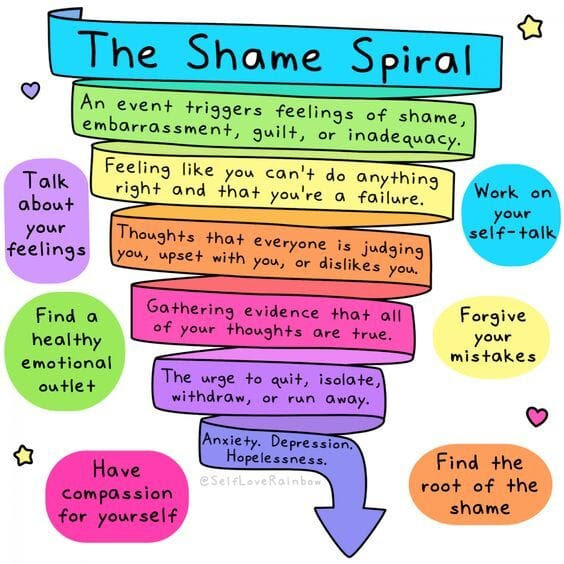
A shame spiral is a specific type of negative emotional cycle characterized by deep feelings of shame and unworthiness. Triggers like rejection, failure, and disconnection often set off shame spirals, which are frequently rooted in perfectionism and anxiety. As these feelings intensify, they create a downward spiral that can be difficult to break without intervention.

Recognizing a Shame Spiral

Identifying a shame spiral can be challenging, especially if you regularly experience negative feelings toward yourself. However, certain indicators can help you recognize when you’re caught in one:

  • Intense feelings of shame and humiliation
  • Beliefs of worthlessness
  • Feelings of isolation and loneliness
  • Difficulty regulating emotions
  • Destructive behavior patterns

Steps to Break the Shame Spiral

While there is no one-size-fits-all solution to ending a shame spiral, several steps can be beneficial in helping you break free from its grip.

1. Acknowledge Your Feelings

The first step is recognizing and acknowledging your emotions. It can be hard to identify a shame spiral if you’re used to negative self-talk. Rather than ignoring these feelings, accept them and understand that you need to change your behavior to stop the negative thought process.

2. Talk to Yourself Like a Friend

Speaking to yourself in the third person can help break the cycle of negative self-talk. We tend to be much harsher on ourselves than on friends or strangers. Imagine you’re talking to a friend and extend the same mercy and forgiveness to yourself that you would to them. This shift in perspective can significantly reduce the intensity of your negative emotions.

3. Get Grounded

Grounding techniques can help you get out of your head and into your body. One effective method is focusing on your breath. Try inhaling for four seconds, holding for four seconds, and exhaling for four seconds. Repeat this cycle several times until you feel more centered. Additionally, observe your surroundings or focus on physical sensations to divert your attention from internal thoughts.

4. Seek Support from Someone You Trust

Isolation is a primary driver of shame spirals. Brene Brown, a renowned author and researcher, suggests that sharing your thoughts with others can diminish shame. Reach out to friends, family, a support group, or a therapist. Sharing your feelings can provide new perspectives, helping you see your thoughts more clearly and be kinder to yourself.

5. Take Action by Serving Someone Else

Although it may seem counterintuitive, serving others can significantly impact your mental health when you’re stuck in a shame spiral. Helping others fosters love, gratitude, and physical activity, counteracting self-pity. Even small acts of kindness can shift your focus and improve your overall mental state.

Conclusion

Breaking free from a shame spiral is challenging, but recognizing the signs and taking proactive steps can help you regain control over your emotions. Acknowledge your feelings, practice self-compassion, ground yourself, seek support, and engage in acts of service to disrupt the negative cycle. By implementing these strategies, you can reclaim your self-worth and move toward a healthier, more positive mindset.

Ayurveda Recipes:Β Tofu Scramble With Kale, Fennel & Tomato

Enjoy ‘Tofu Scramble with Kale, Fennel & Tomato’ for Sunday brunch. Combine this easy to prepare meal with the weekend newspapers and a hot cup of Body-Kind Coffee. Relax into your morning and enjoy a day of rest. Its light, dry and clear qualities will combat any congestion or feelings of brain fog. You will feel full, nourished and fresh after this meal.
Ingredients
1/2 tsp CUMIN
1 c FENNEL STALK
1 tbsp GHEE
1/2 lbs KALE
1/4 pinch RED PEPPER FLAKES (CHILI)
1 c TOFU
2 whole TOMATO
1/4 tsp TURMERIC
Instructions
1. Drain tofu and firmly pat dry with absorbent towels to remove moisture. Then, use a fork to crumble.
2. In a non stick pan, heat 1 tbsp ghee and gently fry cumin, turmeric and chilli powder for 1-2 minutes.
3. Saute chopped kale, tomato and fennel for 5 minutes, then add crumbled tofu.
4. Continue to cook for another 5 – 7 minutes until tofu is coated in spices and cooked through.

Healing From Past Relationship Trauma: A Journey to Reclaim Your Life

“Train your mind to see the good in every situation.”

Healing from a toxic relationship can be a tumultuous journey, often leaving a lasting impact on one’s mental and emotional well-being. Trauma from such relationships can manifest in various ways, making it challenging to trust others and navigate social interactions. Understanding and addressing this trauma is crucial for reclaiming your life and moving forward.

When Does Relationship Trauma Occur?

Relationship trauma isn’t limited to physical assault. Emotional and psychological abuse can also leave deep scars. Common forms of emotional and psychological abuse include:

  • One partner purposely humiliating the other
  • Making degrading comments in private or public
  • Constant criticism
  • Inducing guilt for things beyond the other’s control
  • Controlling behaviors, dictating what the other can and can’t do

Symptoms of Relationship Trauma

Low self-esteem is a hallmark of relationship trauma. Traumatized individuals may apologize excessively, experience unwanted or obsessive thoughts, and have trouble concentrating. Other common symptoms include:

  • Unwanted and recurring flashbacks to traumatic events
  • Feelings of shame or guilt
  • Sleep disturbances and nightmares
  • Trust issues
  • Hypervigilance and suspicion

Tips to Let Go of the Past

Letting go of the trauma from past relationships is essential for healing and personal growth. Here are some strategies to help you release the bonds of trauma:

1. Make a Commitment to Let Go

Acknowledge that the past should not control your future. Resolve to let go of the past and focus on the present. This commitment is the first step towards healing.

2. Feel the Emotions

Memories of past events can trigger strong emotions. Instead of suppressing these feelings, allow yourself to experience them. Understanding these emotions can help you identify what went wrong. Talking to a therapist or a trusted friend about your feelings can be immensely beneficial.

3. Get Help

If you struggle to break free from negative mental patterns on your own, seek individual counseling. Therapy provides tools to manage overwhelming thoughts and emotions, aiding in your healing process.

4. Engage in Mindfulness

Mindfulness can help you stay grounded in the present. Focus on the little joys in life, schedule time for activities that matter, spend more time outdoors, and incorporate meditation into your daily routine.

5. Think Before Reacting

Before reacting to situations, take a moment to consider the consequences of your actions. This practice requires time and effort but can lead to more thoughtful and less reactive responses over time.

Conclusion

Healing from past relationship trauma is a challenging but essential process. By acknowledging your feelings, seeking help, practicing mindfulness, and committing to letting go of the past, you can begin to reclaim your life. Remember, the journey to healing is personal and unique, but with persistence and support, you can overcome the shadows of your past and embrace a brighter future.

The Hidden Danger of Visceral Fat and How to Combat It

Hi, all!
If you have been reading our posts, you probably picked up on us addressing  visceral fat.  I would like to expand upon that. 

Visceral fat isn’t something you see in the mirror and it’s more than just a number on the scaleβ€”it’s the fat that is deeper in your body.  Unlike subcutaneous fat, which sits just under your skin, visceral fat wraps around your vital organs like the liver, pancreas, ntestines, etc.

I found out its considered toxic, so the research nerd that I am had to go read up on why.  Visceral fat is highly active and produces inflammatory chemicals called cytokines. These “cytokines” increase the risk of chronic diseases like heart disease, type 2 diabetes, and even certain cancers.  With the filter health history I have…this is an eye opener.

When visceral fat is in abundance it makes your cells less responsive to insulin, leading to higher blood sugar levels and thus opening the door to diabetes. (Insert Wilford Brimley reference here πŸ₯Ή).

Lets move on to hormonal disruption.  That visceral fat can throw off your hormones, whuch affect everything from stress levels (unbalanced cortisol anyone?) to appetite control, making weight loss even harder.

One of the things that concerned me most is that by surrounding your organs, visceral fat can cause fatty liver disease and impair liver function, whuch in turn adds extra strain to your heart. 

Of course check with your medical professionals.  Ask the questions. 
You can reduce visceral fat through a balanced diet, regular exercise, and stress management. If you need additional support, well-sourced supplements and ingredients that have clinical studies and science to back them up are good to add to your health arsenal.

So when you see me get really excited about my latest addition in my supplement line-up, now you know why. It targets visceral fat and stubborn belly fat. It’s a GLP-1 agonist meaning it’s designed to support balanced blood sugar levels and overall metabolic health. Yes. It’s a natural option to the Semiglutide shots. And I’m not a fan of πŸ’‰ so… I’m good with 2 morning pills a day, instead!

If you have read this far and want to learn more or want the link to get this GLP-1 SYNERGIZER that is a game changer for weightloss… drop a πŸ”₯ in the comments or send me a DM. Happy to help get you started!

#thegoalishealth  #VisceralFat #glp1 #Akkermansia #postbiotic #zipburn  #guthealth  #preventionoverprescription

Fish Pose (Matsayasana)

What is Fish Pose?
Fish pose, or matsayasana in Sanskrit, is a backbend that opens the chest and lungs. From a supine position, the practitioner supports the torso on the forearms while the chest lifts toward the sky. It’s commonly used as a counterpose to shoulderstand, or sarvangasana.
Instructions
Lie on the back with the legs together.Place the hands under the buttocks, palms down.Inhale and lift the heart toward the sky. Rest on the forearms. Lean the head back so that it touches the floor. Do not rest on the head.Breathe while holding the pose.