Breaking Free: A Guide to Healing from Trauma Bonds

Understanding Trauma Bonds

A trauma bond is a complex and powerful emotional attachment that often forms within abusive or dysfunctional relationships.

It’s a cyclical pattern where abuse is intermittently followed by displays of affection or remorse, creating a confusing and addictive dynamic. The abuser may also isolate their victim, intensifying their dependence and making it harder to leave.

In these relationships, the victim often minimizes or even denies the abuse, becoming increasingly reliant on the abuser for emotional validation and support. This creates a formidable barrier to breaking free.

7 Steps to Break the Bond

  1. Seek Support: Reaching out for help is crucial. Domestic violence shelters, local support groups, and hotlines offer vital resources, including legal aid, therapy, childcare, and more. Your safety and privacy are paramount, as these organizations understand the risks involved in leaving an abusive situation.
  2. Set Clear Boundaries: Learn to assert your needs and establish firm boundaries. Be clear and direct in communicating what you will and will not tolerate. Anticipate pushback; abusers often react negatively to boundaries. If setting boundaries escalates the situation or triggers violence, prioritize your safety and have an exit plan ready.
  3. Create Distance: While it may seem counterintuitive, creating physical and emotional distance from the abuser can be vital, especially when safety is a concern. This separation allows you to gain perspective and reduce the intensity of the trauma bond.
  4. Confront Your Emotions: In trauma-bonded relationships, suppressing your feelings becomes a survival mechanism. However, true healing requires acknowledging and addressing these emotions. Allow yourself to feel the anger, sadness, fear, or confusion. This process demonstrates self-compassion and sets the stage for recovery.
  5. Practice Self-Validation: Cultivate self-worth through positive self-talk and affirmations. Remind yourself of your strengths and resilience. Explore creative outlets or lean on supportive friends and family to further validate your feelings and experiences.
  6. Seek Professional Guidance: A therapist specializing in trauma can provide a safe space to process your experiences and develop healthy coping mechanisms. Online directories and free consultations can help you find the right fit.
  7. Embrace Journaling: Journaling offers a private outlet to express your thoughts and emotions without judgment. Document your experiences, track your healing progress, and gain insights into the complex dynamics of the trauma bond.

Remember: Breaking free from a trauma bond takes time and courage. Be patient with yourself, celebrate your progress, and don’t hesitate to seek additional support whenever needed. You deserve a life free from abuse and manipulation.

This is for informational purposes only. For medical advice or diagnosis, consult a professional. Here is another article that is closely related.


Ragdoll Pose (Uttanasana)

What is Ragdoll Pose?
Ragdoll pose is a variation of uttanasana, or standing forward bend. Here, the yogi clasps opposite elbows, bends the knees and allows the head to hang. The pose releases the low back and revitalizes the mind.
Instructions
Begin standing with the feet hip distance wide.Bend the knees slightly, exhale and bend at the hips.Clasp opposite elbows and allow the head to hang. Shift the bodyweight forward.Hold here or slowly sway side to side.Breathe while holding the pose.Inhale and return to standing.

Man and His Horse

There is a story in zen circles about a man and a horse. The horse is galloping quickly, and it appears that the man on the horse is going somewhere important. Another man, standing alongside the road, shouts, β€œWhere are you going?” and the first man replies, β€œI don’t know! Ask the horse!”

Use an Earthing Mat and/or Earthing Sheet

Use an Earthing Mat and/or Earthing Sheet
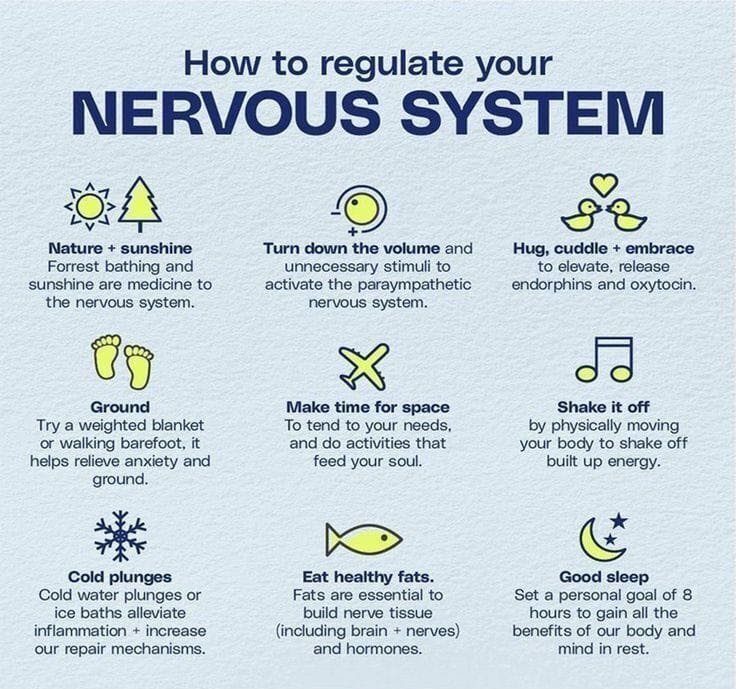
Earthing mats or earthing sheets are an easy way to bring the benefits of earthing into your home as they simulate the effect of sleeping in direct contact with the Earth, while still being in the comfort of your own home. Place a grounding mat under your desk upon which you can place your feet while you work. Earthing sheets can be used on the bed to stay grounded all night long. Grounding equipment like earthing mats and earthing sheets can either be plugged into the grounding outlet of your wall, or you can route the cord outside and stick a stake straight in the earth!
Athletes are always among the firsts to discover new health and performance tactics, so it is no surprise that athletes around the world are employing the science-backed benefits of earthing into their recovery protocol.
Tour de France athletes have been using grounding sleeping bags during competitions for years. By sleeping in these ‘grounded cocoons’ each night, the athletes experience accelerated tissue repair and wound healing, and wake up refreshed and ready to compete in the next leg of the race, averaging 105 miles a day!

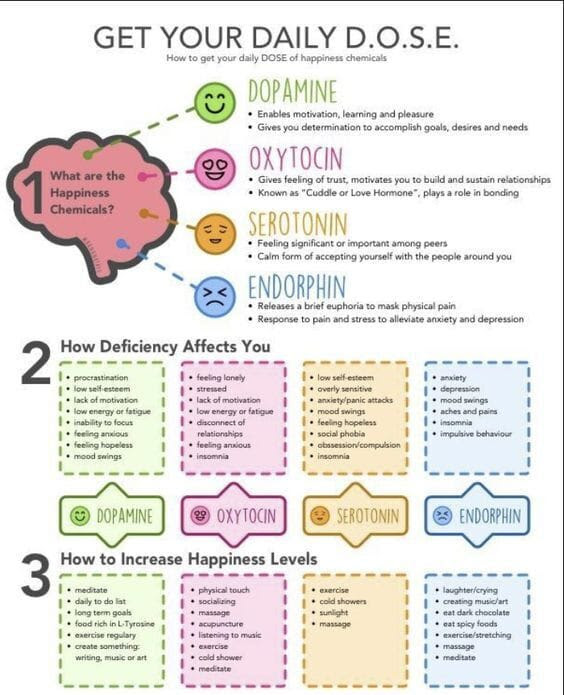
How to Increase Happy Brain Chemicals

How to Increase Happy Brain Chemicals
How to Increase Dopamine Levels Naturally
meditate regularly (increases dopamine by 65%)make a daily to-do list & long term goals (each time you tick off a task or goal you increase dopamine levels)eat foods that are rich in L-Tyrosine (avocados, fish, eggs, cheese, banana, and pumpkin seeds)exercise regularly (whichever form of exercise you enjoy the most will give you the most increase in dopamine levels)create something such as writing, music, art & crafts (β€œif I create something, I am also creating dopamine”)
How to Increase Oxytocin Levels Naturally
physical touch, cuddling, hugging, making eye contact, and even shaking handssocializing (connecting or talking with friends and family reduces cortisol and stimulates your vagus nerve)touching your pet (research shows it lowers blood pressure)getting a massage (reduces stress hormones)acupuncture (elevates oxytocin concentrations)listening to music (has a calming effect on the brain, slow-tempo music has also been shown to increase oxytocin)exercise (stimulates the vagus nerve)cold showers (stimulates the vagus nerve)meditate
How to Increase Serotonin Levels Naturally
exercise (increases serotonin and dopamine, but also helps balance them)cold showers (2-3 mins of cold showers can be unpleasant but offers great benefits that have longer-lasting effects than compared to caffeine)sunshine (10-15 minutes of sunlight a day can increase serotonin and vitamin D)eating foods such as banana, eggs, omega-3 fish, nuts and seeds, leafy greens, and probioticsgetting a massage (increases serotonin and decreases cortisol)
How to Increase Endorphin Levels Naturally
laughter and cryingcreating music or arteating dark chocolate and spicy foodsexercise or stretchinghigh-intensity interval traininggetting a massagemeditate