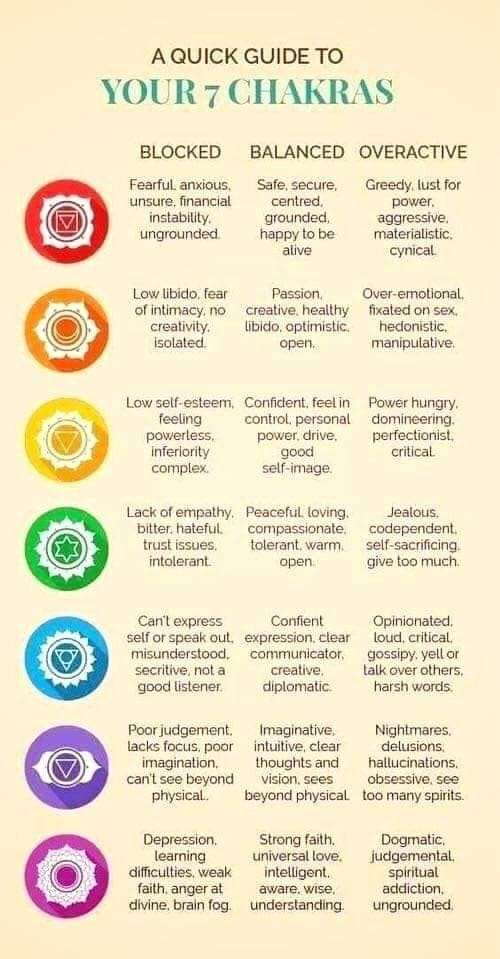
| SYMPTOMS OF BLOCKED ENERGY IN MULADHARA |
| Another name for the Muladhara chakra is the root chakra. Located beneath the tailbone, this chakra is the first one. It represents security, trust, our validity in our experience, and our ability to care for ourselves and others. |
| Root chakra imbalances can present as physical symptoms in the legs, foot, rectum, tailbone, and immune system. It may manifest as constipation, eating disorders, sciatica, knee pain, or degenerative arthritis. Unbalanced emotions have an impact on our basic needs for survival, including money, shelter, and food. |
| SYMPTOMS OF BLOCKED ENERGY IN SVADHISTHANA |
| The Svadhisthana, or sacral chakra, is found two inches below the navel at the sacrum. The source of sensuality, energy, and fluidity is Svadhisthana. We are dedicated, passionate, sexual beings that feel at ease taking chances when we are in a state of equilibrium. |
| Svadhisthana’s physical manifestations of obstructed energy include hip, pelvic, and low back discomfort, urinary troubles, sexual and reproductive disorders, and kidney malfunction. Emotional symptoms manifest as difficulties fulfilling our relationships, expressing our feelings, having fun, and playing according to our desires, creativity, enjoyment, and sexuality. It can also come across as fears of impotence, betrayal or addictions. |
| SYMPTOMS OF BLOCKED ENERGY IN MANIPURA |
| The Manipura, or solar plexus chakra, is the third chakra. It is located beneath the rib cage in the upper abdomen. Maniupura contains our sense of value and self-worth as well as our capacity to fully understand who we are without the need for any projected masks. |
| Physical symptoms can show in the stomach since it’s so close to the navel with digestive problems or stomach ulcers. Liver malfunction, persistent exhaustion, elevated blood pressure, diabetes, problems with the pancreas and gallbladder, and colon illness are other physical signs. Manipura emotional symptoms of obstructed energy manifest as problems with self-worth and personal authority. When there is a Manipura imbalance, it is common for our inner critic to take center stage, making worries of rejection, criticism, and appearance our top priorities. |
| SYMPTOMS OF BLOCKED ENERGY IN ANAHATA |
| The heart chakra, which is situated there, is where the soul or the Self resides. It manifests as feelings of openness, expansiveness, joy, and contentment. |
| Physical imbalance shows up in or around the heart such as asthma, heart and lung disease, issues with breasts, lymphatic systems, upper back and shoulder problems. You could emotionally suffocate someone with your presence or experience feelings of resentment, rage, desertion, or jealousy. |
| SYMPTOMS OF BLOCKED ENERGY IN VISHUDDHA |
| The throat chakra, Vishuddha, is located in the throat and is responsible for the ability to clearly express ourselves. As it facilitates clear communication between the head and the heart, it also serves as a messenger. When we are in balance, we are able to speak honestly and truthfully. |
| When imbalanced, physical symptoms of blocked energy in Vishuddha appear as throat issues. Thyroid difficulties, sore throats, laryngitis, ear infections, ulcers, face troubles, or pain in the neck and shoulders are common signs of blocked energy. Emotional symptoms including feeling powerless or uncontrollable are typical. A further sign of emotional distress is difficulty speaking. |
| SYMPTOMS OF BLOCKED ENERGY IN ANJA |
| Anja, also known as the third eye chakra, is the sixth chakra. This chakra is located just above the middle of the forehead. It is in charge of insight and intuition. |
| Anja experiences migraines, impaired vision, sinus problems, eyestrain, seizures, hearing loss, and hormone dysfunctions when she has blocked energy. Other blocked energy symptoms include issues with moodiness, volatility, and self-reflection. It’s also typical to have an imbalance in the third eye chakra and find it difficult to face one’s own fears and learn from others. |
| SYMPTOMS OF BLOCKED ENERGY IN SAHASRARA |
| The Sahasrara, or crown, chakra is the final chakra. Located at the top of the head, Sahasrara is our connection to universal consciousness. It’s also the site where our spiritual development happens. When balanced, we are present and trust our inner guidance. |
| When imbalanced and blocked, you may struggle with depression, an inability to learn, and sensitivity to light, sounds, annd environment. Rigid ideas about spirituality and religion lead to emotional imbalances and problems with self-awareness. There might be confusion and prejudice and fear of alienation when experiencing blocked energy in Sahasrara. |








 Anna Godfrey
You must be logged in to post a comment.