
There is something incredibly special about serving a meal where the ingredients were grown right here in Michigan. Farm-to-School initiatives are transforming how we source food for our students, moving away from long-haul supply chains and leaning into our local agricultural community.
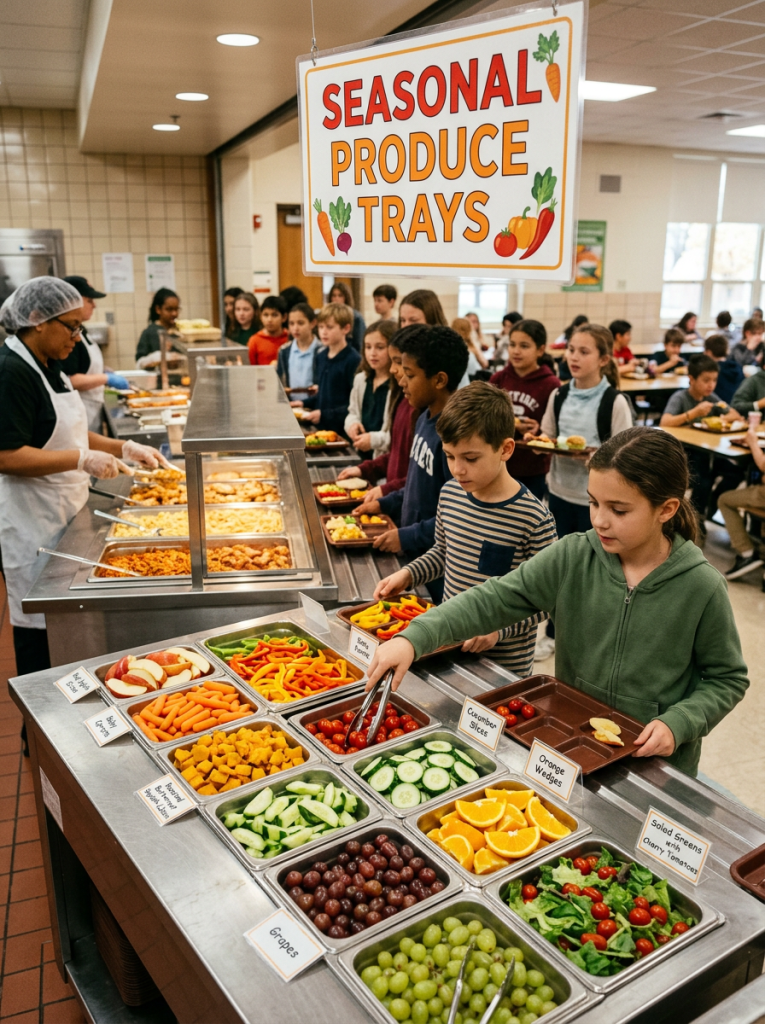
Bringing local food into a high-volume school district is a logistical puzzle. It involves building relationships with local farmers, adjusting our menus based on seasonal yields, and training our staff to process fresh, whole produce efficiently.
But the payoff is worth it. Farm-to-School programs do more than just provide our students with the freshest possible ingredients; they create a crucial educational link. When students understand that the crisp apples or fresh greens on their tray came from a farm just down the road, it builds a lifelong connection to their food system. It is a win for our local economy, a win for sustainability, and a win for our kids.
Resources & Steps for Sourcing Locally
Procuring local food within the tight regulations of school nutrition programs requires a strategic approach to purchasing and planning.
- Start with “Harvest of the Month”: Don’t try to source everything locally at once. Pick one seasonal item per month (e.g., local squash in October, local cherries in May) to feature prominently on the menu and in nutrition education.
- Leverage Food Hubs: Connecting with individual farmers is time-consuming. Look for regional Food Hubs—organizations that aggregate produce from multiple small local farms and handle the logistics, invoicing, and delivery directly to your school loading dock.
- Utilize DoD Fresh: Schools can use their USDA USDA Foods entitlement dollars through the Department of Defense Fresh Fruit and Vegetable Program (DoD Fresh). Many vendors in this program explicitly highlight local produce options you can easily order.
- Apply for Grants: The USDA Farm to School Grant Program offers significant funding annually to help schools build agricultural education programs, plant school gardens, and source local ingredients.


