
The school day is faster, louder, and more digitally saturated than ever before. For students, walking into a classroom carrying the weight of social media pressure, academic anxiety, or challenging home lives means their nervous systems are often operating in survival mode before the first bell even rings.
When a student is dysregulated, they cannot learn. When a classroom is dysregulated, a teacher cannot teach.
Integrating mindfulness into the school day isn’t about adding another cumbersome task to a teacher’s endless to-do list. It’s about building a sustainable culture of emotional safety. By teaching students how to pause and reset, we shift classroom management from a reactive game of “whack-a-mole” to a proactive environment of calm.
Here is how mindfulness transforms our schools, along with practical, plug-and-play daily routines for both elementary and secondary levels.
The Benefits: Science-Backed Success
For the Kids: Moving from Reaction to Reflection
Mindfulness directly strengthens the prefrontal cortex—the brain’s executive suite responsible for focus, impulse control, and emotional regulation. For younger children, this means fewer meltdowns and better sharing. For teenagers, it provides a vital pause button between an emotional trigger (like a peer conflict or a poor grade) and their reaction.
For Classroom Management: Co-Regulation
Classroom management becomes seamless when we shift from discipline to co-regulation. A teacher who models a calm presence allows students to subconsciously match that frequency. When daily mindfulness routines are established, transition times (like coming back from recess or changing periods) shrink dramatically because students have a ritualized pathway back to focus.
Elementary School Strategy: Playful & Sensory
Younger students learn mindfulness best through concrete, somatic, and imaginative practices. They need to feel it and see it.
A Day in the Elementary Classroom
1.The Morning Arrival: Breathing Buddies:8:30 AM.
Start the day on the carpet. Have students lie down or sit comfortably and place a small object (a stuffed animal, an eraser, or a paperweight) on their bellies. As they breathe in, they watch their “buddy” rise; as they breathe out, they watch it fall. This anchors their attention visually and physically.
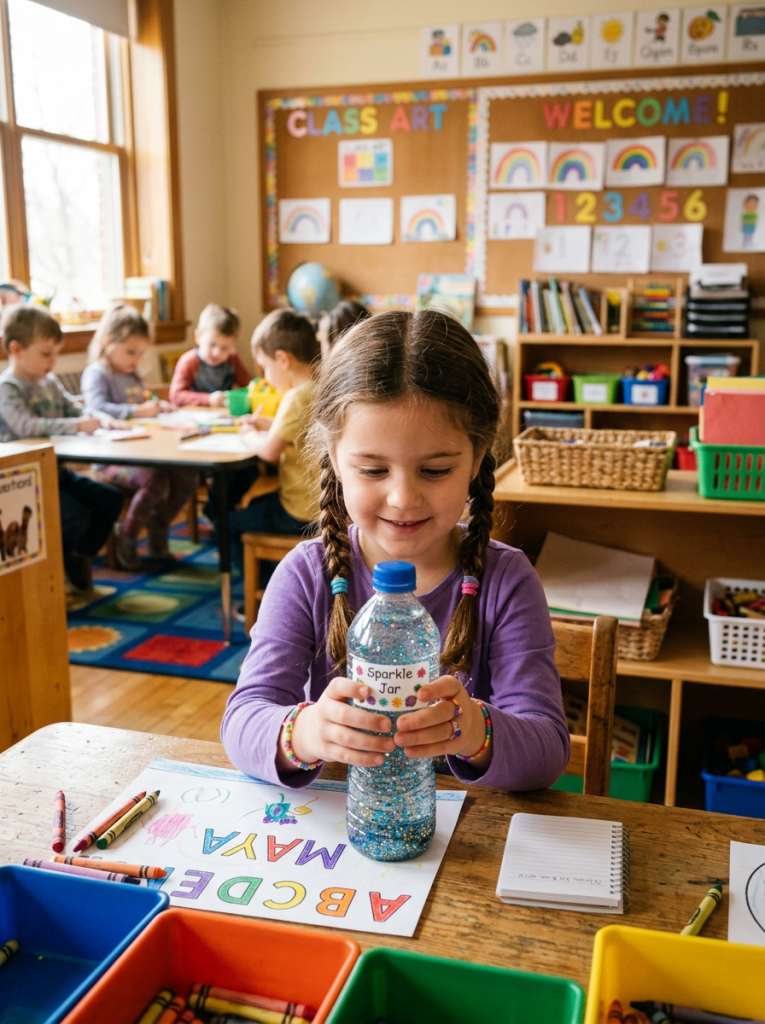
2.Post-Recess Transition: Glitter Jar Quiet:11:45 AM.
Coming back from lunch or recess is notoriously chaotic. Shake up a DIY liquid glitter jar and place it at the front of the room. Challenge the class to sit silently and watch the glitter slowly settle to the bottom. As the glitter rests, their energy resets.
3.Dismissal Reflection: The Kind Wish:3:00 PM.
Before packing backpacks, lead a 60-second “Loving-Kindness” moment. Have students place their hands on their hearts, close their eyes, and silently send a kind wish to someone in the room, someone at home, and themselves.
Secondary School Strategy: Autonomy & Relevance
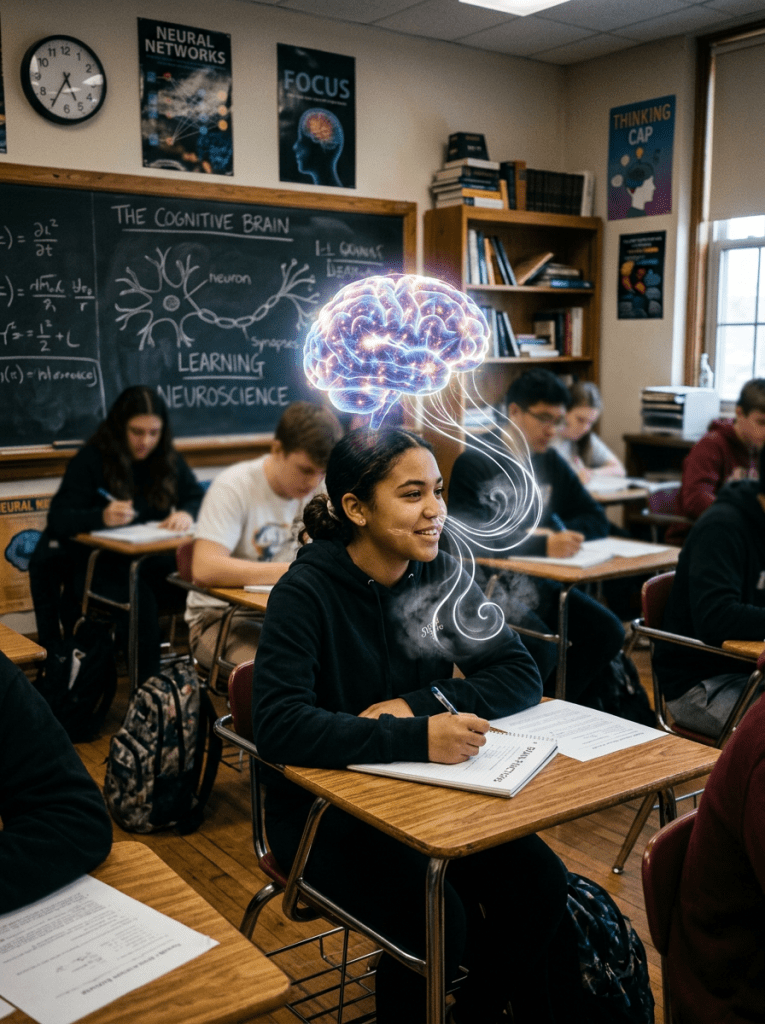
Middle and high school students often push back against things that feel childish or forced. To get buy-in from secondary students, mindfulness must be framed as a tool for personal performance, stress reduction, and mental clarity.
A Day in the Secondary Classroom
1.The 60-Second Brain Drop:Beginning of Class.
Do not start lecturing the moment the bell rings. Give teenagers a minute to arrive. Dim the overhead lights slightly and invite them to close their eyes or look down at their desks. Instruct them to mentally “drop” whatever drama happened in the hallway or on their phones, taking three long, audible exhales.
2.The 5-4-3-2-1 Sensory Check:Mid-Lesson Reset.
During a heavy block of testing or intense lecturing, combat the mental fog with a quick grounding technique. Ask students to silently identify: 5 things they can see in the room, 4 things they can physically feel, 3 things they can hear, 2 things they can smell, and 1 deep, intentional breath.
3.Digital Disconnect & Clear Desk:End of Class.
Two minutes before the final bell, ask students to clear their desks entirely and slide their phones into their bags. Spend the final moments in stillness, allowing the brain to process the academic material before rushing out into the noisy hallway.
Small Steps, Massive Impact
You don’t need a 30-minute meditation block to change the trajectory of a school day. Consistency always beats duration. When we weave these tiny micro-practices into the existing fabric of the school day, we stop treating emotional well-being as an extracurricular activity and start treating it as the foundational prerequisite for learning that it truly is.
Our classrooms don’t just need to be spaces of quiet instruction—they need to be sanctuaries of predictable safety.


