“Learning to let go should be learned before learning to get. Life should be touched, not strangled. You’ve got to relax, let it happen at times, and at others move forward with it.”
Shame spirals are powerful and destructive cycles of negative emotion, often triggered by feelings of embarrassment or unworthiness. They can lead to a cascade of emotions, including guilt, worthlessness, and isolation, making it challenging to escape their grip without help. Understanding how to recognize and break free from a shame spiral is essential for maintaining your mental health and well-being.
What Is a Shame Spiral?
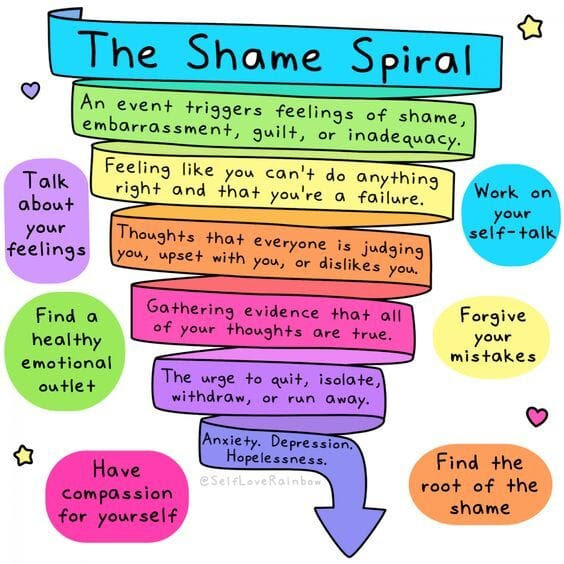
A shame spiral is a specific type of negative emotional cycle characterized by deep feelings of shame and unworthiness. Triggers like rejection, failure, and disconnection often set off shame spirals, which are frequently rooted in perfectionism and anxiety. As these feelings intensify, they create a downward spiral that can be difficult to break without intervention.
Recognizing a Shame Spiral
Identifying a shame spiral can be challenging, especially if you regularly experience negative feelings toward yourself. However, certain indicators can help you recognize when you’re caught in one:
- Intense feelings of shame and humiliation
- Beliefs of worthlessness
- Feelings of isolation and loneliness
- Difficulty regulating emotions
- Destructive behavior patterns
Steps to Break the Shame Spiral
While there is no one-size-fits-all solution to ending a shame spiral, several steps can be beneficial in helping you break free from its grip.
1. Acknowledge Your Feelings
The first step is recognizing and acknowledging your emotions. It can be hard to identify a shame spiral if you’re used to negative self-talk. Rather than ignoring these feelings, accept them and understand that you need to change your behavior to stop the negative thought process.
2. Talk to Yourself Like a Friend
Speaking to yourself in the third person can help break the cycle of negative self-talk. We tend to be much harsher on ourselves than on friends or strangers. Imagine you’re talking to a friend and extend the same mercy and forgiveness to yourself that you would to them. This shift in perspective can significantly reduce the intensity of your negative emotions.
3. Get Grounded
Grounding techniques can help you get out of your head and into your body. One effective method is focusing on your breath. Try inhaling for four seconds, holding for four seconds, and exhaling for four seconds. Repeat this cycle several times until you feel more centered. Additionally, observe your surroundings or focus on physical sensations to divert your attention from internal thoughts.
4. Seek Support from Someone You Trust
Isolation is a primary driver of shame spirals. Brene Brown, a renowned author and researcher, suggests that sharing your thoughts with others can diminish shame. Reach out to friends, family, a support group, or a therapist. Sharing your feelings can provide new perspectives, helping you see your thoughts more clearly and be kinder to yourself.
5. Take Action by Serving Someone Else
Although it may seem counterintuitive, serving others can significantly impact your mental health when you’re stuck in a shame spiral. Helping others fosters love, gratitude, and physical activity, counteracting self-pity. Even small acts of kindness can shift your focus and improve your overall mental state.
Conclusion
Breaking free from a shame spiral is challenging, but recognizing the signs and taking proactive steps can help you regain control over your emotions. Acknowledge your feelings, practice self-compassion, ground yourself, seek support, and engage in acts of service to disrupt the negative cycle. By implementing these strategies, you can reclaim your self-worth and move toward a healthier, more positive mindset.

 Anna Godfrey