| 1. Acknowledge Your Feelings |
| Emotions are a natural aspect of living. It’s typical for all these emotions to make you more sensitive to your triggers. Treat yourself with kindness. Do not compare your past and present life. You might still be recovering from wounds from your previous experience. |
| Your old experiences remain there. Deal with the present while drawing lessons from the past. Remind yourself of this all the time so you can respond to your trigger with better judgment. |
| 2. You Deserve Some Space |
| Sometimes, when the trigger is so overwhelming, it is better to step back and leave. It’s acceptable to request a break in order to prevent losing your temper. |
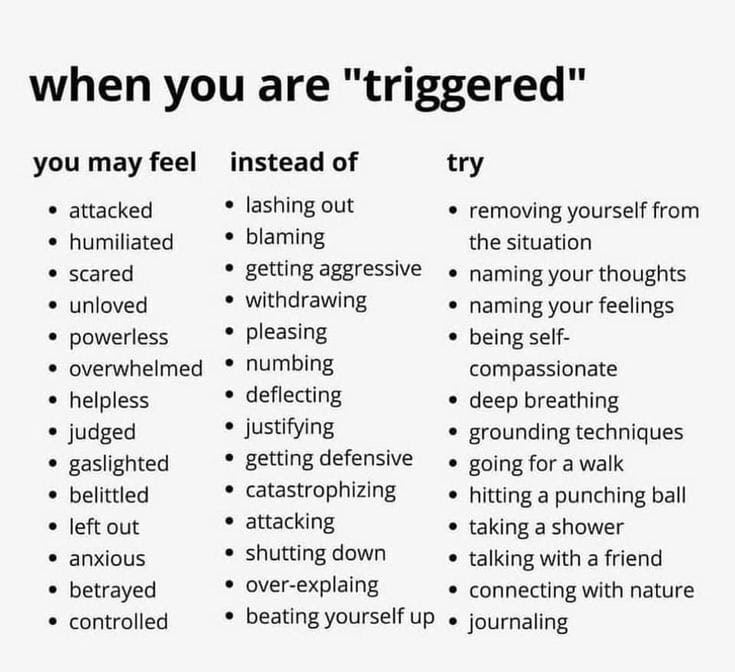
| If you are alone, relax and take a deep breath. Your objective is to feel better and come up with a more effective plan of action for dealing with your trigger. You’re allowing yourself time to relax and clear your thoughts. When you feel like you can manage yourself again, it’s time to face the trigger event with composure. |
| 3. Be Open-Minded |
| Every single human being is at the mercy of their own triggers. If you believe that those in your immediate vicinity are purposefully causing you to feel unpleasant, reconsider. Like you, they are also human. They, too, may feel triggered without you knowing it. |
| Be open-minded, so you understand the behavior of someone you are not familiar with. Avoid passing judgment on them and make an effort to understand their viewpoints. |
| 4. If You Feel Negative Emotions, Practice Positive Actions |
| Often, when a person experiences negative and strong emotions, they show negative responses as well. If you are lonely, you initially want to lock up inside your room and starve. You should practice acting positively instead. |
| Avoid isolating yourself. Make time to spend time with your loved ones and friends by giving them a call. Engage in activities that will produce positive feelings. |
| 5. Create Positive Memories from Positive Experiences |
| Investing in pleasant experiences makes sense if you want to have positive triggers. Spend time with the folks that bring back fond memories for you. |
| Examples of good memories are setting up the Christmas tree, which reminds you of your wonderful childhood, or hearing your favorite song playing, which reminds you of your special someone. |
| 6. Learn to Communicate |
| Even after following all of the advice given above, you continue to find yourself in a circumstance that triggers you. Now is the moment to be honest. Speak with the individual who set you off so that neither of you has to deal with it again. |
| Remain composed and at ease. You have to communicate to yourself by identifying what you feel. Slamming the door on your lover for not appreciating the work you put into your relationship is one example. Here are some things you can do: |
| You have to name what you are feeling. |
| Tell your partner, “I feel so frustrated and angry right now. I don’t feel that you are putting the same quality of effort as I do in this relationship. This pisses me off. I love you, and I don’t want to feel this way. What can we do about this?” |
| Of course, you have to consider that others may not be open communicators like you. You can’t make someone tell you their side of the story or open up to you. |
| The ability to connect what you want to communicate is what matters. The other person will take some quiet, introspective time to process what has just transpired. |


 Anna Godfrey